Azur & Asmar The Princes' Quest Budget
Updated
Synopsis
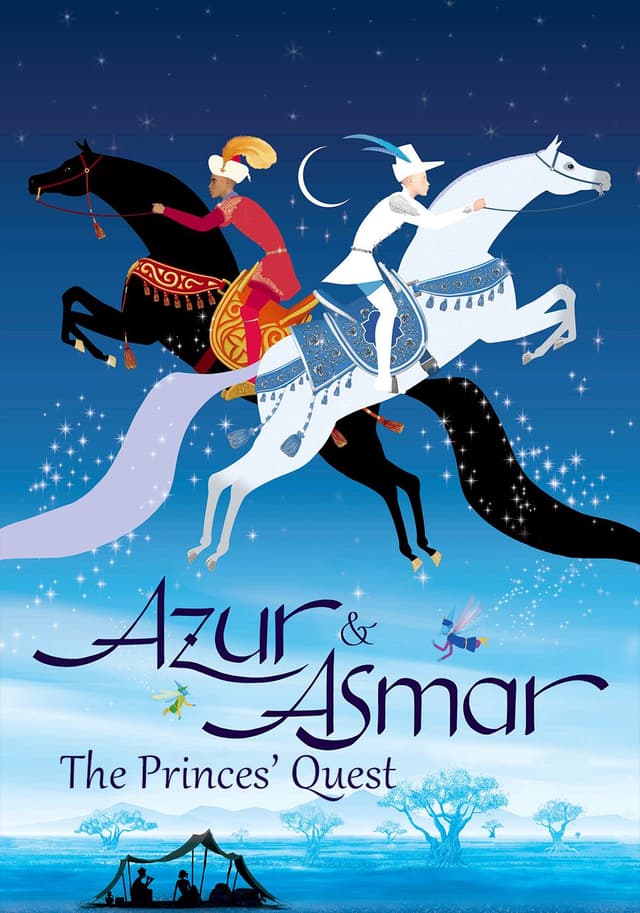
Azur, a blue-eyed European nobleman's son, and Asmar, the dark-eyed son of his Maghrebian nursemaid, are raised together as foster brothers before being separated by class. As young men they journey to the Maghreb to compete for the same legendary princess, learning that their bond outweighs the rivalry their fathers and the world have placed between them.
What Is the Budget of Azur & Asmar: The Princes' Quest (2006)?
Azur & Asmar: The Princes' Quest (2006), directed by Michel Ocelot and distributed by Diaphana Films in France and internationally by various territory partners, was produced as Ocelot's third theatrical feature following Kirikou and the Sorceress (1998) and Princes and Princesses (2000). The film was produced on a reported budget of approximately €10,000,000 (approximately $13,000,000 USD at 2006 exchange rates), the largest budget for a Michel Ocelot feature to that point and a significant investment in French animation during a period when the country was rebuilding its animated-feature production capacity.
The film was produced by Christophe Rossignon and Philip Boëffard at Nord-Ouest Productions in Paris, with co-production from Mac Guff Ligne, Studio O, France 3 Cinéma, Rhône-Alpes Cinéma, Studio Animatie Brussel, and additional Belgian, Italian, and Spanish partners. The cross-European co-production structure reflected the scale of the project and the multiple national funding agencies that contributed to its financing. CGI animation was provided by Mac Guff Ligne, which would later be acquired by Illumination Mac Guff and become the production house behind the Despicable Me franchise.
Key Budget Allocation Categories
The €10,000,000 production budget broke down across the following French animated feature categories:
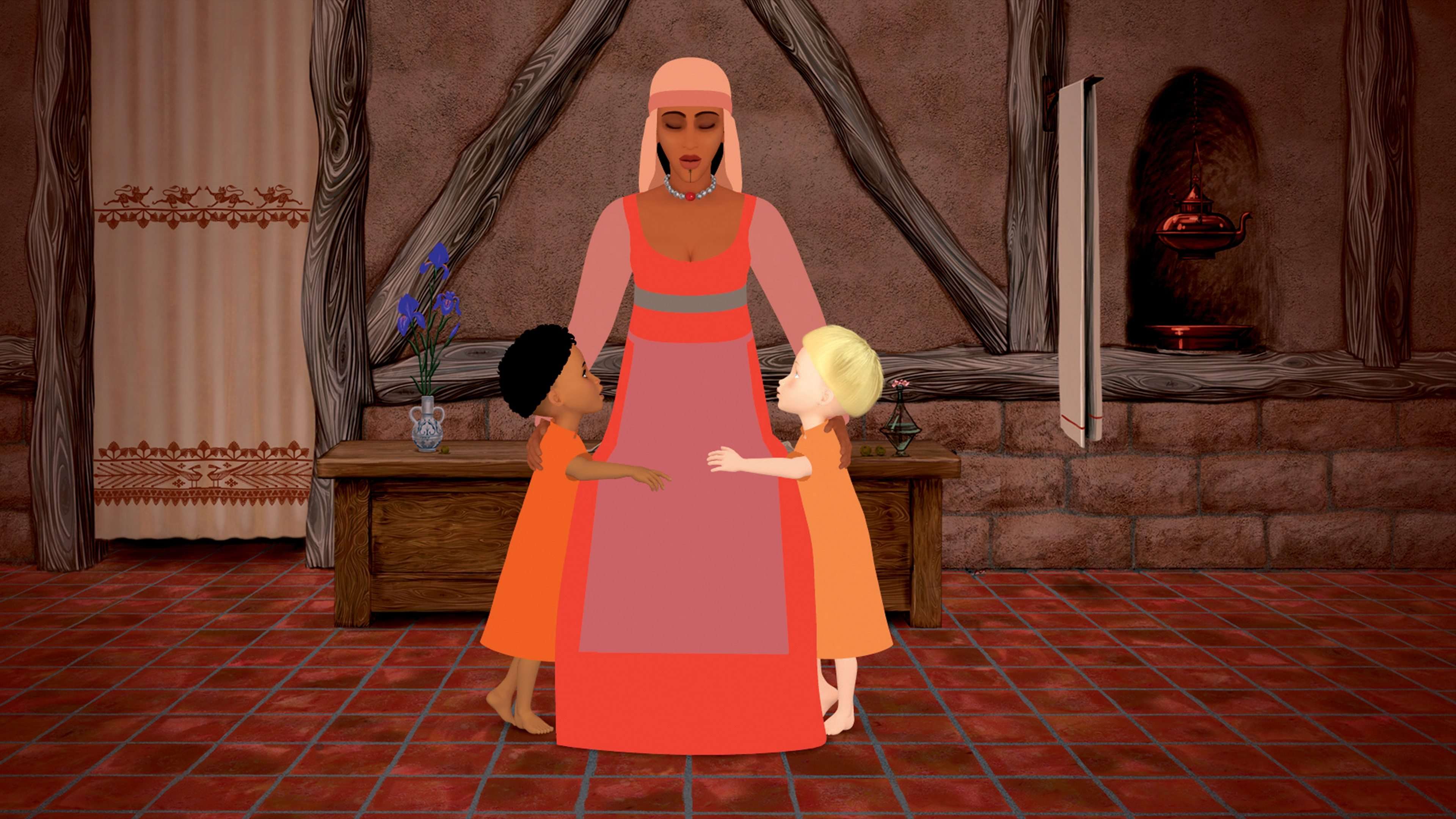
- Mac Guff Ligne CGI Animation: The bulk of below-the-line spend went to Mac Guff Ligne, which produced the film's CGI animation in Paris, France. Ocelot's decision to use 3D CGI rather than the cutout silhouette technique of Princes and Princesses or the hand-drawn animation of Kirikou represented a substantial creative and budgetary shift, requiring an entirely new pipeline approach.
- Direction, Design, and Story: Michel Ocelot wrote, designed, and directed the film, working from his own original story rooted in Maghrebian folklore and medieval Islamic visual culture. The pre-production design phase involved extensive visual research at the Institut du monde arabe in Paris and at architectural and decorative-arts sites across Morocco, Andalusia, and the broader Maghreb.
- Voice Cast: The French-language voice cast included Cyril Mourali as Azur, Karim M'Riba as Asmar, Hiam Abbass as Jenane, Patrick Timsit as Crapoux, and Rayan Mahjoub and Abdelsselem Ben Amar as the young brothers. The film was also recorded in additional language versions for international release, with new vocal performances by territory-appropriate casts including Arabic-language voice work.
- Score and Music: Composer Gabriel Yared provided the original score, drawing on traditional Arabic-Andalusian music, Maghrebian folk traditions, and Western orchestral writing. The score required studio recording sessions with both orchestral ensembles and traditional instrumentalists playing oud, qanun, and other Arabic instruments.
- Multi-National Co-Production Coordination: The French-Belgian-Italian-Spanish co-production structure required coordination across the French CNC, Belgian Wallimage and Flanders Audiovisual Fund, Italian regional funds, Spanish ICAA, and additional Eurimages financing. Administrative and legal overhead for multi-nation animation co-productions of this scale typically runs 8 to 12% of total budget.
- Marketing and International Distribution: The film premiered at the 2006 Cannes Film Festival in the Directors' Fortnight section. Marketing budgets for the territory-by-territory release rolled out across late 2006 and 2007 involved dubbed-language recording, regional marketing campaigns, and limited international art-house theatrical placement.
How Does Azur & Asmar: The Princes' Quest's Budget Compare to Similar Films?
Mid-budget European animation features cluster in a relatively narrow band. Comparable productions include:
- Kirikou and the Sorceress (1998): Budget approximately €4,000,000 | French gross approximately 1,400,000 admissions. Michel Ocelot's breakthrough feature, produced on roughly 40% of the Azur & Asmar budget and the closest single-film reference for Ocelot's economic positioning before the larger investment in Azur & Asmar.
- Persepolis (2007): Budget approximately €7,300,000 | Worldwide $22,778,432. Marjane Satrapi's contemporaneous French animated feature offers the closest European art-house animation reference and grossed substantially more theatrically.
- Spirited Away (2001): Budget approximately $19,000,000 | Worldwide $395,580,000. Hayao Miyazaki's Japanese masterwork, included as a global animation reference; Azur & Asmar was produced for two-thirds of Spirited Away's budget.
- Tales of the Night (2011): Budget approximately €2,000,000 | French gross approximately 280,000 admissions. Ocelot's subsequent film, produced on a much smaller budget that returned to the silhouette-cutout technique of Princes and Princesses.
- Coraline (2009): Budget $60,000,000 | Worldwide $124,596,398. Henry Selick's American stop-motion animation, included as a Western mid-budget animation reference point that illustrates the scale gap between European auteur animation and American studio animation.
Azur & Asmar: The Princes' Quest Box Office Performance
Azur & Asmar opened theatrically in France on October 25, 2006, following its premiere in the Directors' Fortnight section at the 2006 Cannes Film Festival in May. The film accumulated approximately 1,470,000 admissions in France, equivalent to roughly $13,000,000 in territory gross at 2006 ticket prices. International release rolled out across late 2006 and 2007, with additional grosses across European, Asian, and North American art-house markets.
The financial breakdown using mid-range industry assumptions for prestige European animation:
Box Office Breakdown
Azur & Asmar The Princes' Quest

The film became a fixture of French television programming, with TF1, France 3, and other broadcasters acquiring repeated broadcast windows. Educational distribution to French and international schools, particularly in the context of multicultural education programming, generated additional licensing revenue. The film also became a regular feature of European children's animation festival programming.
Michel Ocelot's continued career, including Tales of the Night (2011), Kirikou and the Men and Women (2012), and Dilili in Paris (2018), built on the production-design vocabulary established by Azur & Asmar. The film is widely cited as a pivotal moment in French animation's engagement with North African and Arabic cultural heritage.
Azur & Asmar: The Princes' Quest Production History
Development on Azur & Asmar began at Nord-Ouest Productions in 2002, with Michel Ocelot conceiving the project as a fable rooted in Maghrebian folklore and medieval Islamic culture. Ocelot, who had grown up partly in Guinea and Senegal, had developed a sustained interest in cross-cultural storytelling. The decision to use CGI animation rather than his previous hand-drawn or silhouette-cutout techniques represented a substantial new direction for his career and was driven by the visual demands of representing medieval Maghrebian architecture and decorative arts.
Pre-production and design work ran from 2002 to 2004, with Ocelot conducting extensive visual research at the Institut du monde arabe in Paris and at architectural and decorative-arts sites across Morocco, Andalusia, and the broader Maghreb. Animation production at Mac Guff Ligne ran from 2004 to 2006, with the multi-national co-production structure managing financing and creative oversight across French, Belgian, Italian, and Spanish partners.
Post-production took place at French and Belgian facilities through early 2006. The film premiered in the Directors' Fortnight at the 59th Cannes Film Festival on May 24, 2006 and opened theatrically in France on October 25, 2006. International release rolled out across late 2006 and 2007, with multiple language versions recorded for territory-appropriate dub releases.
Awards and Recognition
Azur & Asmar: The Princes' Quest received significant awards recognition. The film won the European Film Award for Best Animated Film at the 2006 European Film Awards and the Cesar Award for Best Animated Film at the 32nd Cesar Awards in February 2007. It also received nominations at the Annie Awards in the United States and at multiple European animation festivals.
The film won the Audience Award at the 30th São Paulo International Film Festival and the Best Animation Award at the 2007 Brussels International Fantastic Film Festival. Composer Gabriel Yared received a Cesar Award nomination for Best Music. Michel Ocelot received a Lifetime Achievement Award from the Annecy International Animation Film Festival in 2017, recognizing the cumulative contribution of Kirikou, Princes and Princesses, Azur & Asmar, and his subsequent work to French and global animation.
Critical Reception
Azur & Asmar received broadly favorable reviews. The film holds a 78% approval rating on Rotten Tomatoes based on 27 critic reviews, with a critical consensus describing it as a visually arresting cross-cultural fable that succeeds despite the limitations of its early-2000s CGI animation. On Metacritic, the film scored 71 out of 100, indicating generally favorable reviews. The film was not surveyed by CinemaScore because of its limited US art-house release.
Critics praised the film's visual design, the integration of medieval Maghrebian architecture and Islamic decorative arts into the production-design vocabulary, Gabriel Yared's score, and the cross-cultural fable structure. Variety's Ronnie Scheib called it "a visual feast that brings the medieval Maghreb to animated life with rare sympathy," and The Hollywood Reporter's Bernard Besserglik wrote that the film "deploys CGI animation in service of a humane fable rather than as an end in itself."
Less favorable critical responses flagged the early-2000s CGI character animation as technically limited compared with contemporaneous Pixar and DreamWorks work, the relatively slow pacing in the first act, and the heavy reliance on voiceover narration in the international dubbed versions. The largely positive consensus has retained the film's position as one of Michel Ocelot's most-praised features and a touchstone of French cross-cultural animation.
Frequently Asked Questions
How much did it cost to make Azur & Asmar: The Princes' Quest (2006)?
The film was produced on a reported budget of approximately €10,000,000 (approximately $13,000,000 USD at 2006 exchange rates), the largest budget for a Michel Ocelot feature to that point and a significant investment in French animation during a period when the country was rebuilding its animated-feature production capacity.
Who directed Azur & Asmar: The Princes' Quest?
French filmmaker Michel Ocelot directed the film. Ocelot is also known for Kirikou and the Sorceress (1998), Princes and Princesses (2000), Tales of the Night (2011), and Dilili in Paris (2018). He wrote, designed, and directed Azur & Asmar from his original story.
Where can you watch Azur & Asmar: The Princes' Quest?
The film is available on Blu-ray and DVD through various European and international labels. Streaming availability varies by region, with the film typically available through animation-focused streamers and art-house platforms in select territories.
What languages is Azur & Asmar in?
The original French-language version is the primary release. The film was also recorded in additional language versions including English, Arabic, Spanish, Italian, German, and other European languages for territory-appropriate distribution.
Is Azur & Asmar appropriate for children?
Yes. The film is rated U (for all audiences) in France and has been programmed at children's animation festivals worldwide. The themes of cross-cultural friendship, race, and class are handled in a fable structure accessible to viewers from approximately age 7 upward.
What animation technique was used for Azur & Asmar?
The film was made in 3D CGI animation by Mac Guff Ligne in Paris, a substantial departure from Michel Ocelot's previous hand-drawn and silhouette-cutout techniques. Mac Guff Ligne would later be acquired by Illumination and become the production house behind the Despicable Me franchise.
Did Azur & Asmar win any awards?
Yes. The film won the European Film Award for Best Animated Film at the 2006 European Film Awards and the Cesar Award for Best Animated Film at the 32nd Cesar Awards in February 2007. It also won the Audience Award at the 30th São Paulo International Film Festival and the Best Animation Award at the 2007 Brussels International Fantastic Film Festival.
Where did Azur & Asmar: The Princes' Quest premiere?
The film premiered in the Directors' Fortnight at the 59th Cannes Film Festival on May 24, 2006. It opened theatrically in France on October 25, 2006, with international release rolling out across late 2006 and 2007.
How was Azur & Asmar received by critics?
The film received broadly favorable reviews, with a 78% approval rating on Rotten Tomatoes based on 27 critic reviews and a Metacritic score of 71 out of 100. Critics praised the visual design, the integration of medieval Maghrebian architecture and Islamic decorative arts, Gabriel Yared's score, and the cross-cultural fable structure.
How long is Azur & Asmar: The Princes' Quest?
The film has a running time of 99 minutes, standard for a European animated feature and reflective of the unhurried storytelling that defines all of Michel Ocelot's work.
Filmmakers
Azur & Asmar The Princes' Quest

Build budgets like this one in Saturation
Start from an industry-standard feature film template, import the schedule and rates you already have, and let the cost report keep itself current as you spend. Real-time collaboration, no spreadsheets.