Apur Sansar Budget
 Drama1h 45m
Updated
Synopsis
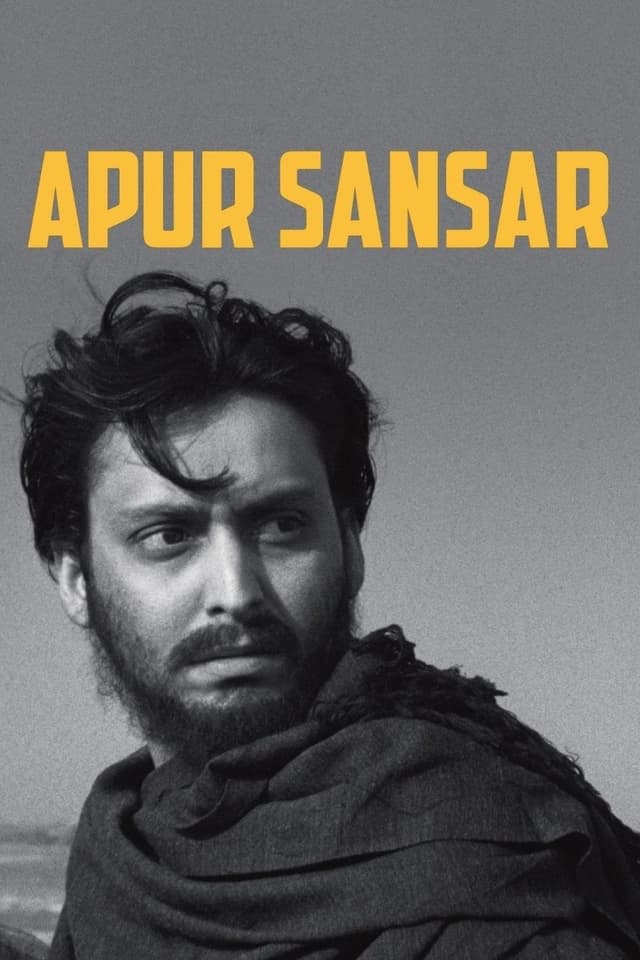
In Calcutta, a grown-up Apu lives in poverty as he struggles to publish a novel. Reluctantly persuaded to marry a young village woman whose intended husband proves mentally unfit, Apu finds unexpected love before tragedy forces him to confront the responsibility for the son he has fathered but refused to meet.
What Is the Budget of Apur Sansar (1959)?
The production budget of Apur Sansar has never been publicly disclosed in dollar terms. The picture was financed by Satyajit Ray's own production company in Bengal on a budget characteristic of Indian art cinema of the era. Industry estimates place the total spend in the equivalent of $20,000 to $50,000 in 1959 US dollars.
Director Satyajit Ray shot the picture in West Bengal across 1958, working with his long-term cinematographer Subrata Mitra and a small crew. The picture concludes the Apu Trilogy, which Ray had begun with Pather Panchali (1955) and Aparajito (1956).
Key Budget Allocation Categories
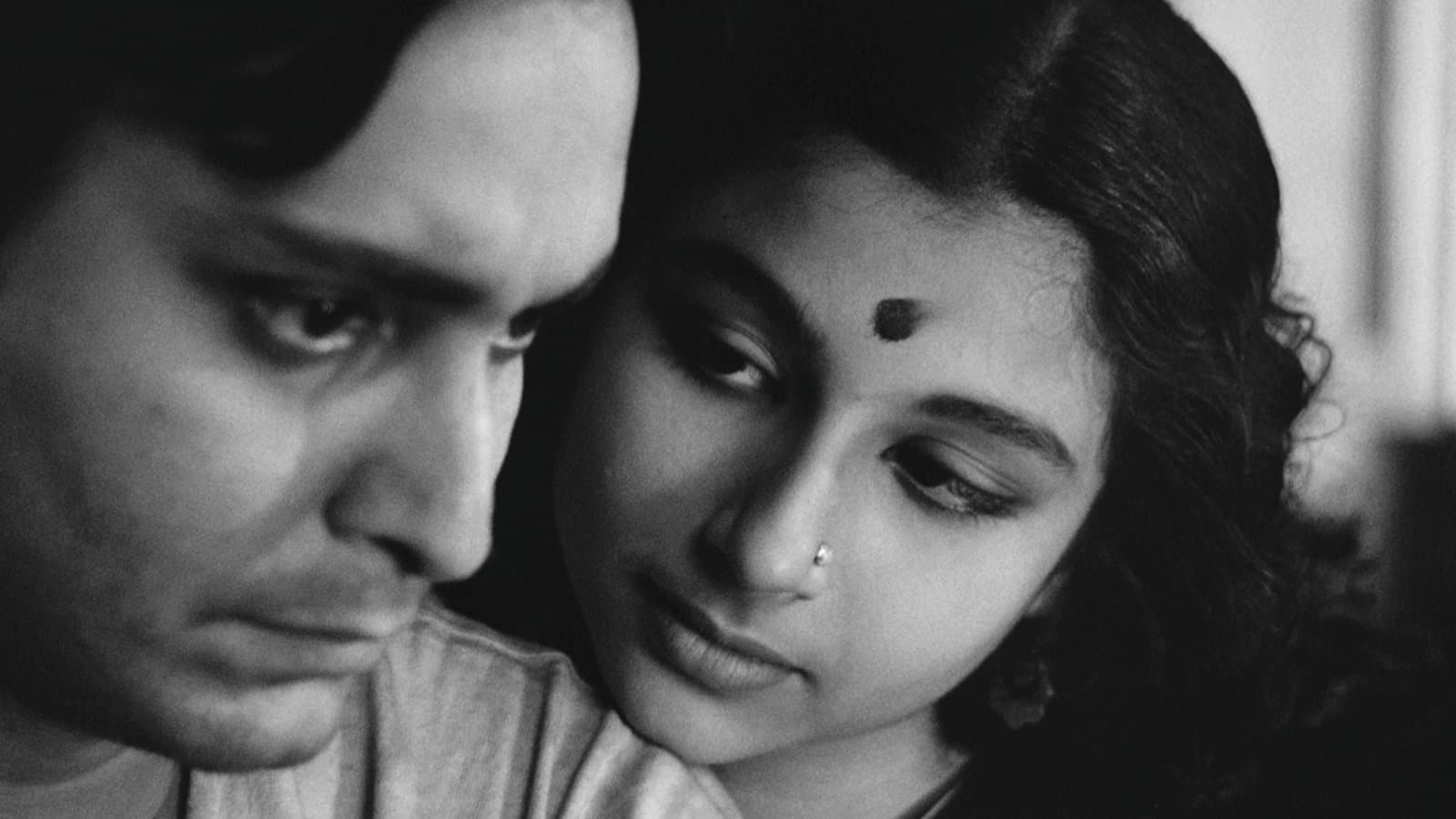
- Cast Compensation: Modest fees for Soumitra Chatterjee in his feature debut as Apu and for Sharmila Tagore as Aparna, also her feature debut.
- Crew and Production: A small Bengali production team working under Ray's direct supervision, including cinematographer Subrata Mitra and art director Bansi Chandragupta.
- Film Stock and Equipment: 35mm film stock and lightweight handheld camera packages typical of Bengali production conditions in the late 1950s.
- Location Filming: Shooting across Calcutta, the Bengali countryside, and small village locations, with limited soundstage work.
- Music and Score: Original sitar-led score composed by Ravi Shankar, recorded in a marathon overnight session in Calcutta.
- International Distribution: Initial Indian release followed by international festival circulation that brought the picture to Edinburgh, Venice, and the National Board of Review.
How Does Apur Sansar's Budget Compare to Similar Films?
- Pather Panchali (1955): Budget approximately $20,000 | Worldwide limited. The first Apu Trilogy entry at a comparable microbudget, made on a West Bengal government grant.
- Aparajito (1956): Budget undisclosed | Worldwide limited. The second Apu Trilogy entry at a similar microbudget, winner of the Golden Lion at Venice.
- The 400 Blows (1959): Budget approximately $75,000 | Worldwide $290,000. Truffaut's French New Wave debut released the same year at a higher European budget.
- Hiroshima Mon Amour (1959): Budget approximately $100,000 | Worldwide limited. Resnais' French-Japanese co-production at a comparable art-cinema budget released the same year.
Apur Sansar Box Office Performance
Apur Sansar premiered in Calcutta on May 1, 1959. The picture circulated on the international festival circuit through 1959 and 1960, including engagements at Edinburgh, the National Board of Review, and the British Film Institute. A US art-house release through Edward Harrison Releasing followed in 1960.
Box Office Breakdown
Apur Sansar

For every $1 invested, the production has likely returned a substantial multiple over more than six decades of repertory exhibition, home video, and educational licensing.
The picture had no significant initial theatrical box office gross by contemporary standards. Its commercial and cultural life unfolded over decades through international festival circulation, the Criterion Collection 2015 Apu Trilogy restoration, and continuous repertory and home video exhibition.
Apur Sansar Production History
Apur Sansar concludes Satyajit Ray's Apu Trilogy, following Pather Panchali (1955) and Aparajito (1956). The trilogy adapts Bibhutibhushan Bandyopadhyay's Bengali novels Pather Panchali and Aparajito.
Ray cast Soumitra Chatterjee as Apu in his feature film debut after meeting him during the casting of Aparajito, where Ray had felt he was too old to play the title role. Sharmila Tagore, a Bengali teenager with no prior acting experience, was cast as Aparna also in her debut.
Principal photography ran through 1958 across Calcutta and the Bengali countryside. The picture's celebrated Ravi Shankar score was recorded in a single marathon overnight session. The trilogy as a whole is widely regarded as one of the finest cinematic achievements of the twentieth century.
Awards and Recognition
Apur Sansar won the Indian National Film Award for Best Feature Film in 1959. The picture also won the Sutherland Award for Best Original and Imaginative Film at the Edinburgh International Film Festival and the National Board of Review Award for Best Foreign Language Film. The Apu Trilogy as a whole appears on multiple major critical polls of the greatest films ever made, including Sight & Sound and the AFI international cinema canon. The Criterion Collection released a major restoration of the trilogy in 2015.
Critical Reception
Apur Sansar holds a 96 percent rating on Rotten Tomatoes. Roger Ebert included the Apu Trilogy on his Great Movies list and called Apur Sansar "the closing of a great work of cinema." Akira Kurosawa wrote that "not to have seen the cinema of Ray means existing in the world without seeing the sun or the moon." Martin Scorsese has cited the trilogy as a foundational influence. James Berardinelli described the picture as "a triumphant conclusion to one of the greatest trilogies in cinema." The picture is taught in essentially every survey course on world cinema.
Frequently Asked Questions
What is the budget of Apur Sansar (1959)?
The production budget of Apur Sansar has never been publicly disclosed. Industry estimates place the total spend in the equivalent of $20,000 to $50,000 in 1959 US dollars, characteristic of Indian art cinema of the era.
Is Apur Sansar a sequel?
Yes. Apur Sansar is the third and concluding entry in Satyajit Ray's Apu Trilogy, following Pather Panchali (1955) and Aparajito (1956).
Who directed Apur Sansar?
Satyajit Ray directed, wrote, and produced Apur Sansar. The picture concludes his Apu Trilogy.
Who stars in Apur Sansar?
Soumitra Chatterjee plays Apu and Sharmila Tagore plays Aparna. Both were making their feature film debuts.
What is Apur Sansar based on?
The picture is loosely adapted from the second half of Bibhutibhushan Bandyopadhyay's Bengali novel Aparajito, the source for the second and third Apu Trilogy entries.
Where was Apur Sansar filmed?
Principal photography took place across Calcutta and the Bengali countryside in 1958.
Did Apur Sansar win any awards?
Yes. The picture won the Indian National Film Award for Best Feature Film in 1959, the Sutherland Award at Edinburgh, and the National Board of Review Award for Best Foreign Language Film.
Who composed the music for Apur Sansar?
Ravi Shankar composed the original sitar-led score for the picture, recorded in a marathon overnight session in Calcutta.
How long is Apur Sansar?
Apur Sansar runs 105 minutes.
Is Apur Sansar available to watch today?
Yes. The Criterion Collection released a major restoration of the entire Apu Trilogy in 2015. Apur Sansar is available on Blu-ray, DVD, and the Criterion Channel streaming service.
Filmmakers
Apur Sansar

Official Trailer
Build budgets like this one in Saturation
Start from an industry-standard feature film template, import the schedule and rates you already have, and let the cost report keep itself current as you spend. Real-time collaboration, no spreadsheets.