Alvin and the Chipmunks Budget
Updated
Synopsis
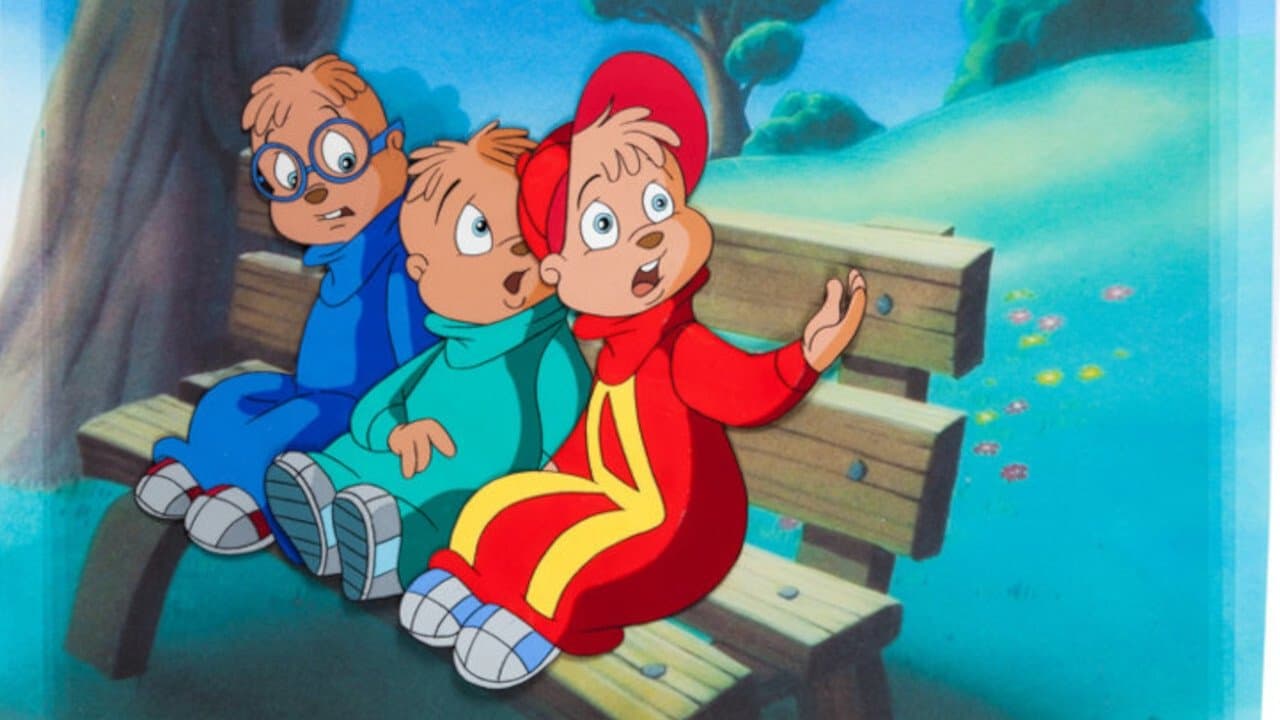
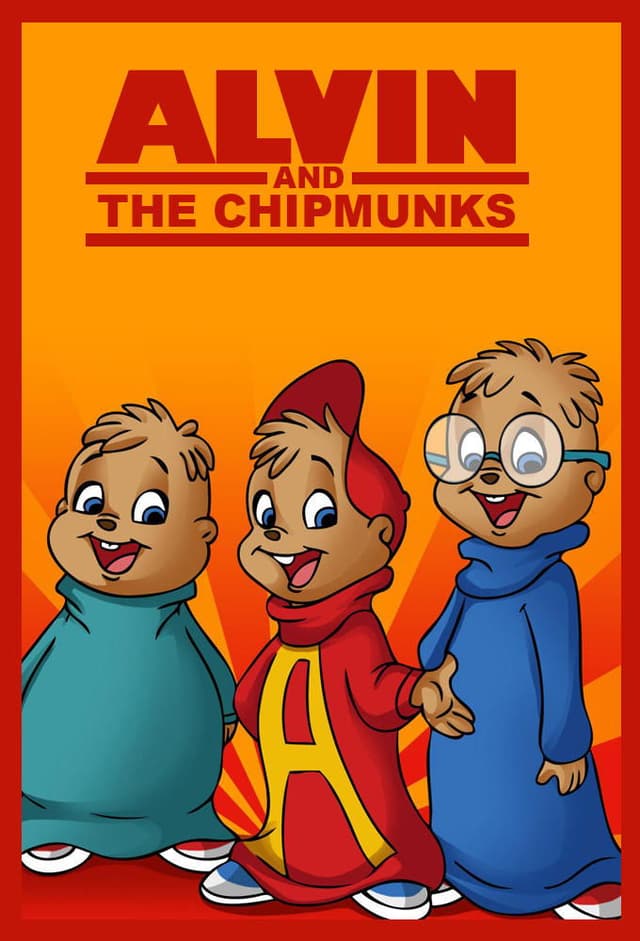
Alvin and the Chipmunks (1983) is the NBC Saturday morning animated revival of Ross Bagdasarian's 1958 musical-novelty act, in which Alvin, Simon, and Theodore (and from season two the Chipettes Brittany, Jeanette, and Eleanor) navigate Los Angeles life under the long-suffering guardianship of songwriter Dave Seville. Ruby-Spears Enterprises produced the first five seasons before DIC Animation City took over for seasons six through eight, with Ross Bagdasarian Jr. and Janice Karman voicing the principal characters across the entire 1983 to 1990 run.
What Is the Budget of Alvin and the Chipmunks (1983)?
Alvin and the Chipmunks (1983), the NBC Saturday morning animated revival of Ross Bagdasarian's 1958 musical-novelty act, was made on an estimated per-episode budget of approximately $300,000 to $500,000 in 1983 to 1990 dollars (roughly $880,000 to $1,470,000 in 2024 inflation-adjusted terms). Specific Ruby-Spears Enterprises and DIC Animation City production budgets from the 1980s Saturday morning animation era are not consistently publicly disclosed, but the figures align with the standard NBC Saturday morning half-hour animation tariff during the period, which sat well below prime-time animation rates and reflected Saturday morning's sponsor-supported economic model.
Across 102 episodes (168 segments) and 8 seasons between September 17, 1983 and December 1, 1990, cumulative production spend is estimated at approximately $30,000,000 to $50,000,000 in period dollars, equivalent to roughly $90,000,000 to $150,000,000 in 2024 inflation-adjusted terms. Ruby-Spears Enterprises produced seasons one through five (1983 to 1988), Murakami-Wolf-Swenson contributed eleven episodes in season six, and DIC Animation City produced seasons six through eight (1988 to 1990) following Ruby-Spears's post-Hanna-Barbera-acquisition wind-down.
Key Budget Allocation Categories
Alvin and the Chipmunks's per-episode spend broke down across the cost centres typical of a 1980s NBC Saturday morning half-hour animated series:
- Above-the-Line Voice Cast: Ross Bagdasarian Jr. voiced Alvin, Simon, and Dave Seville (plus additional male characters), and his wife Janice Karman voiced Theodore, Brittany, Jeanette, and Eleanor (plus additional female characters). The combined Bagdasarian-Karman voice work was the show's defining cost-discipline structure, with two voice actors covering all principal characters under Bagdasarian Productions's direct ownership of the underlying property. Additional voice cast included Dody Goodman as neighbour Beatrice Miller, Thomas H. Watkins as Uncle Willy and the family dog Lilly, and Frank Welker in rotating additional roles.
- Bagdasarian Productions Music: The show's defining incremental cost. Each episode incorporated an original song or covers performed at the chipmunk-pitched-voice production technique that Ross Bagdasarian Sr. had pioneered in 1958. Music production ran through Bagdasarian Productions, with original-song composition, recording sessions, and the studio time required to record and pitch-shift the chipmunk vocals adding a substantial per-episode music budget above standard Saturday morning animation peers.
- Ruby-Spears Animation Production: Seasons one through five (1983 to 1988) ran through Ruby-Spears Enterprises's in-house animation pipeline at standard 1980s Saturday morning cel-animation specifications. Ruby-Spears, founded by Joe Ruby and Ken Spears (the original Scooby-Doo creators), operated a standard low-tariff Saturday morning animation house that delivered the show on the typical 22-minute half-hour format with two 11-minute segments per episode.
- Overseas Animation Outsourcing: Like most 1980s American Saturday morning animation, the show's frame-by-frame animation was largely outsourced to South Korean and Taiwanese animation studios, with US-based storyboarding, layout, voice recording, and post-production. The overseas outsourcing was the principal reason 1980s Saturday morning animation could deliver at the $300,000 to $500,000 per-episode tariff against the substantially higher cost of fully US-domestic animation production.
- Recurring Character Design and Settings: The Seville house, the boys' shared bedroom, the school, and the various Los Angeles neighbourhood settings formed recurring layouts that amortised across the run. The Chipettes' introduction in season two (1984) added Brittany, Jeanette, and Eleanor character designs plus their guardian Miss Miller's home, expanding the recurring-asset library.
- NBC Saturday Morning Delivery: Picture editing, sound, music, and NBC delivery ran through the standard 1980s Saturday morning animation post pipeline. The show was budgeted at standard NBC Saturday morning technical specifications and delivered on the standard mid-1980s American animation production schedule.
- DIC Animation City Transition: Seasons six through eight (1988 to 1990) ran through DIC Animation City after Ruby-Spears was acquired and wound down. The DIC transition was a budget-neutral or slightly cost-reduced move, with DIC's overseas-outsourcing model running at a comparable tariff to Ruby-Spears.
- Bagdasarian Productions Licensing and Merchandise: While not directly a production-budget line item, Bagdasarian Productions's ownership of the underlying Chipmunks property meant that the show generated substantial merchandise, music, and licensing revenue alongside the NBC broadcast fee. The Bagdasarian Productions IP economics were the principal reason the show ran for eight seasons and 102 episodes against most Saturday morning peers' three-to-four season runs.
How Does Alvin and the Chipmunks' Budget Compare to Similar Series?
At approximately $300,000 to $500,000 per episode, Alvin and the Chipmunks sat in the standard tariff range for 1980s NBC Saturday morning animation, broadly comparable to its Ruby-Spears, Hanna-Barbera, and DIC peers. The comparison set illustrates how its production scale stacked up:
- The Smurfs (1981): Estimated per-episode budget approximately $300,000 to $500,000 ($940,000 to $1,565,000 in 2024 dollars). Hanna-Barbera's NBC Saturday morning ratings juggernaut hit a similar per-episode tariff and ran for nine seasons and 256 episodes between 1981 and 1989, providing the principal benchmark for 1980s NBC Saturday morning longevity.
- Scooby-Doo (1983): Estimated per-episode budget approximately $300,000 to $400,000 ($940,000 to $1,250,000 in 2024 dollars). Hanna-Barbera's long-running Saturday morning property ran the New Scooby and Scrappy-Doo Show in 1983 to 1985 at a comparable tariff, illustrating the standard floor for established-IP Saturday morning animation.
- Muppet Babies (1984): Estimated per-episode budget approximately $400,000 to $600,000 ($1,200,000 to $1,800,000 in 2024 dollars). Marvel Productions's CBS Saturday morning Jim Henson property ran at a slightly higher per-episode tariff because of the Henson-licensed character design overhead and the show's relatively higher animation quality.
- The Real Ghostbusters (1986): Estimated per-episode budget approximately $400,000 to $600,000 ($1,090,000 to $1,640,000 in 2024 dollars). DIC Animation City's ABC Saturday morning Ghostbusters adaptation ran at a slightly higher tariff than Alvin and the Chipmunks because of the licensed-feature-film-property overhead and the show's more complex character animation.
- Garfield and Friends (1988): Estimated per-episode budget approximately $300,000 to $500,000 ($820,000 to $1,360,000 in 2024 dollars). Film Roman's CBS Saturday morning Garfield adaptation hit a comparable per-episode tariff to Alvin and the Chipmunks and ran for seven seasons, providing another data point on standard licensed-property Saturday morning animation economics.
- The Simpsons (1989): Estimated per-episode budget approximately $1,000,000 to $1,500,000 ($2,440,000 to $3,660,000 in 2024 dollars). Fox's Sunday-night prime-time launch of The Simpsons in 1989, on a substantially higher per-episode budget than the Saturday morning Chipmunks, illustrated the standard gap between Saturday morning and prime-time animation that would define the 1990s shift toward Fox-and-cable adult-animation production.
Alvin and the Chipmunks Season Performance and Ratings
Alvin and the Chipmunks premiered on NBC Saturday morning on September 17, 1983 to strong opening ratings, becoming one of the highest-rated Saturday morning shows of the 1983-1984 season. The economic framework breaks down as follows:
- Per-Episode Budget: approximately $300,000 to $500,000 in 1983 to 1990 dollars (roughly $880,000 to $1,470,000 in 2024 dollars)
- Total Series Investment: approximately $30,000,000 to $50,000,000 across 102 episodes (168 segments) and 8 seasons in period dollars
- Network: NBC Saturday morning in the United States (1983 to 1990); subsequent syndication via Viacom Enterprises on WGN and WTBS superstations from 1983
- Audience/Ratings: season 1 averaged a top-three NBC Saturday morning placement; later seasons maintained NBC Saturday morning top-tier through the late 1980s
- Syndication: Viacom Enterprises placed the show in domestic syndication immediately upon original broadcast; later runs on Nickelodeon, Disney Channel, and various cable networks across the 1990s and 2000s
- Library/Merchandise Value: Bagdasarian Productions's ongoing ownership has generated continuous merchandise, music, and licensing revenue; the property has spawned subsequent live-action / CG hybrid theatrical films (Alvin and the Chipmunks 2007, Alvin and the Chipmunks: The Squeakquel 2009, Alvin and the Chipmunks: Chipwrecked 2011, Alvin and the Chipmunks: The Road Chip 2015)
The show's eight-season longevity (1983 to 1990) is unusually long for an American Saturday morning animated series and reflects both the Bagdasarian Productions IP ownership structure and NBC's consistent Saturday morning audience for the property. The principal cause of the 1990 wind-down was the broader NBC Saturday morning programming reset that began in the early 1990s and ultimately moved most Saturday morning animation from broadcast networks to cable (Cartoon Network launched in 1992).
Alvin and the Chipmunks Production History
Ross Bagdasarian Jr. and Janice Karman developed Alvin and the Chipmunks for Ruby-Spears Enterprises and NBC in 1982 to 1983, building on the 1961 to 1962 original Alvin Show CBS series and on the underlying Bagdasarian Productions musical-novelty property that had been a hit since 1958. The pitch was for a Saturday morning revival that would update the chipmunks for the 1980s, with contemporary musical references and a Los Angeles family-sitcom structure built around the Dave Seville guardianship.
Production launched in September 1983 on NBC Saturday morning, with Ruby-Spears Enterprises (founded by Joe Ruby and Ken Spears, the original Scooby-Doo creators) handling animation production for seasons one through five. The show's defining creative choice was the introduction of the Chipettes (Brittany, Jeanette, and Eleanor) in season two (1984), a female-counterpart trio that significantly expanded the show's storytelling palette and merchandise potential.
Bagdasarian Productions maintained direct ownership of the music, with Ross Bagdasarian Jr. continuing the chipmunk-pitched-voice production technique that his father had pioneered in 1958. Each episode incorporated an original song or covers performed at the pitched voice, with the recording running through Bagdasarian Productions's studio in Los Angeles. The music economics were the principal reason the show was able to sustain its 8-season run, with the underlying IP generating consistent merchandise and music revenue alongside the NBC broadcast fee.
Production transitioned to DIC Animation City for seasons six through eight (1988 to 1990) after Ruby-Spears Enterprises was acquired and wound down. The DIC transition was a budget-neutral or slightly cost-reduced move, with DIC's overseas-outsourcing model running at a comparable tariff to Ruby-Spears. Murakami-Wolf-Swenson contributed eleven episodes in season six as a Ruby-Spears-to-DIC transition production. The show ended in December 1990 as part of the broader NBC Saturday morning programming reset that retired most network Saturday morning animation across the early 1990s.
The property has remained continuously in distribution since the 1990 wind-down, with Viacom Enterprises's 1980s syndication placement followed by Nickelodeon and Disney Channel runs in the 1990s and 2000s. Bagdasarian Productions and Twentieth Century Fox subsequently developed the 2007 to 2015 live-action / CG hybrid theatrical film series, which generated approximately $1,200,000,000 in worldwide box office across four films and re-established the Chipmunks as a contemporary children's entertainment property.
Awards and Recognition
Alvin and the Chipmunks received steady but limited recognition during its original 1983 to 1990 NBC broadcast run. The show was nominated for Daytime Emmy Awards in animation categories across multiple cycles, with particular recognition for the music production and the Bagdasarian-Karman voice work.
Ross Bagdasarian Jr. and Janice Karman received multiple recognitions from the Producers Guild of America and from animation-industry awards across the show's run, including for the introduction of the Chipettes in season two (1984). The underlying Alvin and the Chipmunks musical-novelty property received Grammy Awards across multiple Bagdasarian Productions cycles, although those awards principally recognised the music releases rather than the NBC Saturday morning animated series directly.
Retrospective recognition has been more substantial. The Television Critics Association, the Paley Center for Media, and the Smithsonian Institution have all included the 1983 series in their American animation canon, and the Chipmunks property remains a foundational reference in animation-industry histories of 1980s Saturday morning programming. The 2007 to 2015 live-action / CG hybrid film series re-established the Chipmunks as a contemporary children's entertainment property and reinforced the 1983 NBC series's position as a foundational 1980s animation landmark.
Critical Reception
Alvin and the Chipmunks received mixed but predominantly positive reviews on its 1983 NBC launch. Newspaper television critics treated the show as a Saturday morning property aimed at children rather than as a critical-attention drama, but trade publications including Variety and The Hollywood Reporter praised the Bagdasarian-Karman voice work and the chipmunk-pitched-voice production technique as the show's defining strengths.
Audience reception was strong across the 8-season run, with the show consistently placing in the top tier of NBC Saturday morning ratings through the late 1980s. The introduction of the Chipettes in season two (1984) drew particular audience attention and significantly expanded the show's storytelling and merchandise potential, with critical reception strengthening through seasons two and three as the expanded ensemble settled in.
Retrospective reappraisal has placed the 1983 series in the upper tier of 1980s American Saturday morning animation. The Television Critics Association and the Paley Center for Media have both included the show in their American animation canon, and the property's eight-season longevity (1983 to 1990) is widely cited as a defining example of how an established 1958-vintage musical-novelty IP could be successfully translated to 1980s Saturday morning television. Subsequent Bagdasarian Productions theatrical and CG developments through the 2000s and 2010s have further cemented the 1983 series's position as the foundational modern Chipmunks entertainment property.
Frequently Asked Questions
How much did each episode of Alvin and the Chipmunks (1983) cost to produce?
Approximately $300,000 to $500,000 in 1983 to 1990 dollars (roughly $880,000 to $1,470,000 in 2024 inflation-adjusted terms). Specific Ruby-Spears Enterprises and DIC Animation City production budgets from the 1980s Saturday morning animation era are not consistently publicly disclosed, but the figures align with the standard NBC Saturday morning half-hour animation tariff during the period.
How many episodes of Alvin and the Chipmunks (1983) are there?
The series produced 102 episodes (168 segments) across 8 seasons between September 17, 1983 and December 1, 1990. Each half-hour broadcast episode typically contained two 11-minute segments under the standard 1980s Saturday morning format.
Who produced the 1983 Alvin and the Chipmunks series?
Bagdasarian Productions retained the underlying property and music rights, with Ruby-Spears Enterprises producing animation for seasons 1 through 5 (1983 to 1988). Murakami-Wolf-Swenson contributed eleven episodes in season 6, and DIC Animation City produced seasons 6 through 8 (1988 to 1990) following Ruby-Spears's post-acquisition wind-down.
Who voiced Alvin and the Chipmunks?
Ross Bagdasarian Jr. voiced Alvin, Simon, and Dave Seville (plus additional male characters), and his wife Janice Karman voiced Theodore, Brittany, Jeanette, and Eleanor (plus additional female characters). The Bagdasarian-Karman voice work covered all principal characters under Bagdasarian Productions's direct ownership of the underlying property.
When were the Chipettes introduced?
The Chipettes (Brittany, Jeanette, and Eleanor) were introduced in season 2 (1984) as a female-counterpart trio to Alvin, Simon, and Theodore. Their introduction significantly expanded the show's storytelling palette and merchandise potential, and the Chipettes' guardian Miss Miller (voiced by Dody Goodman) became a recurring character across the back six seasons.
How does the 1983 series relate to the original 1961 Alvin Show?
The Alvin Show aired on CBS in 1961 to 1962 as the original animated incarnation of Ross Bagdasarian Sr.'s 1958 musical-novelty act. The 1983 NBC series is a separate revival that built on the same underlying property under Ross Bagdasarian Jr. and Janice Karman's creative direction. The 1983 series ran substantially longer than the 1961 original (8 seasons against the original's single CBS season).
Where was Alvin and the Chipmunks animated?
US-based storyboarding, layout, voice recording, and post-production at Ruby-Spears Enterprises (seasons 1 to 5) and DIC Animation City (seasons 6 to 8). Frame-by-frame animation was largely outsourced to South Korean and Taiwanese animation studios under the standard 1980s American Saturday morning animation production model.
How does the 1983 series compare to The Smurfs and Scooby-Doo?
Hanna-Barbera's The Smurfs (1981 to 1989) ran at a comparable per-episode tariff and was the principal NBC Saturday morning longevity benchmark (256 episodes across 9 seasons). Hanna-Barbera's The New Scooby and Scrappy-Doo Show (1983) hit a similar tariff. Alvin and the Chipmunks' 102 episodes across 8 seasons placed it in the upper tier of 1980s Saturday morning longevity, second only to The Smurfs.
Did Alvin and the Chipmunks win any Emmys?
The show was nominated for Daytime Emmy Awards in animation categories across multiple cycles, with particular recognition for the music production and the Bagdasarian-Karman voice work. Ross Bagdasarian Jr. and Janice Karman received recognitions from the Producers Guild of America and animation-industry awards across the run, including for the introduction of the Chipettes in season 2.
How did the 1983 series lead to the 2007 movies?
Bagdasarian Productions's ongoing ownership of the property through the 1990s and 2000s enabled the development of the 2007 to 2015 live-action / CG hybrid theatrical film series with Twentieth Century Fox. The four films (Alvin and the Chipmunks 2007, The Squeakquel 2009, Chipwrecked 2011, The Road Chip 2015) generated approximately $1,200,000,000 in worldwide box office and re-established the Chipmunks as a contemporary children's entertainment property.
Filmmakers
Alvin and the Chipmunks

Official Trailer
Build budgets like this one in Saturation
Start from an industry-standard feature film template, import the schedule and rates you already have, and let the cost report keep itself current as you spend. Real-time collaboration, no spreadsheets.