Alien Covenant Budget
 HorrorScience Fiction2h 2m
Updated
Synopsis
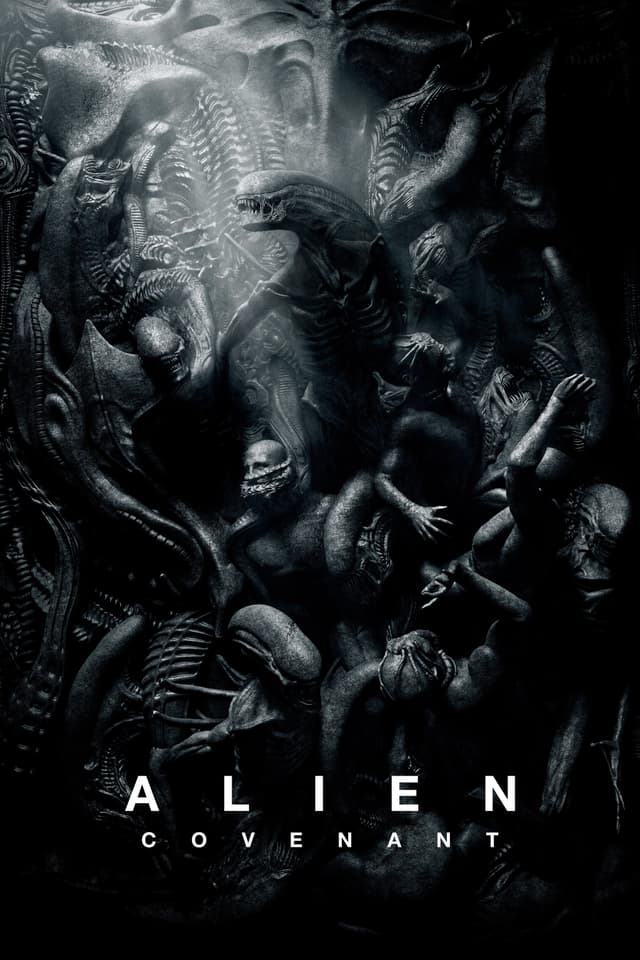
The crew of the colony ship Covenant, bound for a remote planet on the far side of the galaxy, discovers what they think is an uncharted paradise but is actually a dark, dangerous world. Their only escape is through a terrifying journey, with the synthetic David, the lone survivor of the doomed Prometheus expedition, as their unlikely guide.
What Is the Budget of Alien: Covenant (2017)?
Alien: Covenant (2017), directed by Ridley Scott and distributed by 20th Century Fox, was produced on a reported budget of $97,000,000, a modest step up from the $130,000,000 spent on its predecessor Prometheus (2012) once adjusted gross and contingency lines were trimmed. The film served as the second installment in Scott's prequel arc to his 1979 original, continuing the synthetic-led origin story of the Xenomorph while folding in a more conventional crew-in-peril structure that fans of the franchise had been requesting. Fox, Scott Free Productions, Brandywine Productions, and TSG Entertainment co-financed the production as a calculated bridge between the divisive metaphysical reach of Prometheus and a planned third prequel that would have closed the loop into the events of the 1979 film.
The investment reflected a deliberate recalibration. By moving the shoot to Sydney, leaning on Australia's federal Producer Offset, and consolidating creature work at MPC, Fox kept the negative cost roughly $30,000,000 below Prometheus while still committing enough capital for elaborate practical creature builds, large terraforming-ship sets, a New Zealand exterior location block, and Scott's preferred multi-camera coverage. The math assumed Covenant would clear roughly $240,000,000 worldwide to recoup against marketing, a target the film hit almost exactly, leaving little daylight for the studio.
Key Budget Allocation Categories
Covenant's reported $97,000,000 budget was distributed across several core production areas:
- Above-the-Line Talent: Ridley Scott commanded a top-tier director-producer fee, his standard arrangement on Scott Free productions, while Michael Fassbender returned in dual roles as the synthetics David and Walter, taking principal billing and a salary reflecting his post-Prometheus and X-Men: First Class profile. Katherine Waterston, fresh off Fantastic Beasts and Where to Find Them, anchored the human ensemble as Daniels, with Billy Crudup, Danny McBride, Demián Bichir, and Carmen Ejogo filling out the colony-ship crew.
- Sydney Soundstage Build: Principal photography was anchored at Fox Studios Australia in Sydney from April through July 2016. Production designer Chris Seagers, an Alien franchise veteran, oversaw construction of the colony ship Covenant interiors, the lander Tennessee, the engineer city ruins, and David's laboratory complex on multiple soundstages. The scale of the practical sets, including a fully built cargo bay and habitation deck, accounted for a significant share of the build budget.
- New Zealand Exteriors: The film relocated for several weeks to Fiordland and the Milford Sound region of New Zealand's South Island for the planet exterior sequences, including the waterfall arrival, mountain valleys, and engineer-city ridgelines. Helicopter access, alpine logistics, weather coverage, and a full secondary unit added meaningful cost compared with a fully studio-bound shoot.
- Practical Creatures and Animatronics: Odd Studio in Sydney, led by Adam and Lou Elliot-Johns, built the practical Neomorph and Xenomorph puppets, the Facehugger animatronics, the Backburster and Neomorph birth effects, and the silicone makeup for the synthetic injuries. Scott's preference for practical creature performance on set, supplemented rather than replaced by digital work, kept the puppeteering crew and prosthetics department on full strength throughout the shoot.
- Visual Effects: MPC handled the bulk of the visual effects under VFX supervisor Charley Henley, including the digital Xenomorph in extended action sequences, the Engineer city destruction, the holographic ship interiors, and seamless digital extensions of the practical sets. Animal Logic and Industrial Light & Magic contributed additional shots. The final VFX shot count exceeded 1,500.
- Score and Music: Australian composer Jed Kurzel, coming off Macbeth (2015) and Assassin's Creed, scored the film, weaving motifs from Jerry Goldsmith's 1979 Alien score and Marc Streitenfeld's Prometheus themes into a new orchestral and electronic palette. The soundtrack budget covered original composition, orchestra recording in Sydney and London, and clearance of the John Denver and Wagner cues used in marketing and key sequences.
- Marketing Tie-Ins and Viral Campaign: A prologue short, The Crossing, plus the Last Supper and Phobos viral pieces directed by Scott's son Luke Scott, were produced as part of the marketing run-up. These short films, while booked partially against the marketing budget, also pulled from the production line for cast time and stage access during the main shoot.
How Does Alien: Covenant's Budget Compare to Similar Films?
At a reported $97,000,000, Alien: Covenant sits in the mid-range of late-2010s studio sci-fi, smaller than its immediate predecessor but well above the original Alien series. The comparison set illustrates how Scott managed the budget down while the worldwide result drifted lower as well:
- Prometheus (2012): Budget $130,000,000 | Worldwide $403,354,469. Scott's first prequel cost roughly $33,000,000 more and out-grossed Covenant by more than $160,000,000 worldwide, a clear signal that the audience appetite for the prequel arc peaked at the first entry.
- Alien (1979): Budget $11,000,000 | Worldwide $104,931,801. Scott's original cost roughly one ninth of Covenant in nominal dollars and remains the most efficient entry in the franchise on an ROI basis, even before adjusting for inflation.
- Aliens (1986): Budget $18,500,000 | Worldwide $183,316,455. James Cameron's sequel cost less than one fifth of Covenant in nominal dollars and earned roughly 80% of Covenant's worldwide gross, demonstrating how dramatically franchise economics have shifted in the intervening decades.
- Blade Runner 2049 (2017): Budget $185,000,000 | Worldwide $267,667,026. Scott's other 2017 legacy-sequel project, on which he served as producer, cost nearly twice as much and barely cleared Covenant's gross, underlining how unforgiving prestige sci-fi was at the box office that year.
- The Martian (2015): Budget $108,000,000 | Worldwide $630,161,890. Scott's previous space film cost only $11,000,000 more and earned more than 2.6 times Covenant's worldwide haul, illustrating how a crowd-pleasing tone and PG-13 rating outperformed the R-rated Alien prequel arc.
- Life (2017): Budget $58,000,000 | Worldwide $100,544,095. Sony's contemporaneous Alien-adjacent space thriller cost roughly 60% of Covenant and earned less than half its gross, suggesting the genre lane itself was crowded and saturated in spring 2017.
Alien: Covenant Box Office Performance
Alien: Covenant opened on May 19, 2017, taking the number one spot at the domestic box office with $36,160,621 over its opening weekend, ahead of Guardians of the Galaxy Vol. 2 in its third frame and Snatched. International markets opened the same weekend or one week earlier in select territories, contributing another $40,000,000 to the global debut. The film fell sharply in its second weekend, dropping 71% domestically to $10,499,343 amid mixed word of mouth and tough competition from Pirates of the Caribbean: Dead Men Tell No Tales.
Against a reported production budget of $97,000,000, the film needed approximately $240,000,000 in worldwide gross to reach profitability when accounting for marketing and distribution costs. Here is the financial breakdown:
Box Office Breakdown
Alien Covenant

Alien: Covenant returned approximately $1.16 in worldwide gross for every $1 invested when measured against total estimated production and marketing spend, placing it at the borderline of theatrical profitability for a Fox-scale tentpole. The domestic share of the gross was $74,262,031 against an international share of $166,629,732, a 31/69 split that confirmed the prequel arc travelled better than it played in North America but did not deliver the global scale the studio modelled.
The soft result prompted Fox to pause the planned third prequel, with Scott publicly acknowledging in 2017 and 2018 that another Alien film was contingent on Covenant's home-video performance. The subsequent Disney acquisition of 21st Century Fox, completed in March 2019, effectively ended the Scott-led prequel cycle, with the franchise eventually relaunching under Fede Álvarez and Disney with Alien: Romulus (2024).
Alien: Covenant Production History
Development on a Prometheus sequel began almost immediately after the 2012 film's release. Initial drafts by Jack Paglen positioned the project under the working title Paradise and focused heavily on David, the synthetic played by Michael Fassbender. Michael Green and John Logan rewrote the screenplay through 2015 with Scott's direction to bring the prequel arc closer to the recognizable Alien template, increasing the Xenomorph presence and adding a stranded-colony-ship structure. The final screenplay credit went to John Logan and Dante Harper, with story by Jack Paglen and Michael Green.
Casting Katherine Waterston as Daniels in early 2016, alongside the return of Fassbender in dual synthetic roles, formed the spine of the ensemble. Billy Crudup signed on as the doomed colony captain Oram, with Danny McBride as the pilot Tennessee, and Demián Bichir, Carmen Ejogo, Amy Seimetz, Jussie Smollett, Callie Hernandez, and Benjamin Rigby filling out the supporting crew. James Franco shot a brief role as Branson, the colony ship's original captain who dies in the opening minutes.
Principal photography ran from April 4 to July 19, 2016 at Fox Studios Australia in Sydney, anchored by the federal Producer Offset and the New South Wales state PISP grant. The unit then relocated to New Zealand's South Island for several weeks of exterior photography in Fiordland and the Milford Sound region, including the waterfall arrival sequence, the mountain valley landings, and the destroyed Engineer city ridgelines. Helicopter logistics, alpine weather coverage, and a full secondary unit anchored the location work.
Cinematographer Dariusz Wolski, returning from Prometheus and The Martian, shot the film on Red Weapon 8K Vista Vision and Arri Alexa 65 cameras. Production designer Chris Seagers built the Covenant ship interiors, the lander Tennessee, and David's laboratory on Sydney stages, while Odd Studio handled the practical Neomorph and Xenomorph creature builds. Composer Jed Kurzel was brought in late in post-production to score the film, weaving Jerry Goldsmith's 1979 Alien motifs and Marc Streitenfeld's Prometheus themes into the new material.
Post-production ran through late 2016 and into the first quarter of 2017, with VFX work consolidated at MPC under supervisor Charley Henley. Scott shot a prologue short, The Crossing, plus the Last Supper viral piece directed by Luke Scott, as part of the marketing rollout. The original May 4, 2017 release date was shifted to May 19, 2017 to give the marketing campaign additional runway after Covenant's release window collided with Guardians of the Galaxy Vol. 2.
Awards and Recognition
Alien: Covenant received targeted genre and craft recognition. At the 44th Saturn Awards, the film earned three nominations: Best Science Fiction Film, Best Production Design (Chris Seagers), and Best Make-Up (Odd Studio and Conor O'Sullivan), though it did not convert any of the three into wins, losing Best Science Fiction Film to Blade Runner 2049.
The film also received a nomination at the 16th Visual Effects Society Awards for Outstanding Created Environment in a Photoreal Feature for the Engineer city sequence, and Odd Studio's creature and prosthetic work was longlisted for the Academy Award for Best Makeup and Hairstyling shortlist before falling off the final five. At the Empire Awards, Michael Fassbender received a Best Actor nomination for his dual role as David and Walter.
Major Oscar, BAFTA, and Golden Globe ceremonies passed Covenant over entirely, with the 2018 awards calendar dominated by Blade Runner 2049 and The Shape of Water in the genre and visual craft categories. Scott's prequel arc has nevertheless attracted sustained critical reappraisal in subsequent years, particularly for Fassbender's synthetic performance and the David-as-Frankenstein thematic through-line.
Critical Reception
Alien: Covenant received mixed reviews on release. The film holds a 65% approval rating on Rotten Tomatoes based on 412 critic reviews, with a critical consensus that called it visually arresting but tonally uneven. On Metacritic, the film scored 65 out of 100, indicating generally favorable reviews. Audiences surveyed by CinemaScore gave the film a C+, a notable downgrade from the B given to Prometheus and a sign that mainstream viewers were less satisfied with the prequel direction than critics were.
Critics broadly praised Fassbender's dual performance, the production design, Dariusz Wolski's cinematography, and the practical creature work, while objecting to the script's thinly drawn human ensemble, the recycled crew-in-peril beats, and the abrupt third-act twist. Variety's Owen Gleiberman called the film "a sleeker, scarier ride than Prometheus, even if it doesn't answer the cosmic questions that picture raised," while The New York Times' Manohla Dargis wrote that "Mr. Scott has lost none of his eye for the elegantly horrific, even when the screenplay is letting him down." The Guardian's Peter Bradshaw awarded four stars and called it "a real return to form."
Genre press was sharply divided. IGN praised the practical creature work and the David subplot while flagging the formulaic crew dynamics, and io9 called the film "the most David-centric Alien movie possible, which is both its triumph and its trap." The mixed reception, combined with the borderline box office, has cemented Covenant's reputation as the pivot point at which Scott's prequel cycle stalled, with subsequent franchise entries under Disney electing to abandon the Engineer-and-David thread rather than complete it.
Frequently Asked Questions
How much did it cost to make Alien: Covenant (2017)?
The reported production budget was $97,000,000, roughly $33,000,000 below the $130,000,000 spent on its predecessor Prometheus (2012). 20th Century Fox co-financed the production with Scott Free Productions, Brandywine Productions, and TSG Entertainment, anchored by the Australian federal Producer Offset and the New South Wales PISP grant.
How much did Alien: Covenant earn at the box office?
The film grossed $74,262,031 domestically and $166,629,732 internationally, for a worldwide total of $240,891,763. It opened to $36,160,621 in the United States, finishing first on its May 19, 2017 opening weekend.
Was Alien: Covenant a box office success?
Alien: Covenant landed at the borderline of theatrical profitability. Against a $97,000,000 production budget and an estimated $90,000,000 to $110,000,000 in marketing spend, the film returned approximately $1.16 in worldwide gross for every $1 invested. It became profitable only after home video, premium TV, and ancillary revenue, and the soft theatrical result prompted Fox to pause the planned third prequel.
Who directed Alien: Covenant?
Ridley Scott directed the film, returning to the franchise he created with Alien (1979). It was Scott's second prequel after Prometheus (2012) and his second collaboration with Michael Fassbender on the Alien series.
Where was Alien: Covenant filmed?
Principal photography took place at Fox Studios Australia in Sydney from April 4 to July 19, 2016, anchored by the federal Producer Offset and the New South Wales state PISP grant. The unit then relocated to New Zealand's South Island for several weeks of exterior photography in Fiordland and the Milford Sound region.
How does Alien: Covenant compare to Prometheus?
Alien: Covenant cost $97,000,000 against Prometheus' $130,000,000 budget, a roughly 25% reduction. Covenant grossed $240,891,763 worldwide while Prometheus earned $403,354,469, meaning Covenant earned roughly 60% of its predecessor's gross against 75% of the budget. The drop confirmed that audience appetite for the prequel arc peaked with the first entry.
Who plays David and Walter in Alien: Covenant?
Michael Fassbender plays both David, the synthetic from Prometheus, and Walter, the newer-model synthetic aboard the colony ship Covenant. The dual role was the creative spine of the film and earned Fassbender a Best Actor nomination at the Empire Awards.
Did Alien: Covenant get a sequel?
No direct sequel was made. Fox paused the planned third Scott-directed prequel after Covenant's soft theatrical result, and the subsequent Disney acquisition of 21st Century Fox in March 2019 effectively ended the Scott-led prequel cycle. The franchise eventually relaunched under Fede Álvarez and Disney with Alien: Romulus (2024).
What did critics think of Alien: Covenant?
The film received mixed reviews, with a 65% approval rating on Rotten Tomatoes (based on 412 critics) and a 65 out of 100 score on Metacritic. Audiences gave it a C+ CinemaScore, a downgrade from Prometheus' B. Critics praised Michael Fassbender's dual performance, the practical creature work, and Dariusz Wolski's cinematography but objected to the thinly drawn human ensemble and recycled crew-in-peril beats.
Did Alien: Covenant win any awards?
Alien: Covenant received three Saturn Award nominations (Best Science Fiction Film, Best Production Design, Best Make-Up) but did not win any. It also earned a Visual Effects Society nomination for Outstanding Created Environment and a Best Actor nomination for Michael Fassbender at the Empire Awards. The major Oscar, BAFTA, and Golden Globe ceremonies passed the film over.
Filmmakers
Alien Covenant

Official Trailer
Build budgets like this one in Saturation
Start from an industry-standard feature film template, import the schedule and rates you already have, and let the cost report keep itself current as you spend. Real-time collaboration, no spreadsheets.