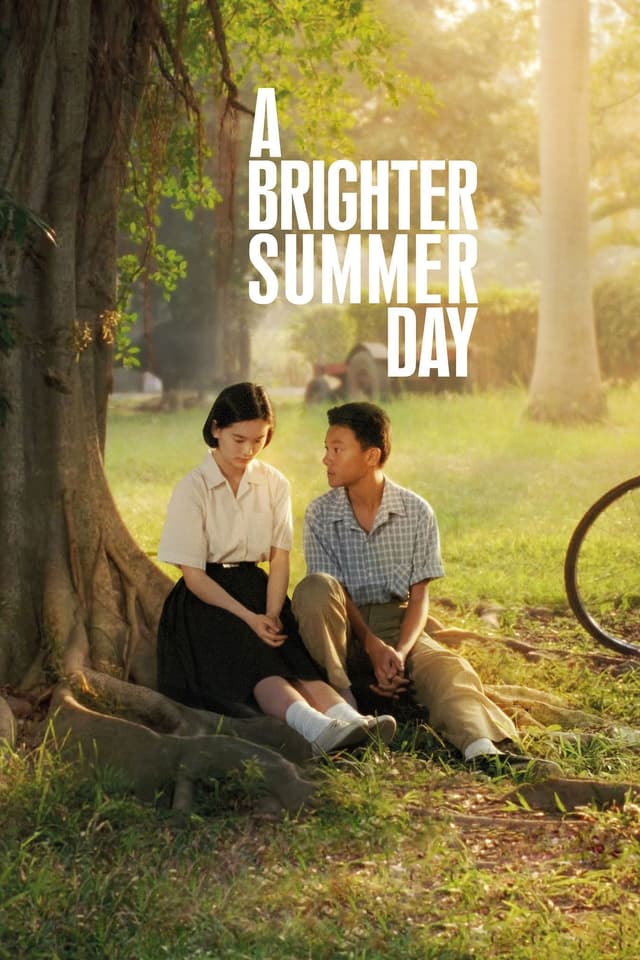
A Brighter Summer Day Budget
Updated
Synopsis
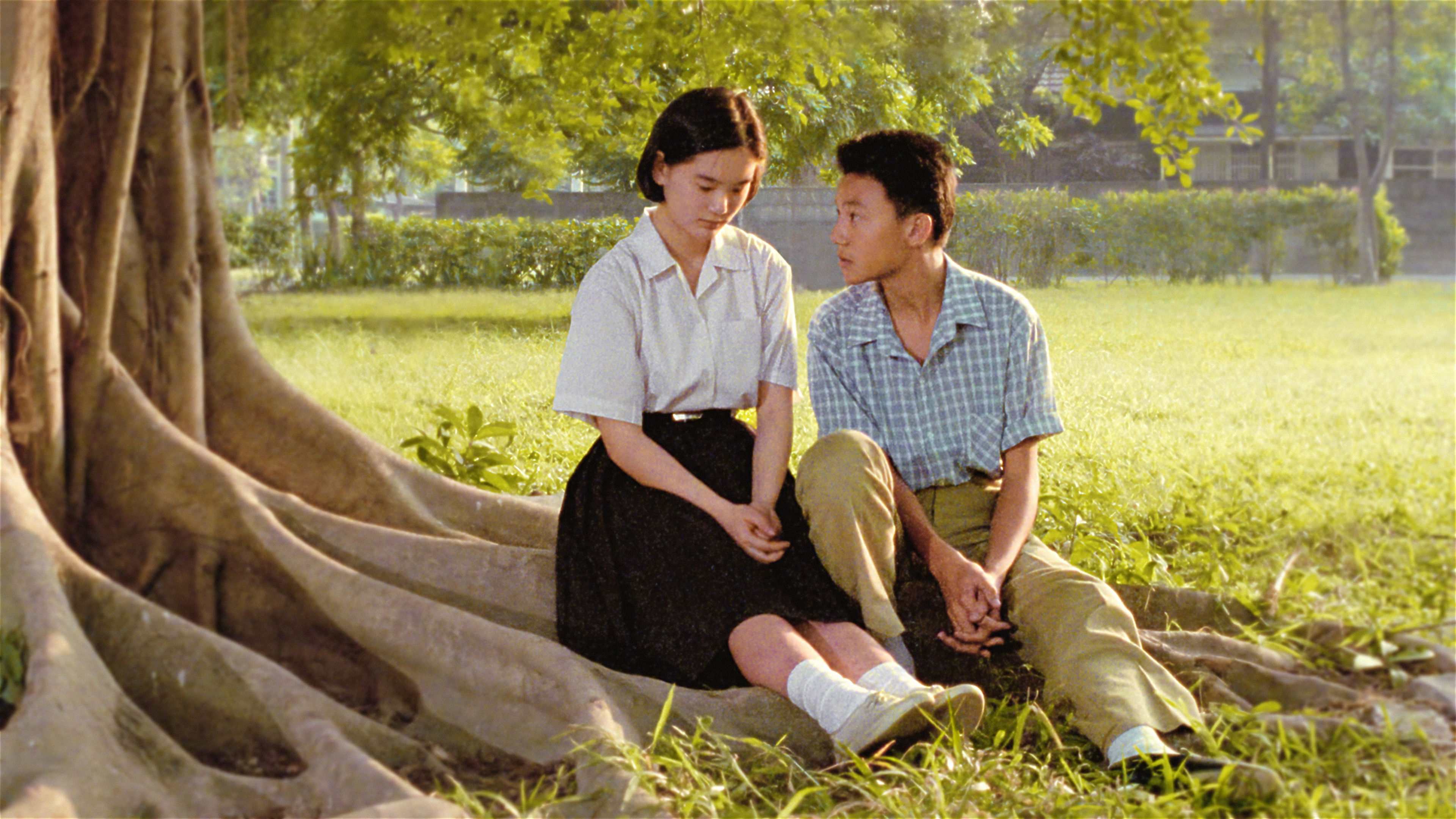
In early 1960s Taipei, the son of a recently exiled Mainland Chinese family enters middle school and falls in with two rival youth gangs. As his father loses standing under political pressure and the boy navigates first love with the elusive Ming, an act of violence draws on a real murder that scarred the era.
What Is the Budget of A Brighter Summer Day (1991)?
A Brighter Summer Day (1991), directed by Edward Yang, was produced on a budget of approximately $2,000,000, an exceptionally high figure for an independent Taiwanese feature of its era. The film was financed by Yang Te-chang Films, with additional production support from Jane Balfour Films and a network of Taiwanese investors who backed the four-year production cycle. The 237-minute final cut, drawn from substantially more footage shot during principal photography, represented one of the most ambitious independently financed Taiwanese productions of the early 1990s.
The budget reflected the necessity of period reconstruction, an ensemble of more than 100 speaking roles (most filled by non-professional actors recruited from Taipei schools), and an extended principal photography schedule. Yang shot the film over nearly a year, with additional reshoots and re-staging across the multi-year post-production cycle. The production functioned as a community endeavor as much as a conventional film production, with cast and crew turnover, shared resources with Hou Hsiao-hsien's parallel productions, and the constant financial improvisation typical of New Taiwan Cinema.
Key Budget Allocation Categories
A Brighter Summer Day's approximate $2,000,000 budget was distributed across these production areas:
- Period Reconstruction: The recreation of early 1960s Taipei, including school interiors, gang hideouts, family apartments, government offices, and street locations, drove significant production design spend. Yang and production designer Yu Wei-yan researched period detail across photographs, oral histories, and surviving 1960s materials.
- Above-the-Line Talent: Casting more than 100 speaking roles primarily from Taipei schools rather than professional actors required extensive workshopping and training. Lead Chang Chen, in his feature debut at age 14, alongside a cast that included his sister Chang Han and father Chang Kuo-chu, was compensated at student-actor rates that kept above-the-line spend manageable.
- Extended Production Schedule: The nearly year-long principal photography and multi-year post-production cycle drove sustained labor and equipment costs. Yang's working method, including substantial reshoots and re-staging of scenes, meant that the production never operated on a conventional fixed schedule.
- Cinematography: Cinematographers Hong-i Chang and Long-yu Chang worked across the extended production, with Yang's characteristic long-take, mid-distance approach requiring careful lighting and blocking on every scene. The widescreen cinematography drove substantial film stock, lighting, and grip costs.
- Music and Score: The soundtrack covered original score composition and licensing of period American and Taiwanese pop songs, including the Cliff Richard hit that gives the film its title and the period staples performed by the film's ensemble youth bands.
- Editing and Post-Production: Yang assembled the 237-minute final cut across an extended post-production cycle, with multiple test screenings and reconfigurations contributing to the eventual definitive version.
How Does A Brighter Summer Day's Budget Compare to Similar Films?
A Brighter Summer Day sits in the upper tier of independent Taiwanese and East Asian art cinema of its era:
- A City of Sadness (1989): Budget approximately $1,500,000 | Worldwide N/A. Hou Hsiao-hsien's contemporaneous Taiwanese historical epic, which won the Golden Lion at Venice 1989, offers the closest direct comparison and operated at similar scale.
- Raise the Red Lantern (1991): Budget approximately $2,000,000 | Worldwide $2,603,061. Zhang Yimou's same-year Chinese-Hong Kong-Taiwanese co-production offers a directly comparable East Asian art cinema case at similar scale.
- Yi Yi (2000): Budget approximately $4,000,000 | Worldwide $1,300,000. Yang's subsequent and final completed feature cost approximately twice as much and earned the Cannes Best Director prize.
- In the Mood for Love (2000): Budget approximately $20,000,000 | Worldwide $14,800,000. Wong Kar-wai's contemporaneous masterpiece operated at substantially higher scale across its multi-year production cycle.
A Brighter Summer Day Box Office Performance
A Brighter Summer Day premiered at the 1991 Tokyo International Film Festival, where it won the FIPRESCI Prize and the Special Jury Prize, before a Taiwanese theatrical release later that year. The film received only limited theatrical distribution outside East Asia during its initial release, screening primarily at festivals and at art-house cinemas in major Western markets. Comprehensive worldwide box office data is not separately reported.
Against the approximate $2,000,000 production budget, the financial breakdown reflects the limited art-house distribution model:
Box Office Breakdown
A Brighter Summer Day

The film's commercial story is dominated by its long-tail value through restoration and Criterion Collection release rather than its initial theatrical run. Janus Films and the World Cinema Project undertook a comprehensive 4K digital restoration completed in 2009, with subsequent theatrical and home video releases that expanded the film's audience well beyond its 1991 release window.
A Brighter Summer Day is now widely regarded as one of the greatest films of the 1990s, with the 2012 Sight & Sound Critics' Poll ranking it among the highest-placing films of its decade and the 2022 poll placing it at number 84 on the all-time list. The film's cultural and critical standing has compounded steadily since its initial release.
A Brighter Summer Day Production History
Edward Yang began developing the screenplay in the late 1980s, drawing on his own childhood memories of early 1960s Taipei and the real 1961 murder of 14-year-old Liu Min by a fellow middle school student, an event that had shocked Taiwanese society and that Yang treated as the historical anchor of the narrative. Co-writers Yan Hong-ya, Yang Shun-ching, and Lai Ming-tang collaborated on the screenplay.
Principal photography took place across nearly a year in Taiwan, primarily in Taipei, with location work at recreated period schools, family apartments, and youth gang hideouts. Yang cast more than 100 speaking roles primarily from Taipei schools, including 14-year-old Chang Chen in his feature debut and Chang's sister Chang Han and father Chang Kuo-chu in family roles.
Yang's working method involved extensive rehearsal and re-staging, with substantial reshoots throughout the production. Post-production unfolded across multiple years, with Yang assembling the 237-minute final cut from substantially more footage. The Tokyo International Film Festival 1991 premiere came at the end of a four-year production and post-production cycle.
Awards and Recognition
A Brighter Summer Day won the FIPRESCI Prize and the Special Jury Prize at the 1991 Tokyo International Film Festival. The film won the Best Feature Film and Best Original Screenplay awards at the 1991 Golden Horse Awards, the most prestigious honors in Chinese-language cinema. It received additional recognition at the Singapore International Film Festival and Asian Pacific Film Festival.
Since its initial release, the film has been the subject of extensive critical retrospectives. It featured prominently on the 2012 Sight & Sound Critics' Poll and ranked at number 84 on the 2022 poll, alongside the BFI's ongoing rankings of Asian cinema masterpieces. The Criterion Collection released a comprehensive Blu-ray edition in 2016 following the World Cinema Project restoration.
Critical Reception
A Brighter Summer Day has received consistently extraordinary critical praise since its 1991 release and the 2009 restoration. The film holds a 100% approval rating on Rotten Tomatoes based on 47 critic reviews following the restoration release, with a critical consensus that called it an epic of youth, history, and quiet devastation. The film has appeared on virtually every major critic's greatest-films list across the 2010s and 2020s.
Critics have praised Yang's long-take cinematography, the ensemble of non-professional young actors, the multi-layered historical and political subtext linking the 1960s Mainland Chinese exile community to the gang violence of the period, and what J. Hoberman of the Village Voice described as "a vision of adolescence and history so complete it transcends conventional film criticism." A.O. Scott of the New York Times called the film "one of the great films of the last 50 years," while The Guardian's Peter Bradshaw described it as "an absolute masterpiece."
Academic and critical retrospectives have positioned the film as the central work of New Taiwan Cinema alongside Hou Hsiao-hsien's A City of Sadness, with Yang's detailed attention to mid-twentieth-century Taipei and his political acuity treated as definitive contributions to East Asian cinema history.
Frequently Asked Questions
How much did it cost to make A Brighter Summer Day (1991)?
The production budget was approximately $2,000,000, an exceptionally high figure for an independent Taiwanese feature of its era. Yang Te-chang Films financed the production with additional support from Jane Balfour Films and a network of Taiwanese investors who backed the four-year production cycle.
How long is A Brighter Summer Day?
The definitive cut runs 237 minutes (three hours and 57 minutes). Edward Yang assembled the final cut from substantially more footage shot during the nearly year-long principal photography schedule.
Who directed A Brighter Summer Day?
Edward Yang directed the film. Yang was one of the central figures of New Taiwan Cinema, alongside Hou Hsiao-hsien, and was active across the 1980s and 1990s before his death in 2007 at age 59 from colon cancer.
Is A Brighter Summer Day based on a true story?
Yes. The film is based on the real 1961 murder of 14-year-old Liu Min by a fellow middle school student in Taipei, an event that shocked Taiwanese society. Yang dramatized the case in the context of the gangs, schools, and exiled Mainland Chinese families of early 1960s Taipei.
Where was A Brighter Summer Day filmed?
Principal photography took place across nearly a year in Taipei, Taiwan, with location work at recreated period schools, family apartments, and youth gang hideouts. The production drew on Yang's own memories of growing up in Taipei in the early 1960s.
Who plays the lead in A Brighter Summer Day?
Chang Chen plays the lead role of Si'r in his feature debut at age 14. Chang would go on to become one of the most prominent East Asian actors of his generation, with later roles in Wong Kar-wai's Happy Together (1997), Ang Lee's Crouching Tiger Hidden Dragon (2000), and Hou Hsiao-hsien's The Assassin (2015).
Is A Brighter Summer Day on the Criterion Collection?
Yes. The Criterion Collection released a comprehensive Blu-ray edition in 2016 following the World Cinema Project's 4K digital restoration. The release includes extensive supplementary material on the film's production and historical context.
What language is A Brighter Summer Day in?
The film is primarily in Mandarin and Taiwanese Hokkien, with some Cantonese and English. The multilingual texture reflects the complex linguistic landscape of early 1960s Taipei, including the exiled Mainland Chinese community at the center of the narrative.
What is the meaning of the title A Brighter Summer Day?
The English title is taken from the lyrics of the Elvis Presley song "Are You Lonesome Tonight?" (the line "On a brighter summer day"), which the youth gang members listen to in the film. The Chinese title, 牯嶺街少年殺人事件, translates literally as "The Youth Murder Incident on Guling Street," referring to the actual neighborhood where the historical murder occurred.
What did critics think of A Brighter Summer Day?
The film has received consistently extraordinary critical praise since its 1991 release, with a 100% approval rating on Rotten Tomatoes based on 47 critic reviews. It has appeared on virtually every major critic's greatest-films list across the 2010s and 2020s, including the 2022 Sight & Sound Critics' Poll at number 84 on the all-time list.
Filmmakers
A Brighter Summer Day

Official Trailer
Build budgets like this one in Saturation
Start from an industry-standard feature film template, import the schedule and rates you already have, and let the cost report keep itself current as you spend. Real-time collaboration, no spreadsheets.