Star Wars Budget
 AdventureActionScience Fiction2h 1m
업데이트
Synopsis
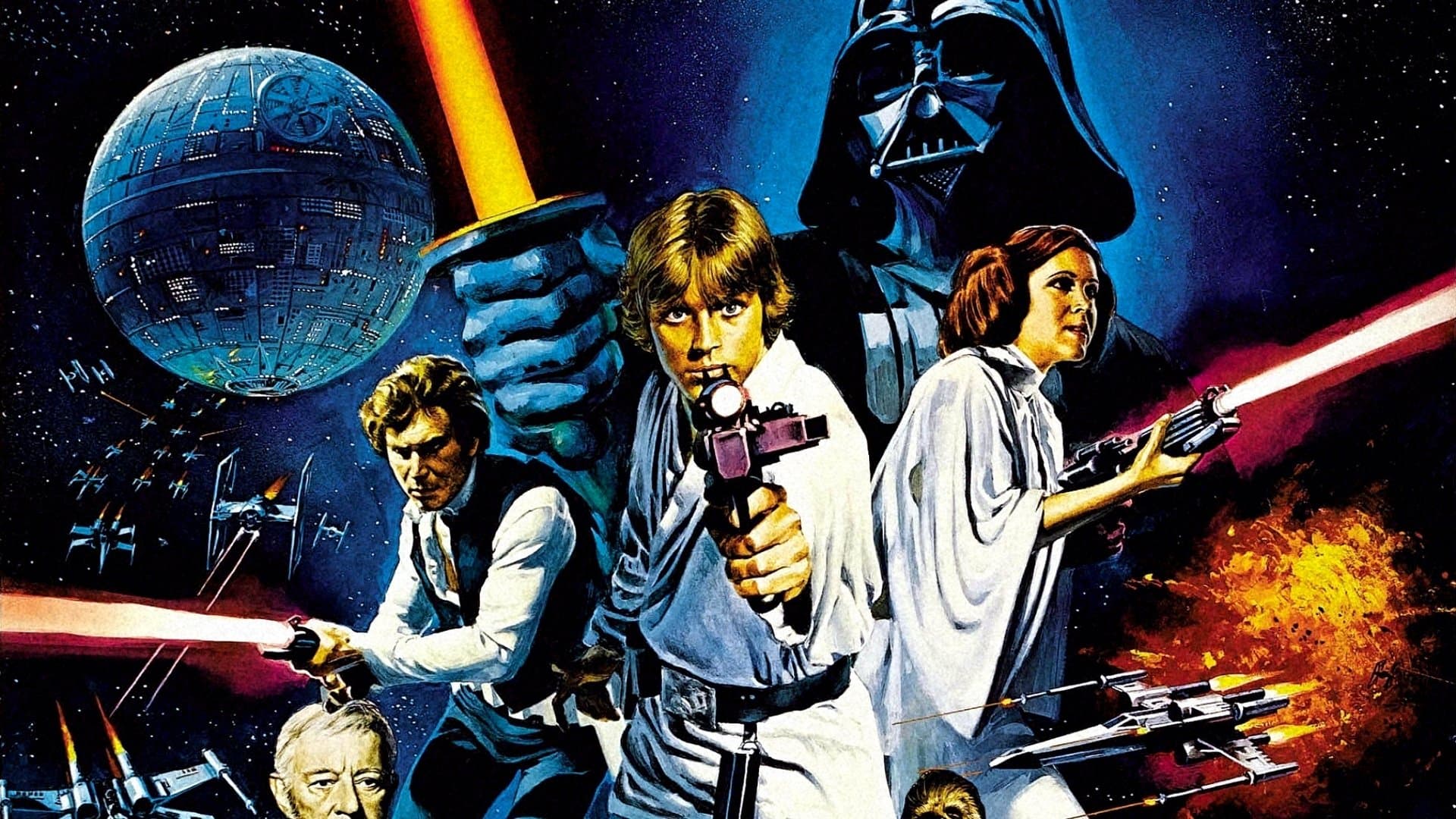
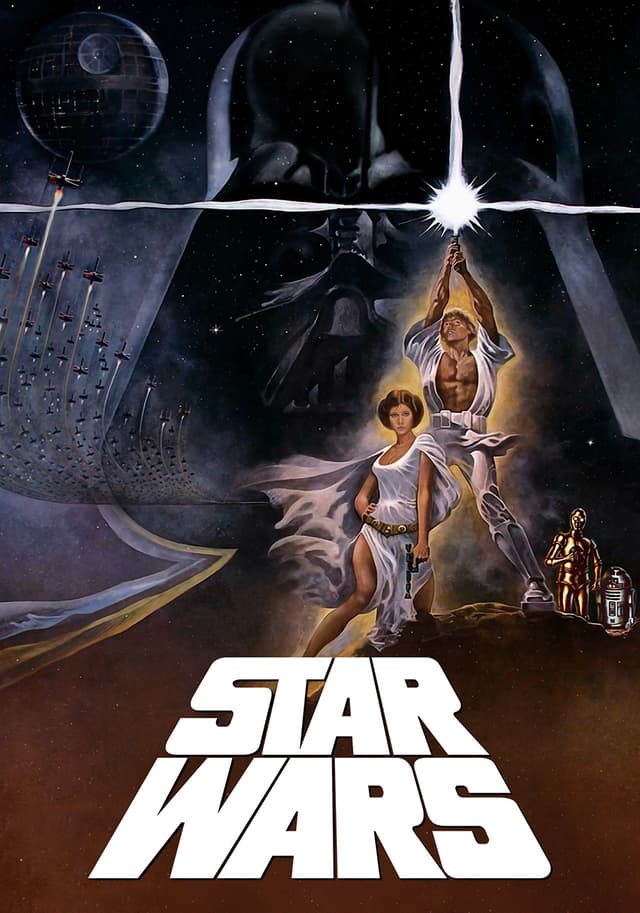
Princess Leia is captured and held hostage by the evil Imperial forces in their effort to take over the galactic Empire. Venturesome Luke Skywalker and dashing captain Han Solo team together with the loveable robot duo R2-D2 and C-3PO to rescue the beautiful princess and restore peace and justice in the Empire.
What is the budget of Star Wars?
"Star Wars," an adventure released in 1977, was directed by George Lucas and stars Mark Hamill, Harrison Ford. The production budget was $11,000,000, placing it in the low-budget range for adventure productions of the 1970s.
Key Budget Allocation Categories
While specific budget breakdowns are not publicly available, typical cost drivers for an adventure production like this include:
- Stunts, Action Sequences & Visual Effects: Action films allocate a substantial portion of their budget to choreographing and executing practical stunts, pyrotechnics, and CGI-heavy sequences.
- Above-the-Line Talent (Cast & Director): A-list talent commands significant upfront fees plus backend participation.
- Production Design, Sets & Locations: Action films frequently require multiple international shooting locations, large-scale set construction, vehicle acquisitions and modifications, and specialized equipment , all of which drive production costs well above those of dialogue-driven genres.
- Writing: Since commencing the writing process in January 1973, Lucas wrote four different screenplays for Star Wars, searching for "just the right ingredients, characters and storyline." By May 1974, he had expanded the original treatment into a full, 132-page rough draft, which included elements such as the Sith, the Death Star, and a general named Annikin Starkiller.
What were the major cost factors in Star Wars?
Several factors contributed to the overall production costs of "Star Wars."
- Stunts: Stunts, Action Sequences & Visual Effects is one of the primary cost drivers in adventure productions of this scale.
- Above-the-Line Talent (Cast: Above-the-Line Talent (Cast & Director) is one of the primary cost drivers in adventure productions of this scale.
- Production Design: Production Design, Sets & Locations is one of the primary cost drivers in adventure productions of this scale.
How Does Star Wars's Budget Compare to Similar Films?
At $11,000,000, Star Wars sits in the low-budget range. Here is how it compares to productions with a similar budget:
- Forsaken (2015): Budget $11,000,000
- Barry Lyndon (1975): Budget $11,000,000, Worldwide Gross $31,500,000
- Alien (1979): Budget $11,000,000, Worldwide Gross $104,931,801
- The Lighthouse (2019): Budget $11,000,000, Worldwide Gross $18,262,464
- Gremlins (1984): Budget $11,000,000, Worldwide Gross $153,083,102
The median budget for wide-release adventure films in the era ranges from $30 to 80M for mid-budget to $150M+ for tentpoles.
Star Wars Box Office Performance
"Star Wars" earned $460,998,507 domestically and $775,398,007 worldwide at the box office. Against a production budget of $11,000,000, the film performed strongly at the box office.
A film typically needs to earn approximately twice its production budget to cover marketing and distribution costs. For "Star Wars," that break-even threshold was roughly $22,000,000. With worldwide earnings of $775,398,007, the film cleared that threshold comfortably.
Box Office Breakdown
Star Wars

At 6949.1%, "Star Wars" earned roughly $70.49 for every $1 invested in production.
Star Wars Production History
Since commencing the writing process in January 1973, Lucas wrote four different screenplays for Star Wars, searching for "just the right ingredients, characters and storyline." By May 1974, he had expanded the original treatment into a full, 132-page rough draft, which included elements such as the Sith, the Death Star, and a general named Annikin Starkiller. He then changed Starkiller to an adolescent boy, and shifted the general,who came from a family of dwarfs,into a supporting role. Lucas envisioned the Corellian smuggler, Han Solo, as a large, green-skinned monster with gills.
Lucas had a preference for casting unknown or relatively unknown actors, which led him to select Mark Hamill and Carrie Fisher for leading roles. Jodie Foster was offered the role, but turned it down because she was under contract with Disney. Koo Stark was also considered for Leia, but was instead cast as Luke's friend Camie Marstrap, a character that was eventually cut from the film.
In 1975, Lucas founded the visual effects company Industrial Light & Magic (ILM) after discovering that Fox's visual effects department had been shut down. ILM began its work on Star Wars in a warehouse in Van Nuys, California. Most of the visual effects used pioneering digital motion control photography developed by John Dykstra and his team, which created the illusion of size by employing small models and slowly moving cameras.
Awards and Recognition
Won 6 Oscars. 70 wins & 31 nominations total
- BAFTA Award for Best Original Music (32nd British Academy Film Awards)
- Saturn Award for Best Director (5th Saturn Awards)
- Saturn Award for Best Science Fiction Film (5th Saturn Awards)
- Saturn Award for Best Make-up (5th Saturn Awards)
- Saturn Award for Best Special Effects (5th Saturn Awards)
- Special Achievement Academy Award: Ben Burtt
- Saturn Award for Best Writing (5th Saturn Awards)
- Academy Award for Best Sound: Bob Minkler (50th Academy Awards)
자주 묻는 질문
How much did it cost to make Star Wars (1977)?
The production budget was $11,000,000, covering principal photography, cast and crew salaries, locations, sets, post-production, and music. Marketing and distribution (P&A) costs are estimated at an additional $5,500,000 - $8,800,000, bringing the total studio investment to approximately $16,500,000 - $19,800,000.
How much did Star Wars (1977) earn at the box office?
Star Wars grossed $460,998,507 domestic, $314,399,500 international, totaling $775,398,007 worldwide.
Was Star Wars (1977) profitable?
Yes. Against a production budget of $11,000,000 and estimated total costs of ~$27,500,000, the film earned $775,398,007 theatrically - a 6949% ROI on production costs alone.
What were the biggest costs in producing Star Wars?
The primary cost drivers were above-the-line talent (Mark Hamill, Harrison Ford, Carrie Fisher); visual effects, practical stunts, and A-list talent compensation.
How does Star Wars's budget compare to similar adventure films?
At $11,000,000, Star Wars is classified as a low-budget production. The median budget for wide-release adventure films in the era ranges from $30 - 80M for mid-budget to $150M+ for tentpoles. Comparable budgets: Forsaken (2015, $11,000,000); Barry Lyndon (1975, $11,000,000); Alien (1979, $11,000,000).
Did Star Wars (1977) go over budget?
There are no widely reported accounts of significant budget overruns for this production. However, studios rarely disclose precise budget overrun figures publicly. The reported production budget reflects the final estimated cost.
What was the return on investment (ROI) for Star Wars?
The theatrical ROI was 6949.1%, calculated as ($775,398,007 − $11,000,000) ÷ $11,000,000 × 100. This measures gross revenue against production budget only - it does not account for P&A or exhibitor shares.
What awards did Star Wars (1977) win?
Won 6 Oscars. 70 wins & 31 nominations total.
Who directed Star Wars and who were the key crew members?
Directed by George Lucas, written by George Lucas, shot by Gilbert Taylor, with music by John Williams, edited by Paul Hirsch, Marcia Lucas.
Where was Star Wars filmed?
Star Wars was filmed in United States of America. In 1975, Lucas founded the visual effects company Industrial Light & Magic (ILM) after discovering that Fox's visual effects department had been shut down. ILM began its work on Star Wars in a warehouse in Van Nuys, California.
Filmmakers
Star Wars

Official Trailer
Saturation에서 이런 예산을 만들어 보세요
업계 표준 장편 영화 템플릿으로 시작해 이미 가진 일정과 요율을 가져오고, 지출과 함께 비용 보고서가 자동으로 최신 상태를 유지하게 하세요. 실시간 협업, 스프레드시트 없이.