Gladiator II Budget
 ActionAdventureDrama2h 28m
업데이트
Synopsis
Years after witnessing the death of Maximus in the Colosseum as a child, Lucius Verus has been living in Numidia under an assumed identity. When Roman soldiers conquer his adopted homeland, Lucius is enslaved and forced into the gladiatorial arena, where he catches the attention of Macrinus, a former slave turned powerful gladiator owner with political ambitions. As Lucius fights his way through the Colosseum, he uncovers truths about his lineage and becomes entangled in a dangerous plot to reshape the Roman Empire.
What Is the Budget of Gladiator II?
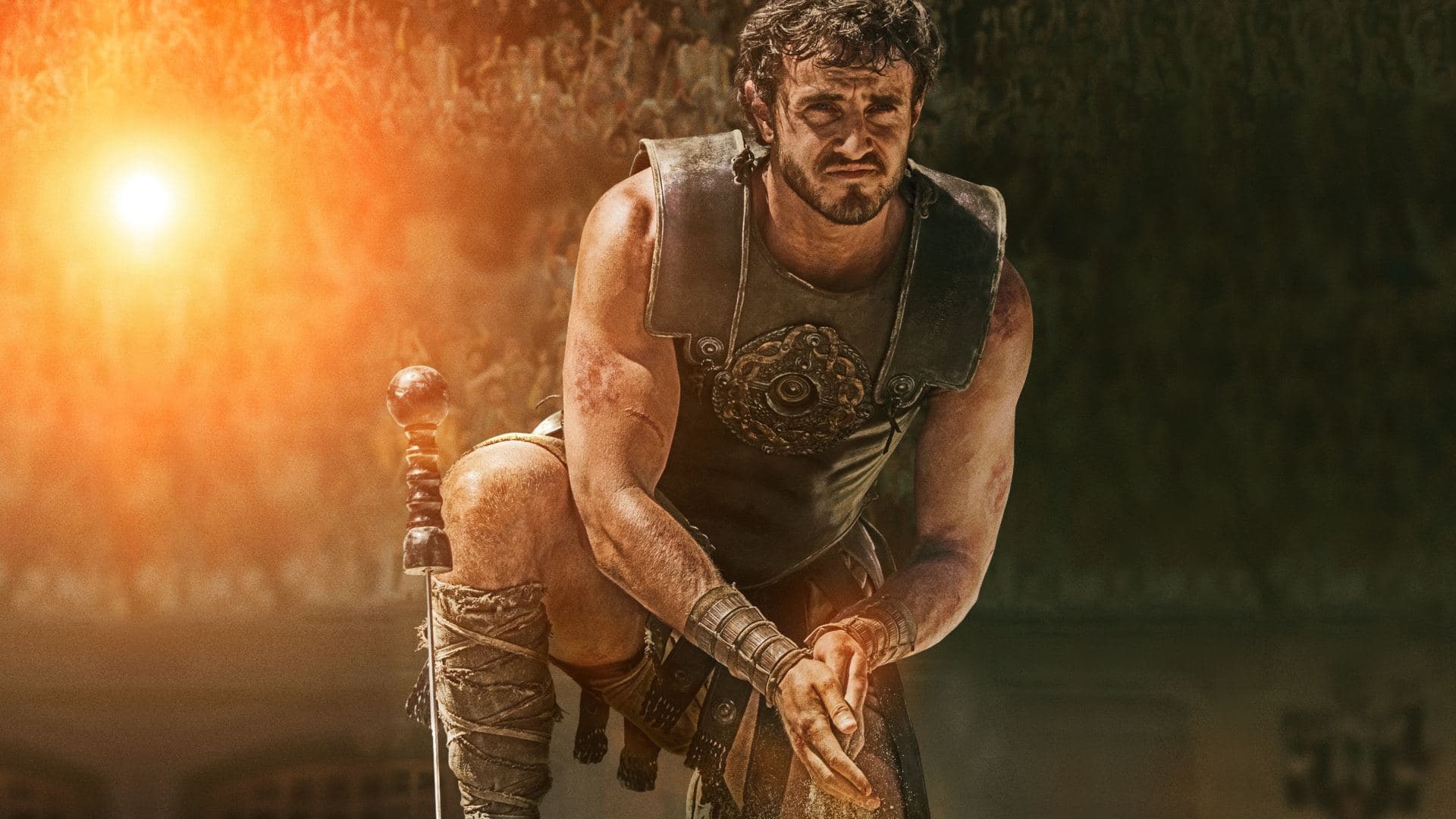
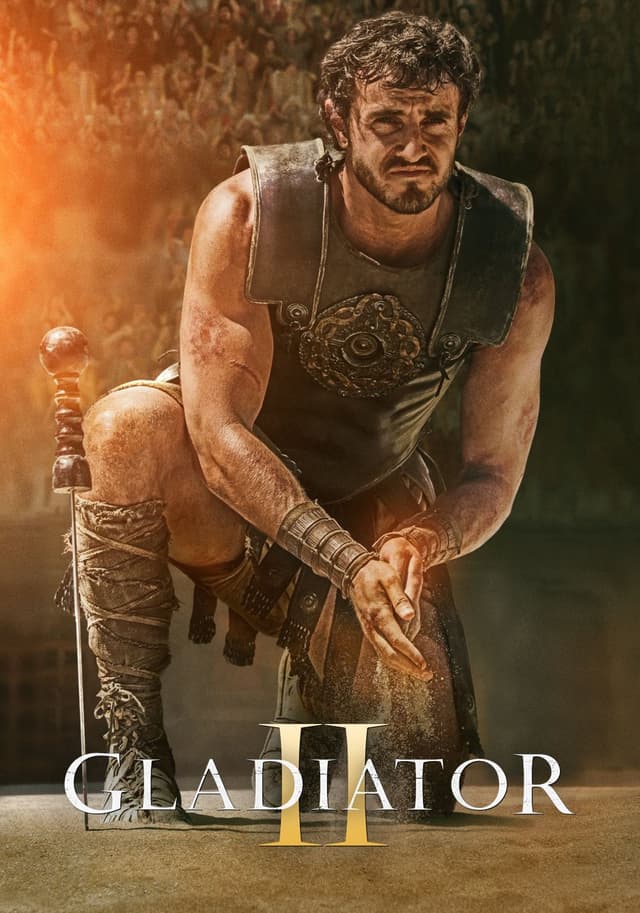
Gladiator II (2024), directed by Ridley Scott and released by Paramount Pictures, was produced on a budget of $250 million. The long-awaited sequel to Scott's 2000 Academy Award-winning epic arrived 24 years after the original, following Lucius Verus (played by Paul Mescal), the grown son of Maximus' (Russell Crowe) love interest Lucilla. The production represents one of the most expensive historical epics ever made, reflecting both the scale of Scott's vision and the practical demands of recreating ancient Rome for a modern audience.
The budget was driven by massive practical set construction in Morocco and Malta, a large ensemble cast headlined by Paul Mescal, Pedro Pascal, Denzel Washington, and Connie Nielsen (returning from the original), extensive battle and gladiatorial sequences, and the considerable visual effects required to bring ancient Rome to life. Ridley Scott's insistence on practical filmmaking combined with digital augmentation, rather than purely CGI environments, contributed to the high cost.
Key Budget Allocation Categories
The $250 million budget was distributed across several major production areas:
- Cast and Above-the-Line Talent: Denzel Washington's involvement as Macrinus, a powerful gladiator owner with political ambitions, represented a major casting coup and significant financial commitment. Paul Mescal, transitioning from independent cinema to blockbuster leading man, Pedro Pascal, and the returning Connie Nielsen formed an expensive ensemble. Ridley Scott's directing fee and David Scarpa's screenwriting costs added to the above-the-line total.
- Practical Set Construction: The production built large-scale practical sets for the Roman Colosseum and surrounding environments in both Morocco and Malta. Scott's preference for tangible environments over purely digital backdrops meant constructing massive structures that could be dressed, lit, and destroyed during action sequences. These builds rivaled the scale of the original Gladiator's Fort Ricasoli set in Malta.
- International Location Filming: Filming took place across Morocco (where the North African and desert sequences were shot), Malta (for the Roman arena and architectural set pieces), and the United Kingdom (for stage work and additional sequences). Each location required full crew deployment, local infrastructure, transportation, and extended production timelines.
- Battle and Gladiatorial Sequences: The film's extended combat sequences, including arena fights, naval battles recreated inside a flooded Colosseum, and large-scale military engagements, required extensive choreography, stunt coordination, practical effects, armor and weapons fabrication, and trained animals. The naval battle sequence, featuring ships inside the Colosseum, was one of the most technically ambitious set pieces in recent blockbuster filmmaking.
- Visual Effects and Post-Production: Digital effects were required to extend practical sets into full-scale ancient Rome, populate crowd scenes, enhance battle sequences, and create environmental effects. The VFX workload was substantial, though Scott's practical-first approach meant digital work served to augment rather than replace physical photography. Post-production also included extensive sound design for the arena sequences and a score by Harry Gregson-Williams.
How Does Gladiator II's Budget Compare to Similar Films?
At $250 million, Gladiator II ranks among the most expensive historical epics ever produced. Comparing it with genre peers:
- Gladiator (2000): Budget $103,000,000 | Worldwide $465,400,000. The original cost less than half of its sequel (even before inflation adjustment) and won the Academy Award for Best Picture, earning a 351% ROI against its production budget. The sequel's 142% premium in production costs reflected 24 years of Hollywood cost escalation.
- Napoleon (2023): Budget $200,000,000 | Worldwide $220,100,000. Ridley Scott's previous historical epic, released just one year before Gladiator II, cost $50 million less and underperformed dramatically at the box office. Napoleon's disappointing returns raised questions about the commercial viability of expensive historical films.
- Kingdom of Heaven (2005): Budget $130,000,000 | Worldwide $218,600,000. Scott's Crusades epic cost roughly half of Gladiator II and was considered a box office disappointment, though the Director's Cut later achieved critical reappraisal.
- Ben-Hur (2016): Budget $100,000,000 | Worldwide $94,100,000. The modern remake of the classic epic was one of the biggest box office bombs in recent memory, losing an estimated $120 million. Its failure highlighted the risk of expensive historical productions without proven IP.
- Troy (2004): Budget $175,000,000 | Worldwide $497,400,000. Wolfgang Petersen's ancient warfare epic, adjusted for inflation, cost roughly as much as Gladiator II and delivered modest profitability, driven largely by international markets.
Gladiator II Box Office Performance
Gladiator II opened in the United States on November 22, 2024, positioned as a Thanksgiving tentpole. The film faced competition from Wicked and Moana 2 in a crowded holiday corridor.
Box Office Breakdown
Gladiator II

At approximately +49%, Gladiator II returned roughly $1.49 for every $1 of production budget invested during its theatrical run.
With a worldwide gross of $451.1 million against a $250 million production budget, Gladiator II delivered an 80% ROI against the production cost alone. However, factoring in estimated marketing costs of $125-150 million and theatrical distribution fees, the film almost certainly lost money on its theatrical run. Industry estimates placed the break-even at $500-600 million, a threshold the film did not reach.
The domestic performance of $168 million was respectable for an R-rated historical epic but insufficient given the budget. International markets contributed 63% of the total gross ($283.1 million), with strong performance in Europe where the Roman setting resonated. The crowded Thanksgiving release window, shared with Wicked and Moana 2, likely suppressed the film's domestic ceiling. Paramount will look to streaming, home video, and television licensing to recoup the theatrical shortfall.
Gladiator II Production History
Discussions about a Gladiator sequel began almost immediately after the original's success, but the death of Maximus at the end of the 2000 film presented an obvious narrative obstacle. Over the next two decades, various approaches were considered and abandoned, including a script by musician Nick Cave that involved Maximus being resurrected by the Roman gods, a concept Ridley Scott ultimately found too fantastical.
The project gained real momentum in 2018 when Paramount Pictures began development on a sequel focusing on Lucius, Lucilla's son who appeared as a child in the original film. David Scarpa wrote the screenplay, crafting a narrative that would explore the corrupted Rome that Lucius inherits and his path from enslaved gladiator to agent of change. The script went through multiple drafts before reaching the production stage.
Paul Mescal's casting as the adult Lucius was announced in early 2023, representing a major bet on the Irish actor whose breakout came through independent films (Normal People, Aftersun, All of Us Strangers). Pedro Pascal signed as General Acacius, Connie Nielsen returned as Lucilla, and Denzel Washington joined as Macrinus, a role that promised to be one of his most theatrical performances.
Principal photography took place primarily in Morocco and Malta, with additional work in the United Kingdom. The Moroccan locations served as the stand-in for North Africa and the ancient world's desert environments, while Malta's historical architecture provided a foundation for the Roman set pieces, just as it had for the original film 24 years earlier. The Colosseum set, constructed for the gladiatorial sequences, was one of the largest practical builds in recent blockbuster production. Scott, at 86 years old during filming, maintained his reputation for efficient, decisive direction.
Awards and Recognition
Gladiator II entered the awards conversation as a potential contender, leveraging the original's legacy (which won five Academy Awards including Best Picture and Best Actor) and the pedigree of its cast. Denzel Washington's performance as Macrinus drew particular attention from awards bodies, with his portrayal of a cunning power broker navigating Roman politics earning him Supporting Actor nominations at multiple ceremonies. Paul Mescal's physical transformation and dramatic work anchored the film's leading-man credentials.
The film received technical nominations for its production design, costume design, and visual effects, all categories where the original Gladiator had excelled. The Colosseum naval battle sequence was highlighted by the Visual Effects Society as one of the year's most complex practical-digital integration achievements. However, the film's mixed critical reception and commercial underperformance relative to its budget tempered its awards momentum compared to the original's dominant run.
Critical Reception
Gladiator II received generally favorable reviews, earning a 71% approval rating on Rotten Tomatoes and a 60 out of 100 on Metacritic. Critics were broadly impressed by the spectacle and performances while divided on whether the sequel justified the 24-year wait.
Denzel Washington's performance emerged as the consensus highlight, with reviewers praising his scene-stealing portrayal of Macrinus as magnetic, unpredictable, and layered. Paul Mescal drew more divided responses: some critics praised his intensity and physicality, while others found him an underwhelming successor to Russell Crowe's iconic Maximus. Pedro Pascal's General Acacius was praised as a nuanced antagonist, and Connie Nielsen's return as Lucilla provided emotional continuity with the original.
Ridley Scott's direction received appreciation for its visual grandeur and efficient pacing, with the Colosseum sequences drawing particular praise. The naval battle inside the arena was cited as the film's most spectacular and inventive set piece. Critics who found fault with the film pointed to a screenplay that occasionally felt derivative of the original's structure, a third act that rushed its political resolution, and the inherent difficulty of following one of the most beloved historical epics in cinema history.
자주 묻는 질문
How much did it cost to make Gladiator II (2024)?
Gladiator II had a production budget of $250 million. The costs were driven by massive practical set construction in Morocco and Malta (including a large-scale Colosseum), the star-studded ensemble cast, extensive battle and gladiatorial sequences, and the visual effects needed to recreate ancient Rome.
How much did Gladiator II earn at the box office?
The film grossed $168 million domestically and $283.1 million internationally for a worldwide total of $451.1 million. It opened at $55.5 million domestically over Thanksgiving weekend 2024.
Was Gladiator II profitable?
Likely not on its theatrical run alone. With a $250 million production budget plus an estimated $125-150 million in marketing, the break-even was approximately $500-600 million. The $451.1 million worldwide gross fell short. Paramount will rely on streaming, home video, and licensing to recoup the shortfall.
Who directed Gladiator II?
Ridley Scott directed the film, returning to the franchise he created 24 years earlier. Scott was 86 years old during production and maintained his reputation for efficient, decisive direction across extensive shoots in Morocco, Malta, and the UK.
How does Gladiator II connect to the original Gladiator?
The sequel follows Lucius Verus, the son of Lucilla (Connie Nielsen) who appeared as a child in the original film. Paul Mescal plays the adult Lucius, who has been living under an assumed identity before being enslaved and forced into the gladiatorial arena. Connie Nielsen returns as Lucilla.
Where was Gladiator II filmed?
The film was shot primarily in Morocco (for North African and desert sequences), Malta (for Roman architectural set pieces, as in the original), and the United Kingdom. The Colosseum set was one of the largest practical builds in recent blockbuster production.
What did critics think of Gladiator II?
The film received generally favorable reviews: 71% on Rotten Tomatoes and 60 on Metacritic. Denzel Washington's performance was the consensus highlight. Paul Mescal received more divided responses, with some critics finding him an underwhelming successor to Russell Crowe's iconic Maximus.
How does Gladiator II's budget compare to the original Gladiator?
The original Gladiator (2000) cost $103 million and won Best Picture. Gladiator II cost $250 million, a 142% increase. Even adjusting for 24 years of inflation, the sequel was significantly more expensive, reflecting the escalating scale of Hollywood blockbusters.
What was the Colosseum naval battle in Gladiator II?
One of the film's most ambitious sequences involved ships fighting inside a flooded Colosseum, inspired by the historical Roman practice of naumachia (staged naval battles in arenas). The sequence combined massive practical water effects with digital augmentation and was cited as one of the year's most complex VFX achievements.
Did Gladiator II receive any awards nominations?
The film received technical nominations for production design, costume design, and visual effects. Denzel Washington earned Supporting Actor nominations at multiple ceremonies for his performance as Macrinus. However, mixed critical reception and commercial underperformance tempered its awards momentum compared to the original.
Filmmakers
Gladiator II

Official Trailer
Saturation에서 이런 예산을 만들어 보세요
업계 표준 장편 영화 템플릿으로 시작해 이미 가진 일정과 요율을 가져오고, 지출과 함께 비용 보고서가 자동으로 최신 상태를 유지하게 하세요. 실시간 협업, 스프레드시트 없이.