X-Men: Days of Future Past Budget
 ActionAdventureScience Fiction2h 12m
Mis à jour
Synopsis
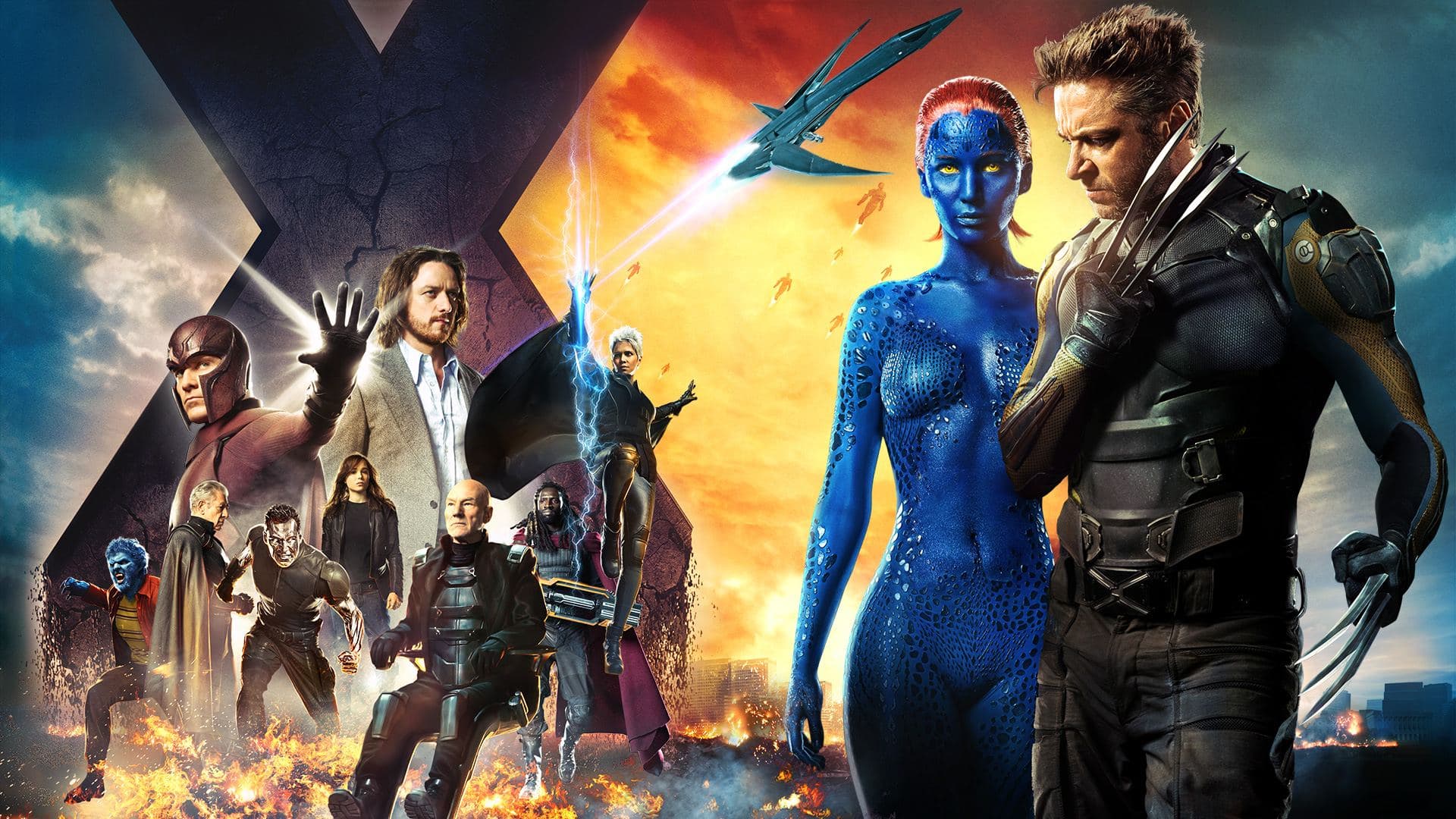
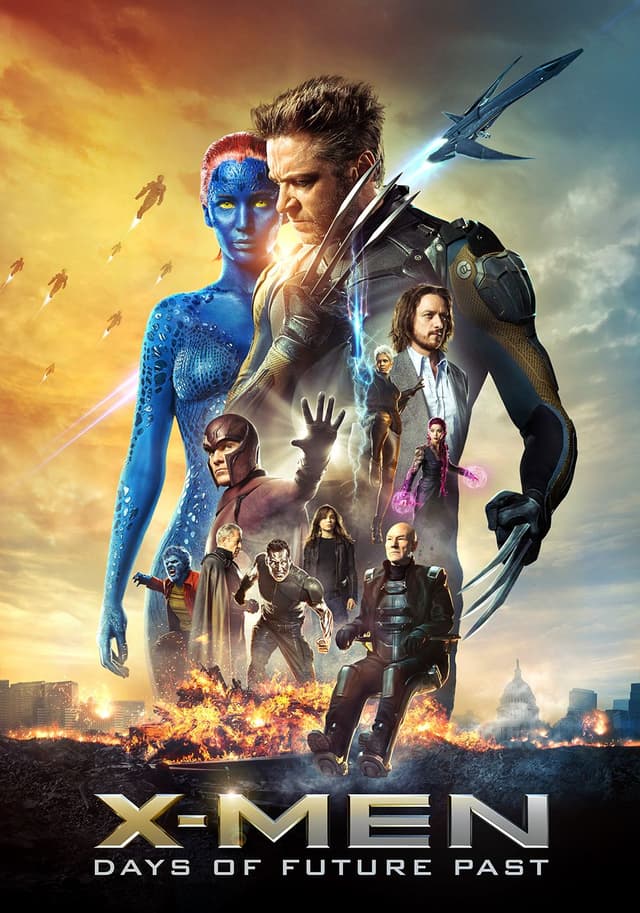
In a dystopian future where mutant-hunting Sentinels have decimated both mutant and humankind, the remaining X-Men send Wolverine's consciousness back to 1973 to prevent the event that triggered the Sentinel program: Mystique's assassination of weapons designer Bolivar Trask. In the past, Wolverine must unite a broken, despairing young Charles Xavier and a radicalized young Magneto to change the course of history before the future is sealed.
What Is the Budget of X-Men: Days of Future Past?
X-Men: Days of Future Past (2014), directed by Bryan Singer and distributed by 20th Century Fox, was produced on a budget of $200,000,000. The seventh installment in the X-Men film series combined the casts of the original trilogy and the First Class prequel into a time-travel narrative that sent Wolverine's consciousness back to 1973 to prevent a catastrophic future. The film served as both a franchise correction (reconciling continuity errors accumulated across six previous films) and a platform for an unprecedented ensemble of A-list and established talent.
The $200 million budget made Days of Future Past the most expensive X-Men film at the time of production. Costs were driven by the dual-timeline structure requiring two complete sets of production design (a dystopian future and 1970s-era Washington, D.C., Paris, and Saigon), the combined salaries of two generations of X-Men actors, and extensive visual effects work depicting the Sentinels, time-travel mechanics, and Quicksilver's signature slow-motion sequence. Principal photography took place primarily in Montreal, Quebec, with additional work at Pinewood Studios.
Key Budget Allocation Categories
X-Men: Days of Future Past allocated its $200 million budget across the following production areas:
- Visual Effects and Sentinel Design: MPC, Digital Domain, and Rising Sun Pictures handled the majority of VFX work. The future Sentinels, adaptive robots that absorb and replicate mutant powers, required full CG character animation for extended battle sequences. The 1973-era Sentinels (practical prototypes designed by Mark 1 aesthetics) used a combination of practical scale models and digital augmentation. The Quicksilver "Time in a Bottle" sequence, depicting Evan Peters moving at superhuman speed within a frozen Pentagon kitchen, required months of specialized pre-visualization, practical set construction (with rotating elements), and frame-by-frame compositing.
- Dual Ensemble Cast: The film united actors from two franchise eras. From the original trilogy: Hugh Jackman as Wolverine, Patrick Stewart as Professor X, Ian McKellen as Magneto, Halle Berry as Storm, Anna Paquin as Rogue, Ellen Page as Kitty Pryde, and Shawn Ashmore as Iceman. From First Class: James McAvoy as young Xavier, Michael Fassbender as young Magneto, Jennifer Lawrence as Mystique, and Nicholas Hoult as Beast. Peter Dinklage joined as the antagonist Bolivar Trask. The combined cast salaries, particularly for Jackman and Lawrence at the height of their market value, represented a major above-the-line expense.
- Production Design for Two Eras: Production designer John Myhre built distinct visual worlds for the dystopian future (ruined cityscapes, Sentinel-devastated landscapes) and the 1973 past (the Pentagon, the Paris Peace Accords, RFK Stadium, the White House). The dual-era approach effectively doubled the design workload, requiring two complete aesthetic languages within a single production. The future sequences used a cold, industrial palette, while the 1970s scenes demanded period-accurate costumes, vehicles, and set dressing.
- Practical Stunts and Action Choreography: The future battle sequences combined wire work, martial arts choreography, and practical pyrotechnics with extensive CG augmentation. The opening future battle, where X-Men fight adaptive Sentinels in a ruined Moscow, required weeks of choreography and stunt work. The 1973 sequences, including Magneto levitating RFK Stadium and dropping it around the White House, used large-scale practical rigs alongside digital effects.
- Score and Period Music: John Ottman served double duty as both editor and composer, a role he had filled on X2: X-Men United. His score blended the franchise's established themes with new motifs for the time-travel narrative. The 1970s sequences incorporated period-appropriate needle drops, most notably Jim Croce's "Time in a Bottle" for the Quicksilver slow-motion sequence, which became one of the film's most memorable moments.
How Does X-Men: Days of Future Past's Budget Compare to Similar Films?
At $200,000,000, Days of Future Past represented a significant investment for 20th Century Fox's X-Men franchise. Comparing it with other superhero ensemble films and time-travel blockbusters:
- X-Men: First Class (2011): Budget $160,000,000 | Worldwide $353,600,000. The direct prequel cost 20% less and earned less than half of Days of Future Past's gross, illustrating how the combined-cast concept dramatically increased both the budget and the commercial ceiling.
- X-Men: Apocalypse (2016): Budget $178,000,000 | Worldwide $543,900,000. Singer's follow-up cost 11% less but earned 27% less, suggesting audience enthusiasm peaked with the novelty of the dual-timeline concept and declined for a more conventional sequel.
- The Avengers (2012): Budget $220,000,000 | Worldwide $1,518,800,000. Marvel's first ensemble crossover cost 10% more and earned twice as much, reflecting the MCU's broader audience reach and more effective multi-film setup compared to Fox's more fragmented franchise continuity.
- Captain America: The Winter Soldier (2014): Budget $177,000,000 | Worldwide $714,300,000. Released two months before Days of Future Past in the same summer, this MCU entry cost 12% less and earned comparable worldwide returns, establishing the competitive dynamic between Fox's X-Men and Marvel Studios' growing dominance.
- Interstellar (2014): Budget $165,000,000 | Worldwide $681,000,000. Christopher Nolan's non-franchise sci-fi epic from the same year cost 18% less and earned 9% less, demonstrating that original properties faced a ceiling that franchise entries could exceed.
X-Men: Days of Future Past Box Office Performance
X-Men: Days of Future Past opened in the United States on May 23, 2014, debuting to $90.8 million domestically over the Memorial Day weekend. The film benefited from strong pre-release buzz generated by the dual-cast concept and the critically acclaimed Quicksilver sequence, which went viral online before release.
Box Office Breakdown
X-Men: Days of Future Past

At approximately +274%, X-Men: Days of Future Past returned roughly $3.74 for every $1 of production budget invested during its theatrical run.
Days of Future Past became the highest-grossing X-Men film at the time, with its international gross of $514 million accounting for 69% of worldwide revenue. China contributed $116 million, reflecting the franchise's growing appeal in that market. The film's commercial success validated Fox's strategy of using time-travel to merge the original and prequel X-Men casts.
X-Men: Days of Future Past Production History
Development began shortly after X-Men: First Class, with producer Lauren Shuler Donner and writer-producer Simon Kinberg conceiving the dual-timeline concept inspired by Chris Claremont and John Byrne's landmark 1981 comic storyline. Bryan Singer, who had directed the first two X-Men films before departing for Superman Returns, returned to the franchise after being wooed by the ambitious scope of the project.
Simon Kinberg wrote the screenplay, working closely with Singer to balance the needs of two distinct casts and timelines. The script required careful navigation of franchise continuity, essentially using the time-travel premise to overwrite problematic plot points from X-Men: The Last Stand and X-Men Origins: Wolverine while honoring the character arcs established in First Class.
Principal photography began in April 2013 in Montreal, Quebec, taking advantage of the province's generous film tax incentives. Montreal's diverse architecture doubled for 1973 Washington D.C., Paris, and other period locations. Additional photography took place at Pinewood Studios in England. The production employed approximately 4,000 crew members and 4,000 extras across the shoot.
The Quicksilver sequence was one of the most technically complex in the film. The Pentagon kitchen set was built on a rotating gimbal that allowed practical plates and utensils to "float" while Evan Peters moved through the scene. High-speed cameras captured the practical elements at extreme frame rates, and the footage was then composited with CG augmentations in post-production. The sequence required three weeks of dedicated shooting for approximately four minutes of screen time.
Awards and Recognition
X-Men: Days of Future Past received an Academy Award nomination for Best Visual Effects, recognizing the Sentinel battles, the Quicksilver slow-motion sequence, and the dual-era effects work. The nomination placed it alongside Interstellar, Dawn of the Planet of the Apes, Captain America: The Winter Soldier, and Guardians of the Galaxy in one of the most competitive VFX fields in recent history.
The film won the Hugo Award for Best Dramatic Presentation, Long Form, beating Interstellar, Guardians of the Galaxy, Edge of Tomorrow, and The Lego Movie. It also received Saturn Award nominations for Best Science Fiction Film and Best Director. The Quicksilver sequence was widely cited by visual effects professionals and film critics as one of the most inventive action sequences of the decade.
Critical Reception
X-Men: Days of Future Past earned a 90% approval rating on Rotten Tomatoes based on 329 reviews, making it the best-reviewed X-Men film at the time. The critics consensus praised Singer's confident direction, the emotional resonance of the dual-timeline structure, and the performances, particularly McAvoy and Fassbender. On Metacritic, the film scored 74 out of 100, indicating "generally favorable reviews."
Critics highlighted the film's success in balancing an enormous cast without losing narrative focus, with the 1973 sequences centering on the relationship between young Charles Xavier (struggling with despair and addiction) and young Erik Lehnsherr (driven by separatist ideology). The Quicksilver Pentagon kitchen sequence was universally praised as a show-stopping set piece that demonstrated what superhero cinema could achieve when visual effects served character and humor rather than spectacle alone.
Minor criticisms included the reduced screen time for several returning original-trilogy actors (Storm, Rogue, and Iceman appear briefly), the somewhat convoluted time-travel logic, and the feeling that Wolverine's central role was more a function of Hugh Jackman's star power than narrative necessity. Despite these notes, the 90% Rotten Tomatoes score reflected near-universal agreement that Days of Future Past reinvigorated a franchise that had lost creative momentum after The Last Stand and Origins: Wolverine.
Questions fréquentes
How much did it cost to make X-Men: Days of Future Past?
The production budget was $200,000,000, making it the most expensive X-Men film at the time. Costs were driven by the dual-era production design, combined salaries of two generations of actors, and extensive VFX work for the Sentinels and Quicksilver slow-motion sequence.
How much did X-Men: Days of Future Past earn at the box office?
The film grossed $233,900,000 domestically and $514,000,000 internationally, totaling $747,900,000 worldwide. It opened with $90.8 million over the Memorial Day weekend in 2014.
Was X-Men: Days of Future Past profitable?
Yes, very. On a $200 million production budget with approximately $150 million in marketing, the $747.9 million worldwide gross yielded strong theatrical profit. The ROI on production costs alone was approximately 274%.
Where was X-Men: Days of Future Past filmed?
Principal photography took place primarily in Montreal, Quebec, taking advantage of the province's film tax incentives. Montreal's architecture doubled for 1973 Washington D.C. and Paris. Additional filming took place at Pinewood Studios in England. The production employed approximately 4,000 crew members and 4,000 extras.
How was the Quicksilver slow-motion sequence filmed?
The Pentagon kitchen set was built on a rotating gimbal that allowed practical elements to float while Evan Peters moved through the scene. High-speed cameras captured practical elements at extreme frame rates, which were then composited with CG augmentations. The sequence required three weeks of dedicated shooting for approximately four minutes of screen time.
Why does Days of Future Past combine two X-Men casts?
The time-travel premise, inspired by Chris Claremont and John Byrne's 1981 comic storyline, allowed the film to unite the original trilogy cast (Stewart, McKellen, Jackman) with the First Class prequel cast (McAvoy, Fassbender, Lawrence). This also served to correct continuity errors accumulated across six previous films.
What is the Rotten Tomatoes score for X-Men: Days of Future Past?
The film holds a 90% approval rating on Rotten Tomatoes based on 329 reviews, making it the best-reviewed X-Men film at the time. On Metacritic it scored 74 out of 100. Critics praised Singer's direction, the dual-timeline balance, and the performances by McAvoy and Fassbender.
Who composed the score for Days of Future Past?
John Ottman served dual roles as both composer and editor, a role he had previously filled on X2: X-Men United. His score blended established franchise themes with new motifs for the time-travel narrative. Jim Croce's "Time in a Bottle" was used for the Quicksilver sequence.
What awards did X-Men: Days of Future Past receive?
The film received an Academy Award nomination for Best Visual Effects and won the Hugo Award for Best Dramatic Presentation, Long Form. It also earned Saturn Award nominations for Best Science Fiction Film and Best Director. The Quicksilver sequence was widely cited as one of the most inventive action sequences of the decade.
How does Days of Future Past compare to other X-Men films commercially?
At $747.9 million worldwide, it was the highest-grossing X-Men film at the time of release (later surpassed by Deadpool). It earned significantly more than First Class ($353.6M) and Apocalypse ($543.9M), validating the combined-cast concept as a commercial strategy.
Filmmakers
X-Men: Days of Future Past

Official Trailer
Créez des budgets comme celui-ci dans Saturation
Partez d'un modèle de long métrage aux normes du secteur, importez le planning et les tarifs que vous avez déjà, et laissez le rapport de coûts se tenir à jour au fil des dépenses. Collaboration en temps réel, sans tableurs.