The Pianist Budget
 DramaWar2h 30m
Mis à jour
Synopsis
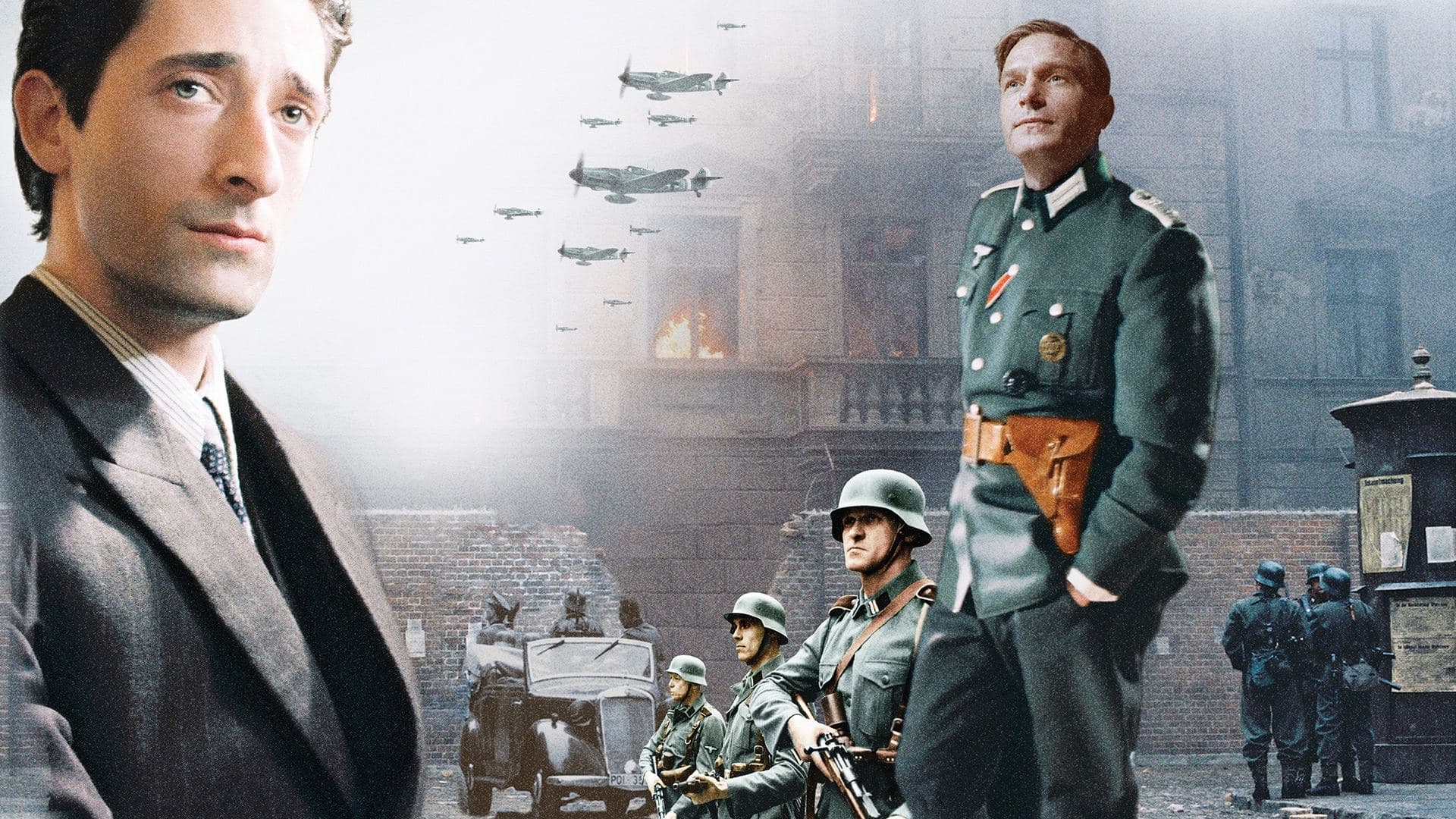
The true story of pianist Władysław Szpilman's experiences in Warsaw during the Nazi occupation. When the Jews of the city find themselves forced into a ghetto, Szpilman finds work playing in a café; and when his family is deported in 1942, he stays behind, works for a while as a laborer, and eventually goes into hiding in the ruins of the war-torn city.
What Is the Budget of The Pianist?
The Pianist (2002) was produced on a budget of $35 million, a moderate figure for a period drama of its scope. Director Roman Polanski and producer Robert Benmussa secured financing through a consortium of European backers, including Studio Canal, Heritage Films, and the UK Film Council, with additional support from French and German co-production funds. The relatively restrained budget reflected the film's European financing model, which prioritized creative control over Hollywood-scale spending.
For a production that required extensive period-accurate set construction depicting 1940s Warsaw, the $35 million budget demanded careful allocation across costumes, production design, and location work. Polanski's insistence on practical sets over digital recreations meant a significant portion went to physical construction, while the intimate nature of the story, centered largely on one man's survival, helped contain costs that might have ballooned under a more action-driven approach.
Key Budget Allocation Categories
- Production Design and Set Construction: Allan Starski, who won an Oscar for Schindler's List, supervised the recreation of wartime Warsaw. Massive sets were built at Babelsberg Studios in Germany, including bombed-out streetscapes and the Warsaw Ghetto walls, accounting for a substantial share of the budget.
- Location Filming: Principal photography took place at Babelsberg Studios near Berlin with additional shooting in Warsaw, Poland. Filming in actual Warsaw locations added logistical costs but provided authenticity that studio-only work could not replicate.
- Costume and Period Detail: Costume designer Anna Sheppard dressed hundreds of extras in period-accurate wardrobe spanning the full arc of the German occupation, from pre-war elegance through ghetto poverty to postwar ruin.
- Cinematography: Pawel Edelman's desaturated, naturalistic photography required careful lighting setups for interior scenes filmed in practical sets, contributing to the film's haunting visual tone without relying on costly post-production color grading.
- Score and Music: Composer Wojciech Kilar created a restrained orchestral score, while the production licensed and recorded Chopin piano performances that are central to the narrative. The musical sequences required precise synchronization between Adrien Brody's on-screen performance and the actual recordings.
- Cast and Performance Preparation: Adrien Brody's commitment included losing approximately 30 pounds and undergoing intensive piano training. While the cast was not filled with A-list names at the time, Brody's physical transformation required extended pre-production support and scheduling flexibility.
How Does The Pianist's Budget Compare to Similar Films?
Positioned against other Holocaust and wartime dramas, The Pianist's $35 million budget sits in the middle range, reflecting its European financing structure and Polanski's efficient filmmaking approach.
- Schindler's List (1993): Budget $22 million | Worldwide $322 million. Steven Spielberg's landmark film cost less in raw dollars but was made nearly a decade earlier; adjusted for inflation, the two films operated at comparable scales.
- The Reader (2008): Budget $32 million | Worldwide $108 million. Another European co-production exploring Holocaust legacy, The Reader spent similarly on period detail and star talent (Kate Winslet) while achieving slightly lower worldwide returns.
- Life Is Beautiful (1997): Budget $20 million | Worldwide $230 million. Roberto Benigni's Italian-produced tragicomedy spent considerably less yet grossed significantly more, demonstrating how a distinctive tonal approach can drive outsized commercial performance.
- Son of Saul (2015): Budget $1.5 million | Worldwide $9.4 million. Laszlo Nemes' debut operated on a fraction of The Pianist's budget with a radical single-take aesthetic, proving that Holocaust cinema can achieve critical acclaim at micro-budget levels.
- The Boy in the Striped Pajamas (2008): Budget $12.5 million | Worldwide $44 million. A more modestly scaled British-Irish production that reached a broad audience through its accessible narrative approach, spending roughly a third of The Pianist's budget.
The Pianist Box Office Performance
The Pianist earned $32,572,577 domestically and $120,098,945 worldwide against its $35 million production budget. The film's theatrical run reflected the typical pattern for prestige foreign-language-adjacent dramas in the American market: a slow platform release that built momentum through awards season rather than a wide opening weekend.
Focus Features distributed the film in North America, opening it on a limited screen count in December 2002 before expanding through January and February 2003 as Oscar nominations drove awareness. The international performance was considerably stronger than domestic, with European audiences, particularly in France, Germany, and Poland, responding to both the subject matter and Polanski's reputation. The film's Palme d'Or win at Cannes in May 2002 provided crucial early visibility that sustained international interest through its staggered global rollout.
Using the standard break-even formula (roughly twice the production budget to account for marketing and distribution), The Pianist needed approximately $70 million to reach profitability. With $120 million in worldwide theatrical gross plus substantial home video and television licensing revenue, the film was comfortably profitable for its investors.
Box Office Breakdown
The Pianist

The Pianist Production History
The Pianist is based on the autobiography of Wladyslaw Szpilman, a Polish-Jewish pianist who survived the destruction of the Warsaw Ghetto during World War II. Szpilman's memoir, originally published in 1946 under the title "Death of a City," was suppressed by Communist authorities and not widely available until its republication in 1998. Ronald Harwood adapted the memoir into a screenplay that Polanski found deeply personal, as the director had himself survived the Krakow Ghetto as a child during the war.
Polanski initially struggled to secure financing from American studios, who were wary of another Holocaust film and concerned about the director's legal status preventing him from working in the United States. The production ultimately came together through a network of European financiers. Casting proved equally challenging: the role of Szpilman demanded an actor who could convey years of physical and emotional deterioration while also convincingly performing piano. Adrien Brody committed fully to the part, giving up his apartment, selling his car, and moving to Europe. He shed approximately 30 pounds to physically embody Szpilman's starvation and isolation.
Principal photography began in February 2001 at Babelsberg Studios outside Berlin, where production designer Allan Starski constructed elaborate sets representing the Warsaw Ghetto and the surrounding city in various stages of destruction. Additional location work took place in Warsaw itself. Pawel Edelman's cinematography established a muted, documentary-like visual language that avoided the stylized imagery common to many war films. Polanski completed the film in time for its premiere at the 2002 Cannes Film Festival, where it won the Palme d'Or, setting the stage for its theatrical release and awards campaign later that year.
Awards and Recognition
The Pianist won three Academy Awards at the 75th ceremony in March 2003: Best Director for Roman Polanski, Best Actor for Adrien Brody, and Best Adapted Screenplay for Ronald Harwood. Brody, at 29 years old, became the youngest Best Actor winner in Oscar history at the time, a record that underscored the transformative power of his performance. Polanski could not attend the ceremony due to the outstanding 1977 arrest warrant in the United States; Harrison Ford accepted the directing award on his behalf.
At the 2002 Cannes Film Festival, The Pianist won the Palme d'Or, the festival's highest honor. The film also won seven Cesar Awards in France, including Best Director and Best Film. The British Academy of Film and Television Arts (BAFTA) awarded it Best Film and Best Director. Additional honors included the National Board of Review's Best Actor for Brody and numerous critics' circle awards across North America and Europe. The breadth of the film's recognition across festival, critics, and industry voting bodies reflected a rare consensus about its quality.
Critical Reception
The Pianist holds a 95% approval rating on Rotten Tomatoes with critical praise centered on Polanski's restrained direction and Brody's physically committed performance. Roger Ebert awarded the film four stars and wrote that Polanski had made a film "that remembers the Holocaust in a new way," emphasizing the deliberate absence of sentimentality that distinguished it from other films about the period. The consensus among critics was that Polanski's personal connection to the material, having survived the Krakow Ghetto as a child, lent the film an authenticity that transcended conventional dramatic treatment.
Critics frequently noted the film's structural boldness: long stretches pass with minimal dialogue as Szpilman hides alone in abandoned apartments, and the narrative resists the redemptive arcs typical of Hollywood war stories. A. O. Scott of The New York Times praised the film's "severe, cool discipline" and its refusal to manipulate the audience emotionally. The relationship between Szpilman and the German officer Wilm Hosenfeld, played by Thomas Kretschmann, drew particular attention for its nuance and ambiguity, avoiding easy moral categorization.
The film's legacy has only strengthened over time. It is now widely regarded as one of the definitive cinematic portrayals of the Holocaust, praised for showing the experience from the ground level of a single individual rather than through the lens of institutional heroism. Brody's performance and Polanski's direction continue to be cited as benchmarks in discussions of how cinema can responsibly represent extreme historical trauma.
Questions fréquentes
How much did it cost to make The Pianist (2002)?
The production budget was $35,000,000, covering principal photography, cast and crew salaries, locations, sets, post-production, and music. Marketing and distribution (P&A) costs are estimated at an additional $17,500,000 - $28,000,000, bringing the total studio investment to approximately $52,500,000 - $63,000,000.
How much did The Pianist (2002) earn at the box office?
The Pianist grossed $32,572,577 domestic, $87,526,368 international, totaling $120,098,945 worldwide.
Was The Pianist (2002) profitable?
Yes. Against a production budget of $35,000,000 and estimated total costs of ~$87,500,000, the film earned $120,098,945 theatrically - a 243% ROI on production costs alone.
What were the biggest costs in producing The Pianist?
The primary cost drivers were above-the-line talent (Adrien Brody, Thomas Kretschmann, Frank Finlay); talent compensation, authentic period production design, and meticulous post-production; international production across France, Germany, Poland, United Kingdom.
How does The Pianist's budget compare to similar drama films?
At $35,000,000, The Pianist is classified as a low-budget production. The median budget for wide-release drama films in the 2000s ranges from $30 - 80M for mid-budget to $150M+ for tentpoles. Comparable budgets: 1941 (1979, $35,000,000); Two for the Money (2005, $35,000,000); Ghost Ship (2002, $35,000,000).
Did The Pianist (2002) go over budget?
There are no widely reported accounts of significant budget overruns for this production. However, studios rarely disclose precise budget overrun figures publicly. The reported production budget reflects the final estimated cost.
What was the return on investment (ROI) for The Pianist?
The theatrical ROI was 243.1%, calculated as ($120,098,945 − $35,000,000) ÷ $35,000,000 × 100. This measures gross revenue against production budget only - it does not account for P&A or exhibitor shares.
What awards did The Pianist (2002) win?
Won 3 Oscars. 57 wins & 74 nominations total.
Who directed The Pianist and who were the key crew members?
Directed by Roman Polanski, written by Ronald Harwood, shot by Paweł Edelman, with music by Wojciech Kilar, edited by Hervé de Luze.
Where was The Pianist filmed?
The Pianist was filmed in France, Germany, Poland, United Kingdom. Principal photography on The Pianist began on 9 February 2001 in Babelsberg Studio in Potsdam, Germany. The Warsaw Ghetto and the surrounding city were recreated on the backlot of Babelsberg Studio as they would have looked during the war.
Filmmakers
The Pianist

Official Trailer
Créez des budgets comme celui-ci dans Saturation
Partez d'un modèle de long métrage aux normes du secteur, importez le planning et les tarifs que vous avez déjà, et laissez le rapport de coûts se tenir à jour au fil des dépenses. Collaboration en temps réel, sans tableurs.