The Mummy Budget
 AdventureActionFantasy2h 4m
Mis à jour
Synopsis
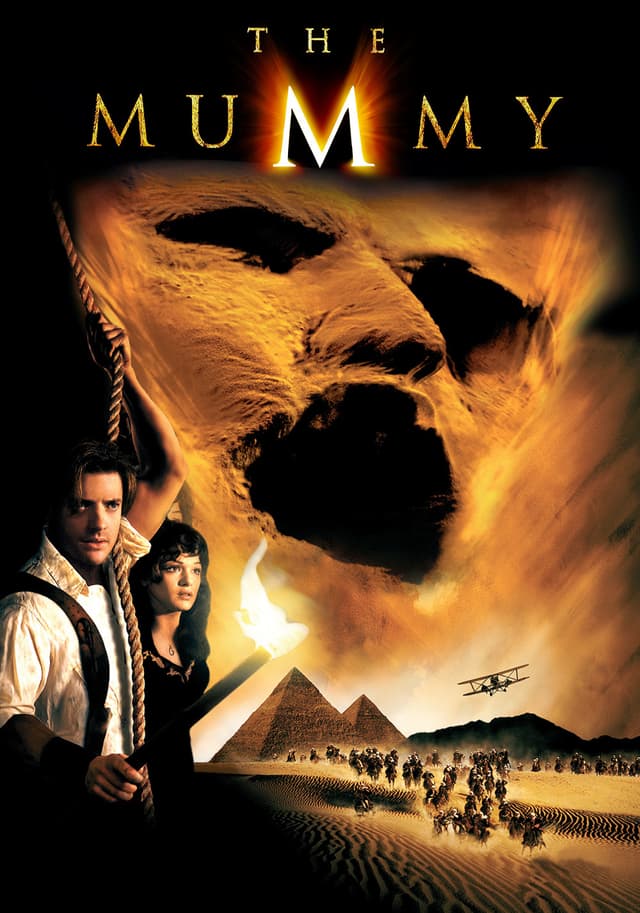
Thought safely entombed in a tomb deep beneath the unforgiving desert, an ancient princess whose destiny was unjustly taken from her is awakened in our current day, bringing with her malevolence grown over millennia and terrors that defy human comprehension.
What Is the Budget of The Mummy?
The Mummy (1999) was produced with an estimated budget of $80 million. Universal Pictures greenlit the film as a big-budget reimagining of their classic 1932 horror property, shifting the tone from gothic horror to action-adventure spectacle. Writer-director Stephen Sommers pitched the project as "Indiana Jones meets the classic monster movie," and Universal committed substantial resources to bring the vision to life.
A significant portion of the budget went toward groundbreaking visual effects by Industrial Light & Magic, which created the fully CGI character of Imhotep and numerous large-scale set pieces including sandstorms, flesh-eating scarabs, and ancient Egyptian environments. For 1999, $80 million represented a major investment, but Universal viewed the property as a potential franchise launcher that could revitalize their dormant monster brand.
Key Budget Allocation Categories
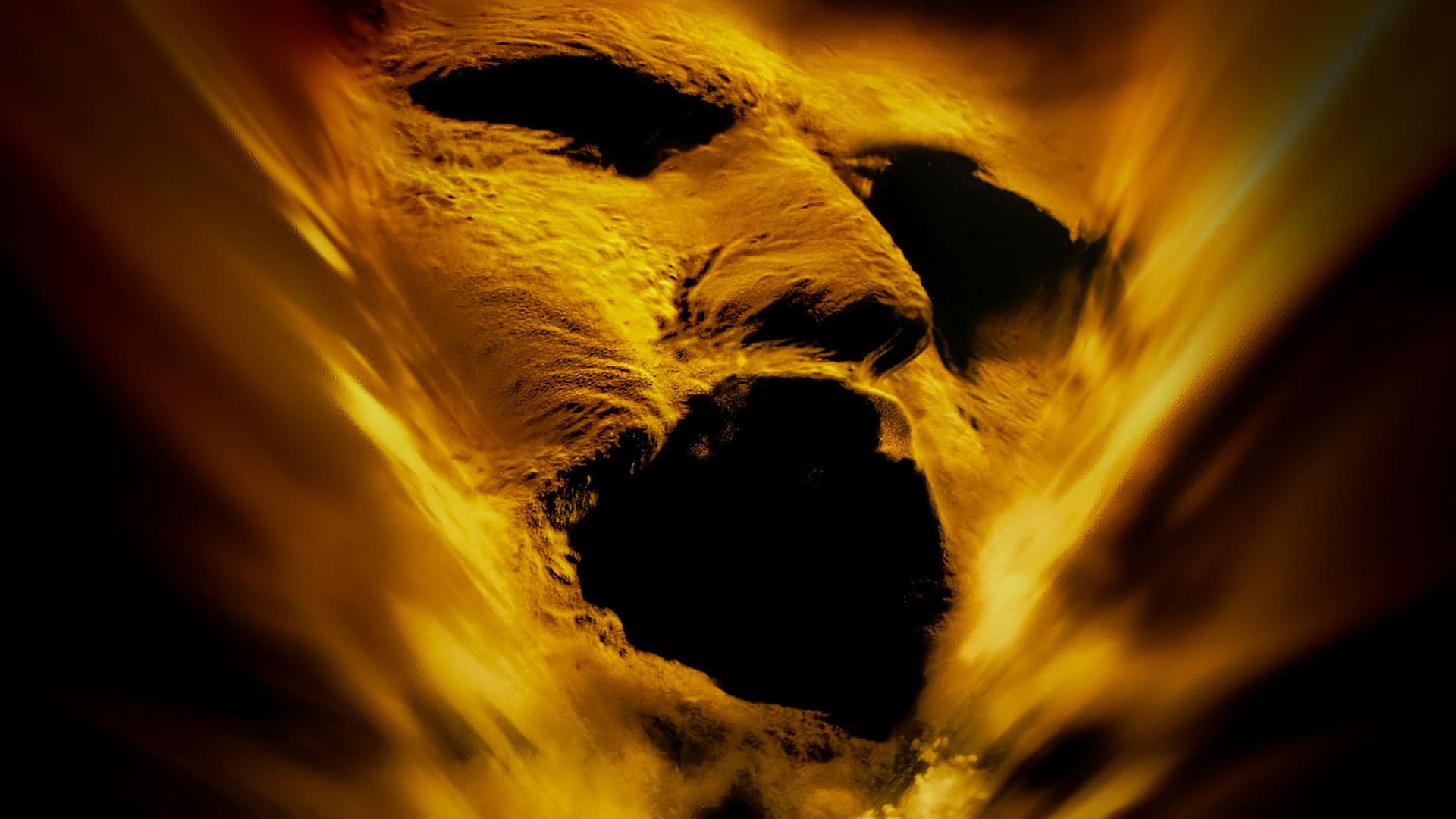
- Visual Effects and CGI: ILM handled an extensive effects workload including the fully digital Imhotep transformations, the wall of sand pursuing a biplane, swarms of flesh-eating scarabs, and the resurrection sequences. The Imhotep face mapping technology was considered cutting-edge for the era and consumed a large share of the production budget.
- Location and Studio Filming: Principal photography took place across Marrakech, Morocco for the desert and ancient city sequences, with additional work at Shepperton Studios in England for controlled interior sets. The Sahara-adjacent Moroccan locations required significant logistics for crew transport, equipment, and climate management.
- Production Design and Sets: Hamunaptra, the City of the Dead, required elaborate practical sets combined with digital extensions. The underground chambers, treasure rooms, and collapsing temple sequences blended physical construction with CG augmentation to create environments that felt tangible while exceeding what practical sets alone could achieve.
- Cast and Crew: Brendan Fraser anchored the film as Rick O'Connell, joined by Rachel Weisz, John Hannah, Arnold Vosloo as Imhotep, Kevin J. O'Connor, and Oded Fehr. While no single salary dominated the budget, assembling the ensemble and retaining Stephen Sommers as writer-director represented a meaningful portion of above-the-line costs.
- Music and Sound Design: Jerry Goldsmith composed an orchestral score that became one of the film's most praised elements. The sound design team built layered audio for the supernatural sequences, contributing to the film's immersive atmosphere and earning an Academy Award nomination for Best Sound.
- Stunts and Action Sequences: Practical action choreography including gunfights, hand-to-hand combat, the river barge fire, and the biplane chase required stunt coordination across both Moroccan and English locations, with wirework and pyrotechnics adding to costs.
How Does The Mummy's Budget Compare to Similar Films?
Positioned as a summer tentpole blending action-adventure with supernatural horror, The Mummy's $80 million budget was competitive with other late-1990s blockbusters targeting similar audiences.
- Indiana Jones and the Last Crusade (1989): Budget $48M | Worldwide $474M. The franchise that directly inspired The Mummy's tone cost less in nominal terms but adjusted for inflation was comparable. Both films leaned on practical stunts and globe-trotting adventure, though The Mummy required heavier CGI work.
- The Matrix (1999): Budget $63M | Worldwide $467M. Released the same year, The Matrix spent less overall but pioneered its own visual effects breakthroughs. Both films demonstrated that mid-tier budgets could generate massive returns when paired with innovative visuals.
- Deep Blue Sea (1999): Budget $82M | Worldwide $164M. A near-identical budget but a fraction of The Mummy's box office return, illustrating how the combination of franchise IP, charismatic leads, and effective marketing gave The Mummy a significant edge in the same summer release window.
- Starship Troopers (1997): Budget $105M | Worldwide $121M. Paul Verhoeven's effects-heavy sci-fi cost substantially more but underperformed commercially, highlighting the risk of high VFX budgets without broad audience appeal. The Mummy achieved far better returns at lower cost.
- The Mummy Returns (2001): Budget $98M | Worldwide $433M. The sequel received a 22% budget increase to accommodate even more elaborate effects, including the early (and infamous) CGI Scorpion King. The original's efficient production made the franchise expansion possible.
The Mummy Box Office Performance
The Mummy opened on May 7, 1999, debuting at number one with a strong $43.4 million opening weekend. The film demonstrated remarkable legs throughout the summer, ultimately grossing $155,385,488 domestically and $260,547,918 internationally for a combined worldwide total of $415,933,406.
Against its $80 million production budget, the standard break-even threshold (factoring in marketing and distribution costs at roughly 2x the production budget) sits around $160 million worldwide. The Mummy surpassed that mark during its domestic run alone, and its worldwide gross represented an ROI of approximately 420%: ($415.9M - $80M) / $80M x 100. The film ranked as one of the top ten highest-grossing releases of 1999, a year that also included Star Wars: The Phantom Menace, The Sixth Sense, and Toy Story 2.
Home video sales added substantially to the film's profitability. The DVD release became one of the best-selling discs of the early DVD era, helping establish the format as a mainstream home entertainment medium and generating additional revenue well beyond its theatrical run.
Box Office Breakdown
The Mummy

The Mummy Production History
Universal Pictures had attempted to revive The Mummy franchise multiple times throughout the 1980s and 1990s. Early development explored a low-budget horror approach, with directors including Clive Barker and George A. Romero attached at various points. Joe Dante was also considered to helm a version closer in tone to the 1932 Boris Karloff original.
The project shifted direction when Stephen Sommers pitched his action-adventure reimagining to Universal in 1997. Sommers envisioned the film as a fun, swashbuckling adventure rather than a straight horror film, drawing heavily from the Indiana Jones series and classic adventure serials. Universal approved his vision and committed to the larger budget his approach required.
Brendan Fraser was cast as Rick O'Connell, a role that would define his career as an action lead. Rachel Weisz joined as Evelyn Carnahan, the Egyptologist whose curiosity drives the plot, and Arnold Vosloo was selected to play Imhotep after an extensive search for an actor who could convey menace through heavy prosthetics and CGI overlays.
Filming began in Marrakech, Morocco in May 1998, where temperatures regularly exceeded 120 degrees Fahrenheit. The Moroccan shoot proved physically demanding for the cast and crew, with Fraser performing many of his own stunts in extreme heat. Several crew members required medical attention for heat-related illness during the desert sequences.
Production moved to Shepperton Studios in England for the interior tomb sequences and controlled set work. The Chatham Dockyard in Kent doubled for the Cairo port scenes. ILM began effects work concurrently with principal photography, developing the Imhotep character through a combination of motion capture from Vosloo and digital face replacement that was state-of-the-art for the period.
Post-production focused heavily on integrating the practical footage with ILM's digital effects. The sandstorm sequence, the scarab swarms, and Imhotep's progressive regeneration from skeletal form to full human appearance each required months of rendering and compositing. Jerry Goldsmith recorded the orchestral score in London, delivering a sweeping adventure theme that became synonymous with the franchise.
Awards and Recognition
The Mummy received an Academy Award nomination for Best Sound (Leslie Shatz, Chris Carpenter, Rick Kline, Chris Munro), recognizing the film's layered audio design that blended supernatural elements with large-scale action sequences. While it did not win, the nomination validated the technical craft behind the film's immersive soundscape.
The film earned a Saturn Award nomination for Best Fantasy Film from the Academy of Science Fiction, Fantasy and Horror Films. ILM's visual effects work was widely recognized within the industry, with the Imhotep face-mapping technology cited as a significant advancement in digital character creation that influenced subsequent films.
The Mummy also won the BMI Film Music Award for Jerry Goldsmith's score, which remains one of the most celebrated adventure film compositions of the late 1990s. The film's commercial performance earned it recognition as one of Universal's most successful franchise launches, directly leading to The Mummy Returns (2001) and the broader "Mummy" universe.
Critical Reception
The Mummy holds a 59% approval rating on Rotten Tomatoes, reflecting a split between critics who found it derivative and those who appreciated its self-aware, pulpy energy. Roger Ebert gave the film two and a half stars, acknowledging its entertainment value while noting it prioritized spectacle over substance. The critical consensus recognized the film as an effective popcorn blockbuster that succeeded on charm rather than depth.
Audience reception was overwhelmingly positive. Viewers embraced the film's blend of humor, horror, and adventure, with Brendan Fraser's charismatic performance and Rachel Weisz's sharp portrayal of Evelyn drawing particular praise. The chemistry between the leads became a defining element of the franchise, and audience scores on platforms like CinemaScore reflected strong satisfaction with the theatrical experience.
Over time, The Mummy's reputation has grown considerably. The film is now widely regarded as a quintessential late-1990s adventure movie, frequently cited alongside The Mask of Zorro and the Indiana Jones trilogy as a benchmark for the genre. Its enduring popularity on streaming platforms and home media, combined with nostalgia from viewers who grew up with it, has elevated it from a commercial hit to a cultural touchstone that subsequent Universal monster reboots have struggled to match.
Questions fréquentes
How much did it cost to make The Mummy (1999)?
The production budget was $80,000,000, covering principal photography, cast and crew salaries, locations, sets, post-production, and music. Marketing and distribution (P&A) costs are estimated at an additional $40,000,000 - $64,000,000, bringing the total studio investment to approximately $120,000,000 - $144,000,000.
How much did The Mummy (1999) earn at the box office?
The Mummy grossed $157,095,368 domestic, $258,790,120 international, totaling $415,885,488 worldwide.
Was The Mummy (1999) profitable?
Yes. Against a production budget of $80,000,000 and estimated total costs of ~$200,000,000, the film earned $415,885,488 theatrically - a 420% ROI on production costs alone.
What were the biggest costs in producing The Mummy?
The primary cost drivers were above-the-line talent (Brendan Fraser, Rachel Weisz, John Hannah); visual effects, practical stunts, and A-list talent compensation.
How does The Mummy's budget compare to similar adventure films?
At $80,000,000, The Mummy is classified as a mid-budget production. The median budget for wide-release adventure films in the era ranges from $30 - 80M for mid-budget to $150M+ for tentpoles. Comparable budgets: Edge of Darkness (2010, $80,000,000); Legend of the Guardians: The Owls of Ga'Hoole (2010, $80,000,000); Meet the Fockers (2004, $80,000,000).
Did The Mummy (1999) go over budget?
There are no widely reported accounts of significant budget overruns for this production. However, studios rarely disclose precise budget overrun figures publicly. The reported production budget reflects the final estimated cost.
What was the return on investment (ROI) for The Mummy?
The theatrical ROI was 419.9%, calculated as ($415,885,488 − $80,000,000) ÷ $80,000,000 × 100. This measures gross revenue against production budget only - it does not account for P&A or exhibitor shares.
What awards did The Mummy (1999) win?
Nominated for 1 Oscar. 5 wins & 24 nominations total.
Who directed The Mummy and who were the key crew members?
Directed by Stephen Sommers, written by Stephen Sommers, shot by Adrian Biddle, with music by Jerry Goldsmith, edited by Bob Ducsay, Kelly Matsumoto.
Where was The Mummy filmed?
The Mummy was filmed in United States of America.
Filmmakers
The Mummy

Official Trailer
Créez des budgets comme celui-ci dans Saturation
Partez d'un modèle de long métrage aux normes du secteur, importez le planning et les tarifs que vous avez déjà, et laissez le rapport de coûts se tenir à jour au fil des dépenses. Collaboration en temps réel, sans tableurs.