Gandhi Budget
 DramaHistory3h 11m
Aktualisiert
Synopsis
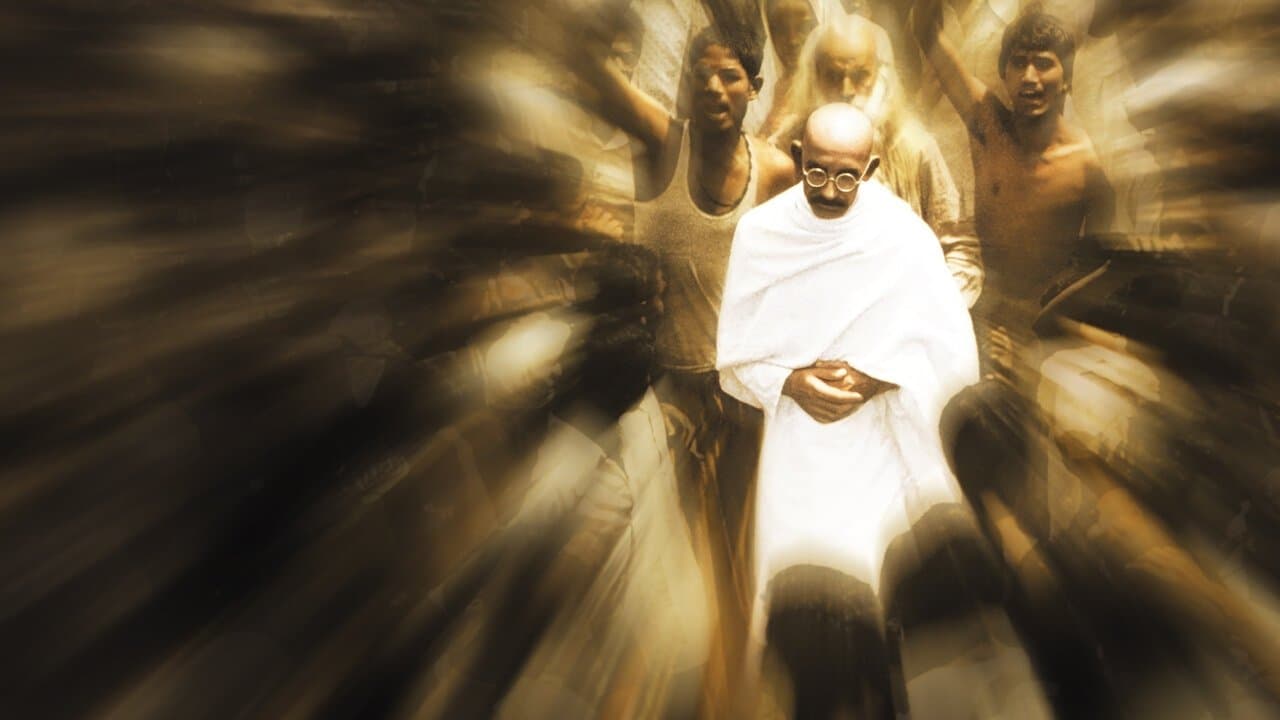
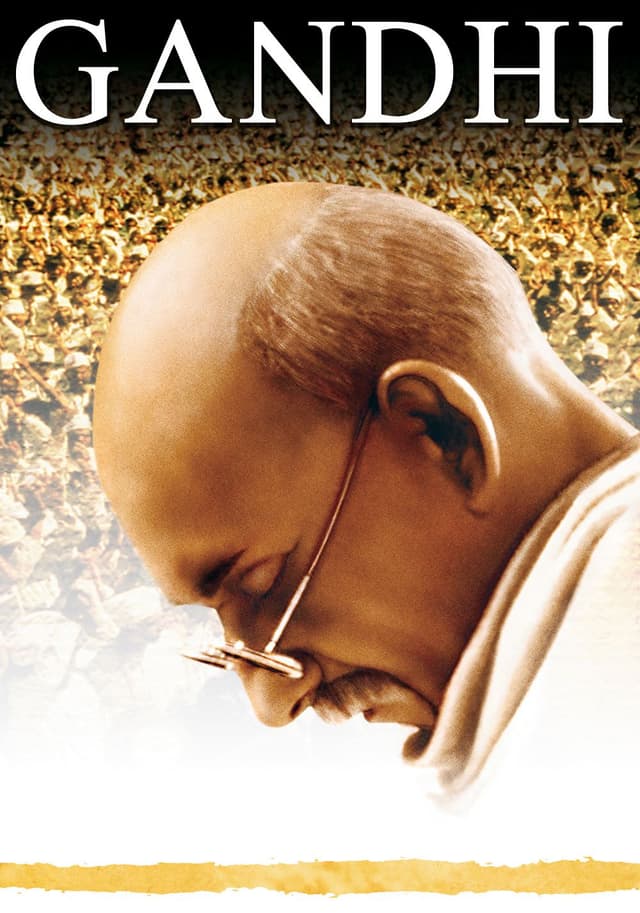
"Gandhi" (1982) is an epic biographical film that chronicles the life of Mahatma Gandhi, the leader of the Indian independence movement against British rule. Directed by Richard Attenborough, the film begins with Gandhi's early years in South Africa, where he first experiences racial discrimination. This pivotal moment ignites his commitment to nonviolent resistance and civil disobedience.
As the narrative unfolds, viewers witness Gandhi's return to India, where he mobilizes the masses through peaceful protests and campaigns for social reform. The film highlights key events such as the Salt March and the struggle for independence, showcasing Gandhi's philosophy of ahimsa (nonviolence) and his unwavering dedication to justice.
The portrayal of Gandhi's personal life, including his relationships with family and followers, adds depth to his character. The film culminates in the tragic assassination of Gandhi in 1948, leaving a lasting legacy of peace and nonviolent activism. With powerful performances and stunning cinematography, "Gandhi" serves as both a historical account and a poignant reminder of the impact one individual can have on the world.
What Is the Budget of Gandhi?
Gandhi (1982) was produced on a budget of $22 million, a figure that represented one of the largest investments in a British biographical film at the time. The money came from two primary sources: the National Film Development Corporation of India, which provided the initial $10 million under the leadership of chairman D.V.S. Raju after co-producer Rani Dube lobbied Prime Minister Indira Gandhi personally, and Goldcrest Films, the British production company run by Jake Eberts, which raised approximately two-thirds of the total budget. Goldcrest invested roughly £5 million and ultimately returned more than £11 million from the film's success, a profit that helped establish Goldcrest as a major force in 1980s British cinema.
The $22 million figure carried considerable weight given the scope of the production. Director Richard Attenborough had spent nearly two decades trying to secure financing after being approached by Motilal Kothari in 1962. Warner Bros. briefly backed a revival attempt in 1976, but Indira Gandhi's declaration of a state of emergency in India brought those plans to a halt. When financing finally came together in 1980, Attenborough had to move quickly, and the production was designed to deliver maximum scale for the budget: over 300,000 extras appeared in the funeral sequence alone, a record at the time. Columbia Pictures handled distribution, releasing the film in the United States on December 8, 1982, after its world premiere in New Delhi on November 30 and a Royal Premiere in London on December 2.
The film's $22 million cost sits comfortably in the range typical for prestige British-American co-productions of the early 1980s, though its ambition and running time of three hours and eleven minutes placed significant pressure on every department to maximize every dollar. The combination of Indian government investment and British private capital was unusual for the era and gave Attenborough both creative latitude and a singular responsibility to deliver a film that honored Gandhi's legacy.
Key Budget Allocation Categories
- Above-the-Line Talent: Ben Kingsley, born Krishna Bhanji to a Gujarati father, was a relatively unknown stage actor when cast as Gandhi, which kept his fee modest compared to the star salaries that a bigger name might have commanded. Richard Attenborough directed and produced, concentrating significant creative authority in a single person to streamline decision-making and avoid cost overruns from disagreements. The supporting cast included John Gielgud, Trevor Howard, John Mills, Martin Sheen, and Candice Bergen, a galaxy of established names whose combined fees likely consumed $3 to $5 million of the above-the-line budget.
- Location and Logistics in India: The majority of principal photography took place in India over approximately 24 weeks, from November 26, 1980, to May 10, 1981. Filming across multiple Indian states, including scenes near the Koilwar Bridge in Bihar, required extensive government cooperation, local crew hiring, transport, and accommodation for a large international cast and crew. Organizing 300,000 extras for the funeral sequence in Delhi represented a logistical achievement with no modern equivalent; the Indian government's cooperation was essential and came partly as a condition of their $10 million investment.
- Costume and Production Design: Costume designers John Mollo and Bhanu Athaiya created hundreds of period-accurate garments spanning six decades of South African and Indian history, from the late Victorian era through Indian independence in 1947. Athaiya became the first Indian to win an Academy Award for her work on the film. Production designer Stuart Craig built or dressed locations across India and the United Kingdom to represent colonial Natal, Johannesburg, London, and numerous Indian cities and villages. Both departments won Academy Awards, reflecting the scale and quality of their work.
- Cinematography: Directors of photography Billy Williams and Ronnie Taylor shared the cinematography credit, an unusual arrangement driven by the length of the shoot and the scope of what needed to be captured. The two men split the production and ultimately shared the Academy Award for Best Cinematography. Shooting on location in India presented constant challenges: managing natural light across dozens of exterior settings, handling the enormous scale of crowd sequences, and maintaining visual consistency across a film that spans the better part of a century.
- Original Score: Ravi Shankar and George Fenton co-composed the score, blending Indian classical music with Western orchestration to reflect Gandhi's own life as a bridge between cultures. The collaboration between Shankar, a globally recognized sitarist, and Fenton, a British composer fluent in both pop and classical idioms, produced a score that received Academy Award and Grammy nominations. Shankar's involvement lent the film cultural authenticity that a purely Western score could not have achieved.
How Does Gandhi's Budget Compare to Similar Films?
At $22 million, Gandhi occupies a specific tier of early 1980s prestige filmmaking: large enough to support an international shoot and a large cast, but not the stratospheric budgets that characterized Hollywood blockbusters of the same period. Its worldwide gross of $127.8 million on a $22 million production budget represents a return that any studio executive of the era would have celebrated, particularly given that the film runs over three hours and deals with a subject that distributors historically considered commercially risky.
- Chariots of Fire (1981): Budget $5.5M | Worldwide $59M. Like Gandhi, Chariots of Fire was a British prestige production backed by Goldcrest Films and released through an American distributor, and it won the Academy Award for Best Picture the year before Gandhi swept the awards. The comparison illustrates how Gandhi operated at four times the budget of another Goldcrest success, reflecting the greater ambition and scale of Attenborough's production.
- Lawrence of Arabia (1962): Budget $15M (equivalent to roughly $150M in 2024 dollars) | Worldwide $70M theatrical. The closest structural predecessor to Gandhi, Lawrence of Arabia was also a long-form British epic biography with sweeping location photography in the developing world. Gandhi was produced for a fraction of the real-dollar cost of Lawrence while achieving comparable critical and commercial prestige, a testament to Attenborough's efficient management of the production.
- Amadeus (1984): Budget $18M | Worldwide $90M. The other dominant prestige biopic of the era, Amadeus won eight Academy Awards to Gandhi's eight, though two years apart. Amadeus was produced in Czechoslovakia to replicate period Vienna, while Gandhi was produced largely on location in India; both films demonstrate how international location shooting in the 1980s could deliver exceptional production value at relatively contained costs compared to American studio productions.
- Out of Africa (1985): Budget $31M | Worldwide $175M. Sydney Pollack's romantic epic, shot on location in Kenya, represents a direct peer comparison: an English-language prestige drama produced largely on location in Africa, starring major international names, and distributed by a major American studio. Out of Africa cost 40% more than Gandhi and grossed proportionally more, but Gandhi's tighter budget relative to its awards haul made it the better return on investment.
Gandhi Box Office Performance
Gandhi earned $52,767,889 domestically in the United States and Canada and approximately $75 million internationally, for a worldwide total of $127.8 million. Columbia Pictures released the film on December 8, 1982, starting in limited release before expanding wide on the strength of its critical reception and awards momentum. The opening weekend of $131,153 reflected the limited platform release strategy, which was standard for prestige films of the period that aimed to qualify for awards before expanding. The film's commercial success grew steadily through the winter awards season, driven by a record eight Academy Award wins on April 11, 1983, which pushed audiences into theaters throughout the spring.
Against a $22 million production budget, Gandhi's $127.8 million gross was a decisive commercial victory. Estimating print-and-advertising costs at approximately $15 million for a wide international release in 1982, total investment would have been roughly $37 million. Because theaters retain approximately 50% of gross receipts, Columbia's share of the worldwide box office was approximately $63.9 million, which covered the full investment and returned a healthy profit to the studio and Goldcrest Films. Goldcrest alone converted its £5 million investment into £11.4 million in returns.
Box Office Breakdown
Gandhi

For every dollar invested in Gandhi's production, the film returned approximately $5.81 in worldwide gross, or roughly $2.90 in studio rental receipts after the theatrical split. When print and advertising costs are factored in, the net return to distributors and producers was more modest, but the film's ongoing home video and broadcast licensing revenue over four decades has made Gandhi one of the most financially durable prestige pictures of the 1980s.
Gandhi Production History
The development of Gandhi is one of cinema's great persistence stories. Richard Attenborough was first approached about the project in 1962 by Motilal Kothari, an Indian diplomat and devoted Gandhian, who believed Attenborough was the right filmmaker to bring Gandhi's life to the screen. After reading Louis Fischer's biography of Gandhi, Attenborough became fully committed and spent the following eighteen years trying to get the film made. Early momentum came through Lord Mountbatten's introductions, which gave Attenborough access to Prime Minister Jawaharlal Nehru and later his daughter Indira Gandhi. Nehru's death in 1964 removed a key supporter. A Warner Bros. revival attempt in 1976 was halted when Indira Gandhi declared a state of emergency in India, creating a political climate inhospitable to international co-productions. It was not until 1980 that co-producer Rani Dube successfully persuaded a now-returned Prime Minister Indira Gandhi to authorize a $10 million contribution from the National Film Development Corporation of India, finally unlocking the project.
Screenwriter John Briley introduced Attenborough to Jake Eberts at Goldcrest Films, which raised the remaining two-thirds of the $22 million budget. Casting began immediately. Ben Kingsley, born Krishna Bhanji to a Gujarati Indian father and an English mother, was chosen partly because of his Indian heritage and partly because his stage-trained intensity mapped naturally onto Gandhi's famous self-discipline. The role required Kingsley to lose significant weight and master Gandhi's physical mannerisms across six decades of the character's life. The supporting cast assembled included some of the most distinguished British actors of the era: John Gielgud, Trevor Howard, and John Mills in smaller roles alongside John Briley's screenplay, which Attenborough had protected closely throughout the development years.
Principal photography ran from November 26, 1980, to May 10, 1981, primarily in India. The production filmed across multiple states, with scenes shot near the Koilwar Bridge in Bihar among many other Indian locations representing colonial Natal, Johannesburg, London, and cities across the Indian subcontinent. The funeral sequence, depicting Gandhi's 1948 state funeral, required the coordinated participation of over 300,000 extras and remains the largest number of people ever assembled for a film shoot. The Indian government's cooperation was critical to achieving this scale.
Post-production was completed in London, with editor John Bloom cutting the film to its final length of three hours and eleven minutes. Ravi Shankar and George Fenton composed and recorded the score. The film premiered in New Delhi on November 30, 1982, before its Royal Premiere in London on December 2 and North American release on December 8. Its reception was immediate and unanimous: Gandhi was recognized as a landmark film within weeks of release, setting up one of the most dominant Academy Awards campaigns in Oscar history.
Awards and Recognition
Gandhi won eight Academy Awards at the 55th Academy Awards ceremony on April 11, 1983, from eleven nominations, a result that placed it among the most decorated films in Oscar history. The eight wins included Best Picture, Best Director (Richard Attenborough), Best Actor (Ben Kingsley), Best Original Screenplay (John Briley), Best Art Direction (Stuart Craig and Bob Laing), Best Cinematography (Billy Williams and Ronnie Taylor), Best Costume Design (John Mollo and Bhanu Athaiya, with Athaiya becoming the first Indian to win an Academy Award), and Best Film Editing (John Bloom). The three nominations that did not convert were Best Makeup, Best Original Score, and Best Sound.
At the BAFTA Awards, Gandhi won five prizes from fourteen nominations, including Best Film, Best Direction, Best Actor in a Leading Role for Kingsley, Best Actress in a Supporting Role for Rohini Hattangadi, and Most Promising Newcomer to Leading Film Roles for Kingsley. The Golden Globe Awards were similarly decisive, with Gandhi winning Best Foreign Film, Best Actor in a Drama Series for Kingsley, Best Director, Best Screenplay, and New Star of the Year for Kingsley. The Directors Guild of America named Attenborough the recipient of its Outstanding Directorial Achievement Award, and the American Cinema Editors recognized John Bloom with their Eddie Award for Best Edited Feature Film.
Beyond the major guilds and industry bodies, Gandhi received recognition from the National Board of Review as Best Film of 1982 and was honored by the New York Film Critics Circle with Best Film and Best Actor. The British Society of Cinematographers awarded its prize for Best Cinematography to Williams and Taylor. Bhanu Athaiya's Academy Award for Costume Design was later returned by her to the Academy in 2012, but the significance of her win as the first Indian Oscar recipient remains a notable part of the film's legacy.
Critical Reception
Gandhi holds an 89% approval rating on Rotten Tomatoes from 112 reviews, with an average score of 8.30 out of 10 and an audience score of 92% from over 50,000 ratings. Metacritic assigned it a score of 79 out of 100 based on 16 reviews, indicating universal acclaim. CinemaScore audiences awarded it a rare A+ grade, reflecting the depth of emotional engagement the film provoked in general audiences rather than just critics.
The Rotten Tomatoes critical consensus reads: "Director Richard Attenborough is typically sympathetic and sure-handed, but it's Ben Kingsley's magnetic performance that acts as the linchpin for this sprawling, lengthy biopic." This framing captures the critical conversation around the film: universal admiration for Kingsley, qualified admiration for the film as a whole. Neil Jillett of The Age wrote that "while this is a good and worthy film rather than a great one, there is greatness in the performance of the British actor Ben Kingsley." Mark Johnson of Awards Daily called it "about as good a historical biopic as you will find, cemented by one of cinema's all-time great performances." Michael Maza of the Arizona Republic offered the most balanced summary: "Like the man himself, Gandhi is not totally successful, but it comes closer to perfection than most."
The recurring critical debate was whether Attenborough's reverential approach to his subject limited the film's depth. Some critics felt the three-hour-plus runtime spread the drama thin in its middle section and that Gandhi himself was too saintly to generate dramatic conflict. But these reservations were always secondary to the consensus that Kingsley's performance was a singular achievement: a British actor of Indian heritage transforming himself so completely that viewers who knew nothing of Kingsley would have believed they were watching Gandhi himself. More than four decades after its release, Gandhi remains a benchmark for biographical filmmaking and Kingsley's performance remains the standard against which all subsequent biographical acting turns are measured.
Häufig gestellte Fragen
How much did it cost to make Gandhi (1982)?
The production budget was $22,000,000, covering principal photography, cast and crew salaries, locations, sets, post-production, and music. Marketing and distribution (P&A) costs are estimated at an additional $11,000,000 - $17,600,000, bringing the total studio investment to approximately $33,000,000 - $39,600,000.
How much did Gandhi (1982) earn at the box office?
Gandhi grossed $52,767,889 domestic, $24,970,000 international, totaling $77,737,889 worldwide.
Was Gandhi (1982) profitable?
Yes. Against a production budget of $22,000,000 and estimated total costs of ~$55,000,000, the film earned $77,737,889 theatrically - a 253% ROI on production costs alone.
What were the biggest costs in producing Gandhi?
The primary cost drivers were above-the-line talent (Ben Kingsley, Candice Bergen, Edward Fox); talent compensation, authentic period production design, and meticulous post-production; international production across India, United Kingdom.
How does Gandhi's budget compare to similar drama films?
At $22,000,000, Gandhi is classified as a low-budget production. The median budget for wide-release drama films in the era ranges from $30 - 80M for mid-budget to $150M+ for tentpoles. Comparable budgets: 12 Rounds (2009, $22,000,000); Before I Go to Sleep (2014, $22,000,000); Dances with Wolves (1990, $22,000,000).
Did Gandhi (1982) go over budget?
There are no widely reported accounts of significant budget overruns for this production. However, studios rarely disclose precise budget overrun figures publicly. The reported production budget reflects the final estimated cost.
What was the return on investment (ROI) for Gandhi?
The theatrical ROI was 253.4%, calculated as ($77,737,889 − $22,000,000) ÷ $22,000,000 × 100. This measures gross revenue against production budget only - it does not account for P&A or exhibitor shares.
What awards did Gandhi (1982) win?
Won 8 Oscars. 35 wins & 23 nominations total.
Who directed Gandhi and who were the key crew members?
Directed by Richard Attenborough, written by John Briley, shot by Billy Williams, Ronnie Taylor, with music by George Fenton, Ravi Shankar, edited by John Bloom.
Where was Gandhi filmed?
Gandhi was filmed in India, United Kingdom.
Filmmakers
Gandhi

Official Trailer
Erstellen Sie Budgets wie dieses in Saturation
Starten Sie mit einer branchenüblichen Spielfilmvorlage, importieren Sie Drehplan und Gagen, die Sie schon haben, und lassen Sie den Kostenbericht sich beim Ausgeben von selbst aktualisieren. Zusammenarbeit in Echtzeit, ohne Tabellen.