Thelma & Louise Budget
 DramaCrimeAdventure2h 10m
업데이트
Synopsis
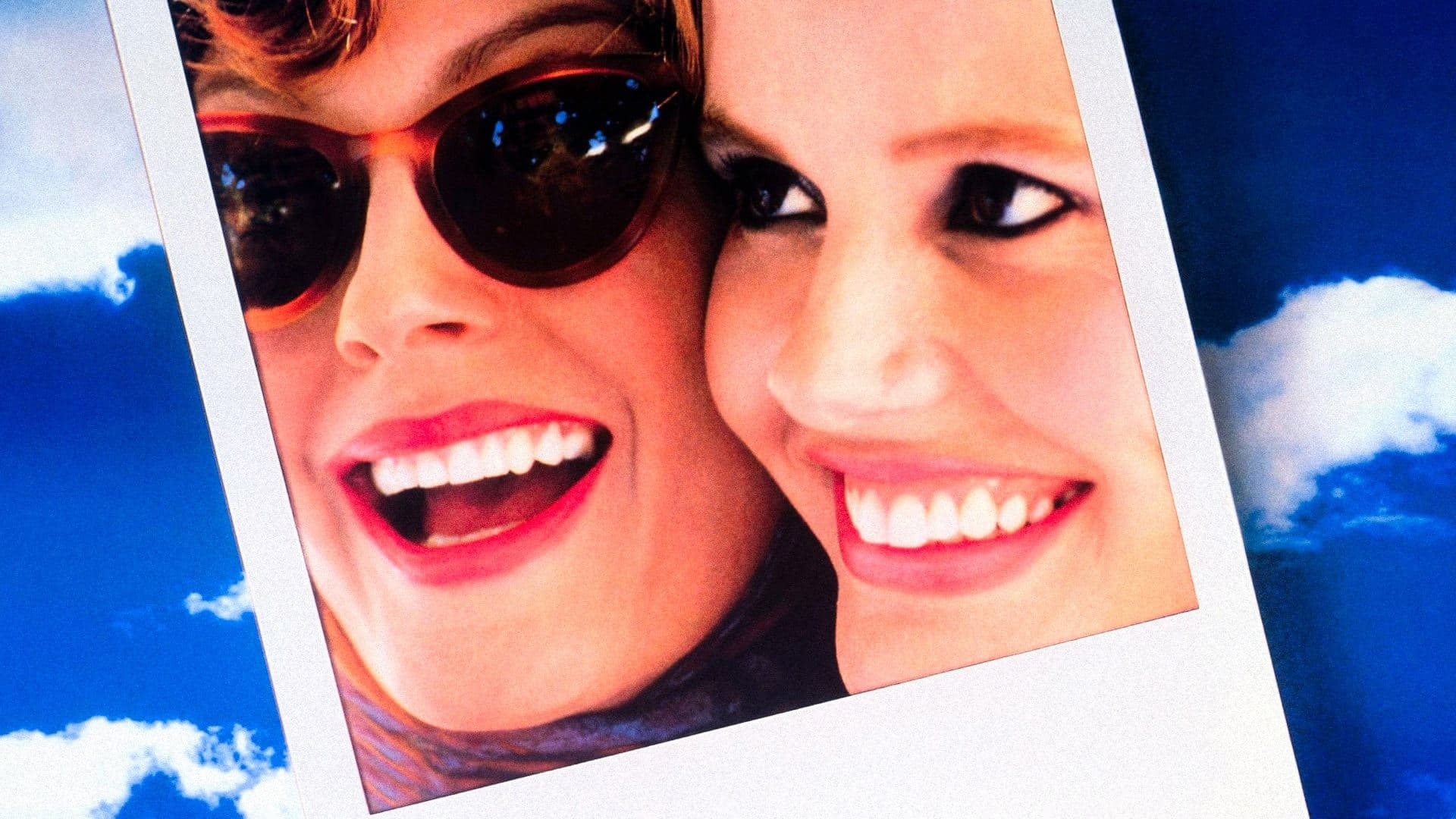
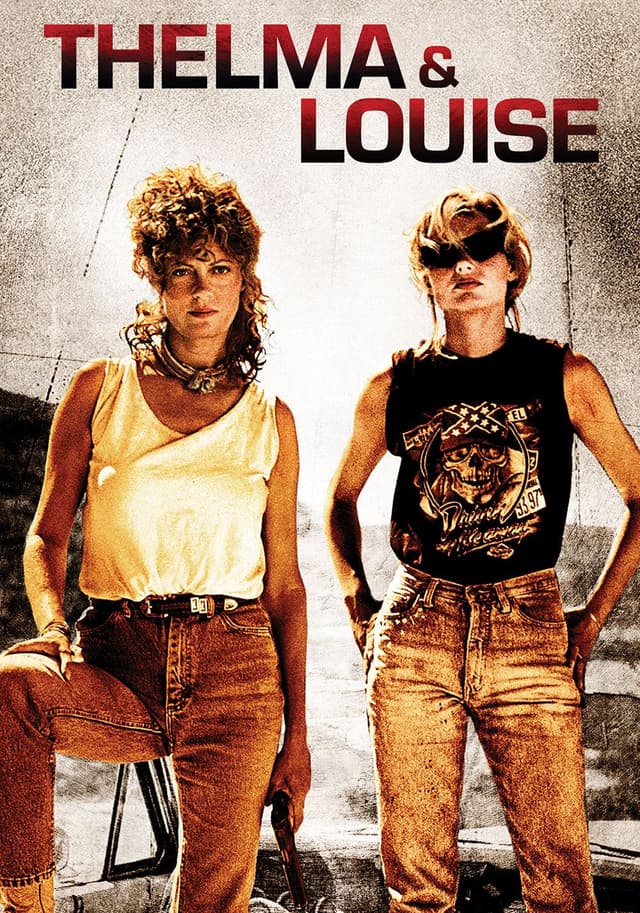
Taking a break from their dreary lives, close friends Thelma and Louise embark on a short weekend trip that ends in unforeseen incriminating circumstances. As fugitives, both women rediscover the strength of their bond and their newfound resilience.
What Is the Budget of Thelma & Louise?
Thelma & Louise was produced on a budget of $16.5 million, a modest sum for a Ridley Scott film even by 1991 standards. The project was financed by Percy Main Productions and Pathe Entertainment and released through MGM/UA, a combination that kept the budget disciplined while securing wide distribution for a film with commercial ambitions beyond its arthouse pedigree.
The budget reflected the film's emphasis on performance and location over spectacle. Ridley Scott, fresh off Black Rain (1989) and working with cinematographer Adrian Biddle, made the American Southwest landscape the film's visual centerpiece, a choice that delivered stunning production value through geography rather than studio construction. The screenplay by Callie Khouri, a first-time feature writer, had attracted significant Hollywood attention by the time Scott attached himself, which helped assemble a cast and crew of unusual distinction for the price point.
Key Budget Allocation Categories
- Above-the-Line Talent: Susan Sarandon and Geena Davis headlined the film as Louise and Thelma respectively, with both women later receiving Best Actress Oscar nominations for their performances. Harvey Keitel, Michael Madsen, and a then-unknown Brad Pitt rounded out the principal cast. Above-the-line costs for this ensemble, including Ridley Scott's director fee, likely consumed $6 to $8 million of the $16.5 million budget.
- Southwest Location Photography: Principal photography took place across Utah's canyon country, including areas near Arches National Park and Canyonlands, as well as locations in the Los Angeles area. Shooting on location in remote desert terrain added logistical costs but delivered the vast, sun-bleached landscapes that became the film's visual identity. Cinematographer Adrian Biddle's widescreen photography transformed the Southwest into a character in its own right.
- Hans Zimmer Score: Composer Hans Zimmer delivered a roots-influenced score blending country, blues, and orchestral elements. Zimmer was in an early phase of his career in 1991, between his breakthrough on Rain Man (1988) and his later blockbuster work. Music costs including licensing of period songs for the soundtrack added to the below-the-line total.
- Stunts and the Finale: The film's climactic sequence required stunt coordination for the final drive off the canyon rim, a practical effects shot that became one of cinema's most iconic endings. Stunt and practical effects work for the finale and road sequences represented a notable budget line given the physical demands of a cross-country chase story.
How Does Thelma & Louise's Budget Compare to Similar Films?
Thelma & Louise occupies a distinctive position in early-1990s studio filmmaking: a $16.5 million drama with a female-led cast and feminist subtext that outperformed its budget and became a cultural flashpoint. The following comparisons illuminate where it sits in context.
- Silence of the Lambs (1991): Budget $19M | Worldwide $272.7M | Released the same year, Jonathan Demme's thriller similarly defied genre expectations for a modest-budget film and swept the Academy Awards. Both films demonstrate that 1991 was a breakthrough year for character-driven dramas with unconventional protagonists.
- Tootsie (1982): Budget $21M | Worldwide $177M | Columbia's cross-dressing comedy with Dustin Hoffman is an earlier example of a studio investing in a female-centric premise at a comparable budget level. Thelma & Louise arrived a decade later with a genuine feminist viewpoint and a smaller budget.
- A League of Their Own (1992): Budget $40M | Worldwide $132M | Columbia's female-ensemble baseball film released a year after Thelma & Louise at more than double the budget, underscoring how unusual it was for a female-led drama to be produced so economically while achieving comparable cultural impact.
- Ridley Scott's Black Rain (1989): Budget $30M | Worldwide $134M | Scott's previous American studio film cost nearly double Thelma & Louise's budget, demonstrating the production restraint the director applied to Khouri's script, a choice that kept the film's profitability equation favorable.
Thelma & Louise Box Office Performance
Thelma & Louise opened on May 24, 1991, earning $7.3 million in its opening weekend across 1,237 theaters. Distributed by MGM/UA, the film expanded steadily through summer 1991 on the strength of critical consensus and audience response, ultimately grossing $45.4 million domestically. International distribution was limited, making domestic the primary revenue source.
On a $16.5 million production budget with estimated prints and advertising costs of $12 million, the film's total investment approached $28.5 million. At a standard theatrical split giving the studio roughly 50 percent of gross receipts, the domestic gross returned approximately $22.7 million in studio share, a tight margin that nonetheless positioned the film as a success, particularly given its awards season performance and long-term home video revenue.
Box Office Breakdown
Thelma & Louise

Thelma & Louise earned roughly $2.75 for every $1 invested in production, though the theatrical split and marketing costs meant actual profitability came primarily through home video sales, cable licensing, and the film's enduring cultural life. MGM's investment was recouped and then some, validating the risk of producing a feminist road movie in a market that had not clearly demonstrated appetite for such material.
Thelma & Louise Production History
The screenplay for Thelma & Louise was written by Callie Khouri, a music video producer who had never written a feature film before. Khouri wrote the script in 1987 and spent several years trying to sell it in a Hollywood that repeatedly questioned whether a female-led action-road film could find an audience. The script circulated widely before landing with producers Ridley Scott and Mimi Polk Gitlin, who attached Scott as director and took the project to MGM.
Casting was contested. Among the names considered for the lead roles were Meryl Streep and Goldie Hawn; the pairing ultimately settled on Susan Sarandon and Geena Davis, who had both been seeking material that matched their abilities. Their chemistry in development and rehearsal convinced Scott that the film's emotional core would hold. Brad Pitt, then 27 and barely known, auditioned for the role of J.D. from an open call and landed what became the role that introduced him to mainstream American audiences.
Principal photography began in fall 1990 in the American Southwest. Adrian Biddle, the British cinematographer who had worked with Scott on Aliens (1986), shot the film in Panavision anamorphic widescreen, creating the expansive landscapes that made the Utah locations feel like the American frontier. Filming across remote canyon country added logistical complexity but delivered images that would define the film's visual legacy.
Thelma & Louise premiered at the 1991 Cannes Film Festival on May 20, 1991, four days before its US theatrical opening. The film's cultural conversation began immediately, with critics and commentators debating its politics, its violence, and its ending. Callie Khouri won the Academy Award for Best Original Screenplay in March 1992, the only Oscar from the film's six nominations.
Awards and Recognition
Thelma & Louise received six Academy Award nominations at the 64th Academy Awards (1992): Best Picture, Best Director (Ridley Scott), Best Actress (Susan Sarandon), Best Actress (Geena Davis), Best Cinematography (Adrian Biddle), and Best Film Editing (Thom Noble). The film won one Oscar: Best Original Screenplay for Callie Khouri, who became the first woman in Academy history to win in that category for a debut screenplay.
The film also received nominations from the British Academy of Film and Television Arts and multiple critics circles. It was selected for preservation in the United States National Film Registry by the Library of Congress in 2016, cited as 'culturally, historically, or aesthetically significant.' The dual Best Actress nominations for Davis and Sarandon, both women nominated for the same film, was a rare distinction that underscored the film's status as a performance showcase.
Critical Reception
Thelma & Louise opened to rapturous critical reception. Roger Ebert gave the film four stars, calling it 'a pure piece of filmmaking.' Janet Maslin at The New York Times described it as 'one of the most thrilling films of the year.' The consensus positioned the film as both a crowd-pleaser and a significant cultural statement.
The film generated immediate controversy alongside the praise. Some critics and commentators objected to its portrayal of violence and its ending, arguing that it romanticized criminal behavior or presented an overly bleak vision of gender relations. Others argued the same critics would not have raised these objections about a male-led action film. The debate itself became part of the film's cultural legacy, a provocation that extended its reach beyond the box office.
Decades of critical reassessment have only strengthened the film's reputation. It is now regarded as one of the defining American films of the 1990s, a watershed moment for female-led genre cinema, and a touchstone for discussions about gender, freedom, and Hollywood's relationship to both. The AFI ranked it on multiple lists of great American films.
자주 묻는 질문
How much did Thelma & Louise (1991) cost to make?
The production budget was $16,500,000. MGM/Pathe Entertainment financed and distributed the road-trip drama, with Ridley Scott's Percy Main Productions and Mimi Polk co-producing the film that had previously been turned down by multiple studios.
How much did Thelma & Louise earn at the box office?
The film grossed $45,400,000 domestically and approximately $12,000,000 internationally, for a worldwide total of approximately $57,400,000. It opened to $6,100,000 on May 24, 1991, expanding from a limited release into wide play through summer.
Who directed Thelma & Louise?
Ridley Scott directed the film, his sixth feature following Alien (1979), Blade Runner (1982), Legend (1985), Someone to Watch Over Me (1987), and Black Rain (1989). Thelma & Louise represented a deliberate tonal shift toward character-driven drama after a run of stylized genre pieces.
Who stars in Thelma & Louise?
Geena Davis plays Thelma and Susan Sarandon plays Louise. Supporting cast includes Harvey Keitel as Detective Hal Slocumb, Michael Madsen as Jimmy, and a then-unknown Brad Pitt in his breakthrough role as J.D., the hitchhiker. Christopher McDonald plays Thelma's husband Darryl.
Did Thelma & Louise win any Oscars?
The film received six Academy Award nominations and won one, for Best Original Screenplay for Callie Khouri. It was nominated for Best Director (Ridley Scott), Best Actress for both Geena Davis and Susan Sarandon, Best Cinematography for Adrian Biddle, and Best Film Editing.
How did Thelma & Louise launch Brad Pitt's career?
Brad Pitt was 27 and largely unknown when cast as J.D., the charming hitchhiker who sleeps with Thelma and steals their money. His five-scene performance became one of the most discussed breakout roles of the year and led directly to leading-man casting in A River Runs Through It (1992) and Kalifornia (1993).
Where was Thelma & Louise filmed?
Principal photography took place across Arkansas, Utah, California, and New Mexico, with the iconic Grand Canyon sequences shot in Canyonlands National Park and Dead Horse Point State Park in Utah rather than the actual Grand Canyon. The film's 73-day shoot covered approximately 1,400 miles of road.
What did critics think of Thelma & Louise?
Reviews were strongly positive, with an 86% approval rating on Rotten Tomatoes and an 88 out of 100 score on Metacritic. The film became one of the defining critical and cultural conversations of 1991, with extensive debate in mainstream press about its portrayal of female agency and male antagonism.
Was Thelma & Louise profitable?
Yes. Against the $16,500,000 production budget and an estimated $15,000,000 to $20,000,000 in marketing spend, the worldwide gross of $57,400,000 produced a clear theatrical profit. Home video and cable broadcast revenue, plus a sustained second life on academic and cultural reading lists, have made the property a long-running catalog asset.
Where can I stream Thelma & Louise?
The film is available for digital purchase and rental on Amazon Prime Video, Apple TV, and Google Play. It has periodically rotated through Netflix, Hulu, and Pluto TV on the subscription tier, with a 4K restoration released for the 30th anniversary in 2021 on Blu-ray.
Saturation에서 이런 예산을 만들어 보세요
업계 표준 장편 영화 템플릿으로 시작해 이미 가진 일정과 요율을 가져오고, 지출과 함께 비용 보고서가 자동으로 최신 상태를 유지하게 하세요. 실시간 협업, 스프레드시트 없이.