Ocean's Eleven Budget
 ThrillerCrime1h 56m
업데이트
Synopsis
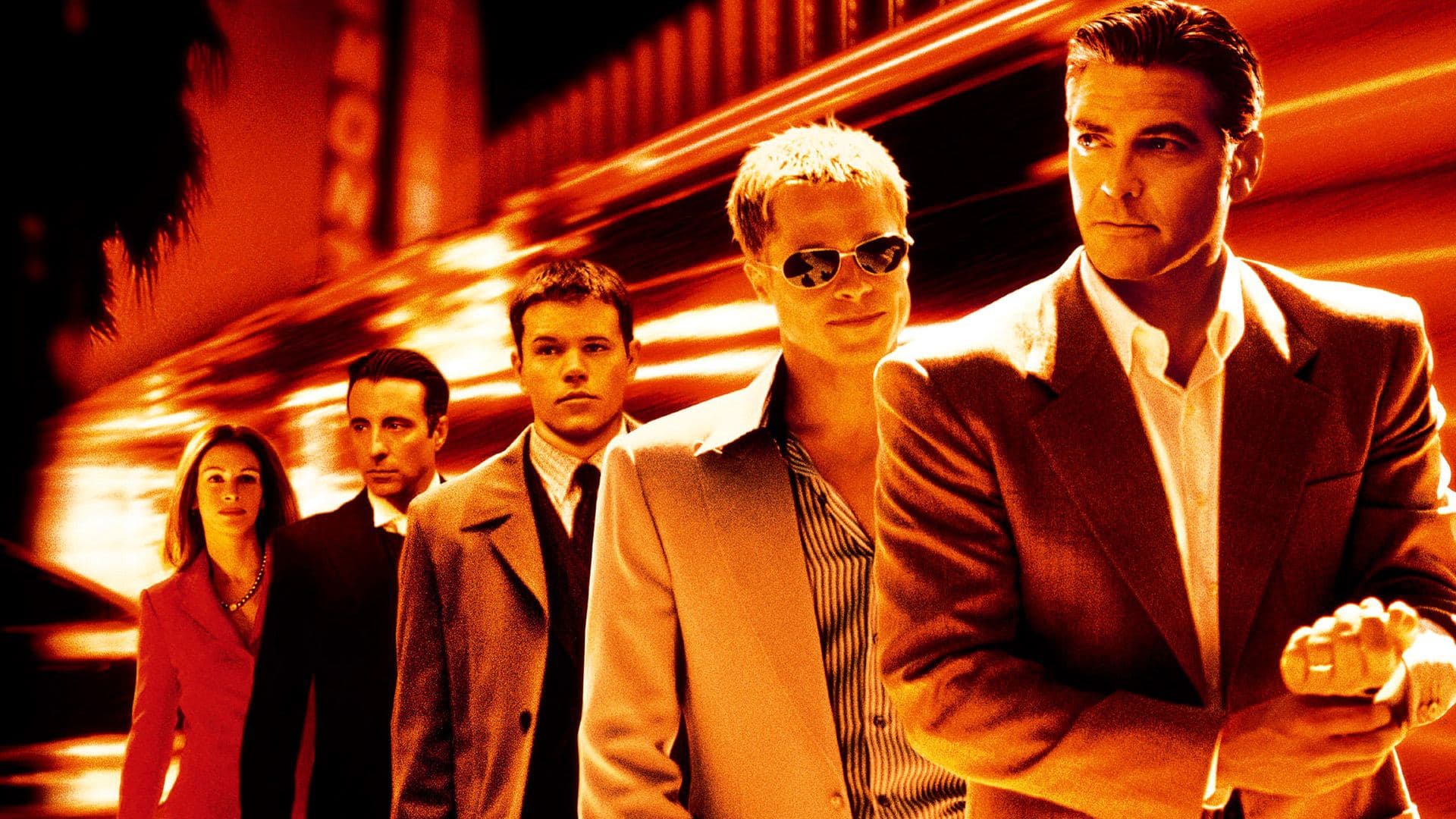
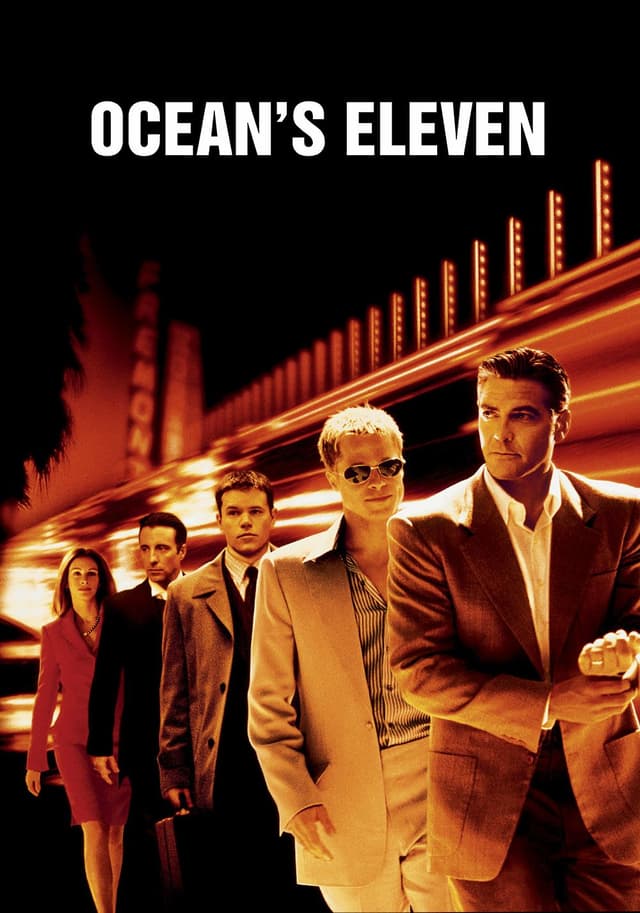
Danny Ocean wants to score the biggest heist in history. He combines an eleven member team, including Frank Catton, Rusty Ryan and Linus Caldwell. Their target? The Bellagio, the Mirage and the MGM Grand. All casinos owned by Terry Benedict. It's not going to be easy, as they plan to get in secretly and out with $150 million.
What Is the Budget of Ocean's Eleven?
Ocean's Eleven had a production budget of approximately $85,000,000. That figure reflects the extraordinary cost of assembling what was, at the time of release, the most star-studded ensemble cast in a single Hollywood production. George Clooney, Brad Pitt, Matt Damon, Julia Roberts, and Andy Garcia alone represented an above-the-line package that had never been assembled for a single studio film, and Warner Bros. backed the project precisely because the cast was its own marketing campaign.
Producer Jerry Weintraub and director Steven Soderbergh structured the budget around the ensemble value proposition: the star power was the spectacle. Unlike a traditional studio tentpole, the film carried no major visual effects costs, no large-scale action setpieces requiring extensive second units, and no franchise IP licensing fees. The $85 million went overwhelmingly into above-the-line talent, Las Vegas casino access and logistics, and the production design required to build a convincing replica of the Bellagio vault and sub-basement for the heist sequences.
Key Budget Allocation Categories
- Ensemble Above-the-Line Talent: George Clooney and Brad Pitt each received approximately $10 million in salary, while Matt Damon, Julia Roberts, and Andy Garcia each earned in the $7 to $10 million range. The remaining ensemble, including Don Cheadle, Bernie Mac, Casey Affleck, Scott Caan, Elliott Gould, Carl Reiner, Eddie Jemison, and Shaobo Qin, added further above-the-line costs. Together, cast fees likely consumed more than half of the $85 million budget, making this the defining line item in the production.
- Las Vegas Casino Access and Production Logistics: Filming at actual operational casinos, including the Bellagio, MGM Grand, The Mirage, and Caesars Palace, required extensive coordination, insurance coverage, and cooperation agreements with casino management. The casinos supported the production because they recognized the marketing value of being glamorized in a Clooney-Pitt vehicle. Filming in live casino environments meant reduced crew sizes and careful scheduling around operational hours, adding logistical costs that a backlot production would have avoided.
- Production Design and Vault Set Construction: Production designer Philip Messina constructed a full-scale replica of the Bellagio vault and its sub-basement systems for the heist sequences that could not be filmed inside the real casino. These practical sets required engineering research and detailed reference materials from the actual Bellagio infrastructure, and they appear extensively in the film's climactic third act.
- Soderbergh as His Own Cinematographer: Soderbergh shot the film himself under his longtime pseudonym Peter Andrews, as he does on most of his projects. This dual role reduced one above-the-line cost, the director of photography fee, while giving Soderbergh complete visual control over the film's stylized palette. His use of diffusion, color grading, and selective film grain became one of the production's defining aesthetic choices.
- David Holmes's Score and Music Licensing: Belfast-born composer David Holmes crafted a jazz and lounge-inflected score that became one of the most recognizable soundtracks of the early 2000s. The original compositions and needle drops throughout the film required substantial music licensing costs, and the score was widely credited as integral to the film's tone.
How Does Ocean's Eleven's Budget Compare to Similar Films?
Ocean's Eleven occupies a specific tier in studio filmmaking: a mid-to-high budget production with no franchise IP and no digital spectacle, carried entirely by its ensemble. Comparing it to other heist and ensemble films places the $85 million in context.
- The Italian Job (2003): Budget $60M, worldwide gross $176M. The ensemble heist film that most directly followed Ocean's Eleven in the early-2000s heist revival cost $25 million less, deployed a smaller but still star-driven cast, and performed respectably, though never matched the cultural impact of Ocean's Eleven.
- Ocean's Twelve (2004): Budget $110M, worldwide gross $362M. The immediate sequel came in $25 million over Ocean's Eleven due to the expense of European locations in Amsterdam, Rome, and Paris, as well as a retained and expanded ensemble. Warner Bros. paid more for the follow-up and received significantly less at the global box office.
- Now You See Me (2013): Budget $75M, worldwide gross $352M. A magic-heist film that inherited Ocean's Eleven's ensemble-of-specialists template a decade later, with a younger cast and a lower budget. Its outperformance in international markets demonstrated how durable the heist ensemble genre remained.
- The Sting (1973): Budget $5.5M (approximately $38M in 2001 dollars), domestic gross $156M. The classic ensemble con film that Ocean's Eleven most consciously echoes was made for a fraction of the cost in a different studio era. The comparison illustrates how star-driven ensemble films had become exponentially more expensive to assemble by 2001.
Ocean's Eleven Box Office Performance
Ocean's Eleven opened on December 7, 2001, distributed by Warner Bros. The film debuted to $38.3 million in its opening weekend, the largest December opening weekend on record at that time, a figure that signaled both the strength of the ensemble's commercial appeal and the film's broad audience reach beyond typical heist-genre demographics. The domestic run accumulated $183,417,150, and the film performed strongly in international markets, particularly in the United Kingdom, Germany, and Australia, bringing the worldwide total to $450,728,529.
Against a $85 million production budget and an estimated $50 million in prints and advertising, the total investment was approximately $135 million. With theatrical distributors retaining roughly 50 percent of ticket revenue, the studio's share of the worldwide gross was approximately $225 million, well above the total investment. Ocean's Eleven cleared its break-even point during its theatrical run and delivered substantial profit before home video, television licensing, and merchandising revenues were calculated.
Box Office Breakdown
Ocean's Eleven

Ocean's Eleven earned roughly $5.30 for every dollar invested in its production budget, a return that justified Warner Bros.'s willingness to pay for the ensemble. The theatrical splits and P&A costs reduced the studio's actual profitability relative to the raw box office number, but the film's performance on home video, where it became a top-selling DVD title in 2002, made it one of the studio's strongest earners of the year across all windows.
Ocean's Eleven Production History
The remake of Ocean's Eleven originated with producer Jerry Weintraub, who had produced the original 1960 Rat Pack film, Ocean's 11, featuring Frank Sinatra, Dean Martin, Sammy Davis Jr., Peter Lawford, and Joey Bishop. Weintraub held the remake rights for decades and had long sought the right combination of director and talent to revive the project. Following Steven Soderbergh's back-to-back critical and commercial successes with Erin Brockovich and Traffic in 2000, Weintraub brought the project to him. Soderbergh and George Clooney, who had formed the production company Section Eight together, agreed to develop it as an original heist picture rather than a direct period remake.
The ensemble was assembled largely through personal relationships. Clooney recruited Brad Pitt, who recruited Matt Damon. Julia Roberts was the last major addition, and her casting was announced as a separate coup, underscoring the film's unique status as an event built around its cast rather than its story. Screenwriter Ted Griffin adapted the original Harry Brown and Charles Lederer script into a contemporary Las Vegas setting, replacing the Sands casino with the Bellagio, then newly opened in 1998 and widely regarded as the most opulent casino in the world.
Principal photography took place in Las Vegas and Los Angeles. The casino access was unprecedented for a major studio production. The Bellagio, MGM Grand, The Mirage, and Caesars Palace all cooperated with the production, allowing filming on casino floors, in hotel corridors, and in public areas. Soderbergh worked with smaller crews than typical on-location shoots, both to satisfy casino requirements and to maintain the naturalistic feel he wanted for the film. He shot the film himself, credited as Peter Andrews, as was his established practice.
Post-production and the film's marketing were managed as a signature Warner Bros. event release. The film was positioned as a December prestige entertainment title rather than a summer blockbuster, targeting adult audiences rather than teenagers. It opened to reviews that were largely positive and audience reception that was enthusiastic, establishing the Ocean's franchise as one of Warner Bros.'s most reliable ensemble properties and spawning two sequels and a female-led spinoff over the following two decades.
Awards and Recognition
Ocean's Eleven received no major Academy Award nominations, a reflection of the Academy's longstanding resistance to rewarding genre entertainment regardless of execution quality. The film was nominated for a Saturn Award for Best Action/Adventure/Thriller Film from the Academy of Science Fiction, Fantasy and Horror Films, and received MTV Movie Award nominations including Best Movie and Best On-Screen Team for the ensemble cast.
In the years since its release, Ocean's Eleven has received considerable critical reassessment. The American Film Institute recognized it as one of the defining studio films of the early 2000s. Soderbergh's work as both director and cinematographer, editor Stephen Mirrione's precision cutting, and David Holmes's score have all been cited as exemplary craft contributions in retrospective analysis. The film is frequently cited in discussions of how to execute a large ensemble narrative without giving any single character disproportionate screen time, a structural achievement that eluded most imitators.
The ensemble itself became a recurring reference point in Hollywood deal-making and talent packaging. George Clooney, Brad Pitt, and Matt Damon's willingness to work together at reduced individual fees for the collective benefit of a stronger ensemble became a model that studios attempted, with limited success, to replicate in subsequent productions.
Critical Reception
Ocean's Eleven holds an 82 percent approval rating on Rotten Tomatoes, based on over 175 reviews, with critics consistently praising its wit, pace, and ensemble chemistry. A.O. Scott of The New York Times called it slick and entertaining in the most satisfying way. Roger Ebert awarded it 3.5 out of 4 stars, writing that the film delivers the pleasures it promises with exceptional craft and that Soderbergh had found the ideal tone for a caper film: sophisticated without being cold, and funny without undermining its own tension.
The critical consensus recognized the film as a masterclass in studio entertainment. Unlike many ensemble films that collapse under the weight of competing star egos and storylines, Ocean's Eleven maintains clarity, rhythm, and wit throughout its two-hour runtime. The heist's mechanics are explained to the audience in a way that is comprehensive without being condescending, and the film's final revelation recontextualizes earlier scenes without feeling manipulative.
The film revitalized the heist genre for the 2000s and established a template that has been imitated repeatedly. It directly spawned Ocean's Twelve in 2004 and Ocean's Thirteen in 2007, both of which performed well commercially but received more mixed critical responses. The female-led spinoff Ocean's 8, released in 2018 with Sandra Bullock, Cate Blanchett, Anne Hathaway, and Rihanna in the lead roles, returned to the form's potential and grossed $297 million worldwide. Ocean's Eleven itself remains the strongest entry in the franchise by most critical measures and the film most frequently cited when the ensemble heist genre is discussed.
자주 묻는 질문
How much did it cost to make Ocean's Eleven (2001)?
The production budget was $85,000,000, covering principal photography, cast and crew salaries, locations, sets, post-production, and music. Marketing and distribution (P&A) costs are estimated at an additional $42,500,000 - $68,000,000, bringing the total studio investment to approximately $127,500,000 - $153,000,000.
How much did Ocean's Eleven (2001) earn at the box office?
Ocean's Eleven grossed $183,417,150 domestic, $267,300,000 international, totaling $450,717,150 worldwide.
Was Ocean's Eleven (2001) profitable?
Yes. Against a production budget of $85,000,000 and estimated total costs of ~$212,500,000, the film earned $450,717,150 theatrically - a 430% ROI on production costs alone.
What were the biggest costs in producing Ocean's Eleven?
The primary cost drivers were above-the-line talent (George Clooney, Brad Pitt, Andy Garcia); talent compensation, location cinematography, and tension-driven editorial.
How does Ocean's Eleven's budget compare to similar thriller films?
At $85,000,000, Ocean's Eleven is classified as a mid-budget production. The median budget for wide-release thriller films in the 2000s ranges from $30 - 80M for mid-budget to $150M+ for tentpoles. Comparable budgets: Minions: The Rise of Gru (2022, $85,000,000); The Fast and the Furious: Tokyo Drift (2006, $85,000,000); Enchanted (2007, $85,000,000).
Did Ocean's Eleven (2001) go over budget?
There are no widely reported accounts of significant budget overruns for this production. However, studios rarely disclose precise budget overrun figures publicly. The reported production budget reflects the final estimated cost.
What was the return on investment (ROI) for Ocean's Eleven?
The theatrical ROI was 430.3%, calculated as ($450,717,150 − $85,000,000) ÷ $85,000,000 × 100. This measures gross revenue against production budget only - it does not account for P&A or exhibitor shares.
What awards did Ocean's Eleven (2001) win?
4 wins & 20 nominations total.
Who directed Ocean's Eleven and who were the key crew members?
Directed by Steven Soderbergh, written by Ted Griffin, shot by Steven Soderbergh, with music by David Holmes, edited by Stephen Mirrione.
Where was Ocean's Eleven filmed?
Ocean's Eleven was filmed in United States of America.
Filmmakers
Ocean's Eleven

Saturation에서 이런 예산을 만들어 보세요
업계 표준 장편 영화 템플릿으로 시작해 이미 가진 일정과 요율을 가져오고, 지출과 함께 비용 보고서가 자동으로 최신 상태를 유지하게 하세요. 실시간 협업, 스프레드시트 없이.