The Departed Budget
 DramaThrillerCrime2h 31m
अपडेट किया गया
Synopsis
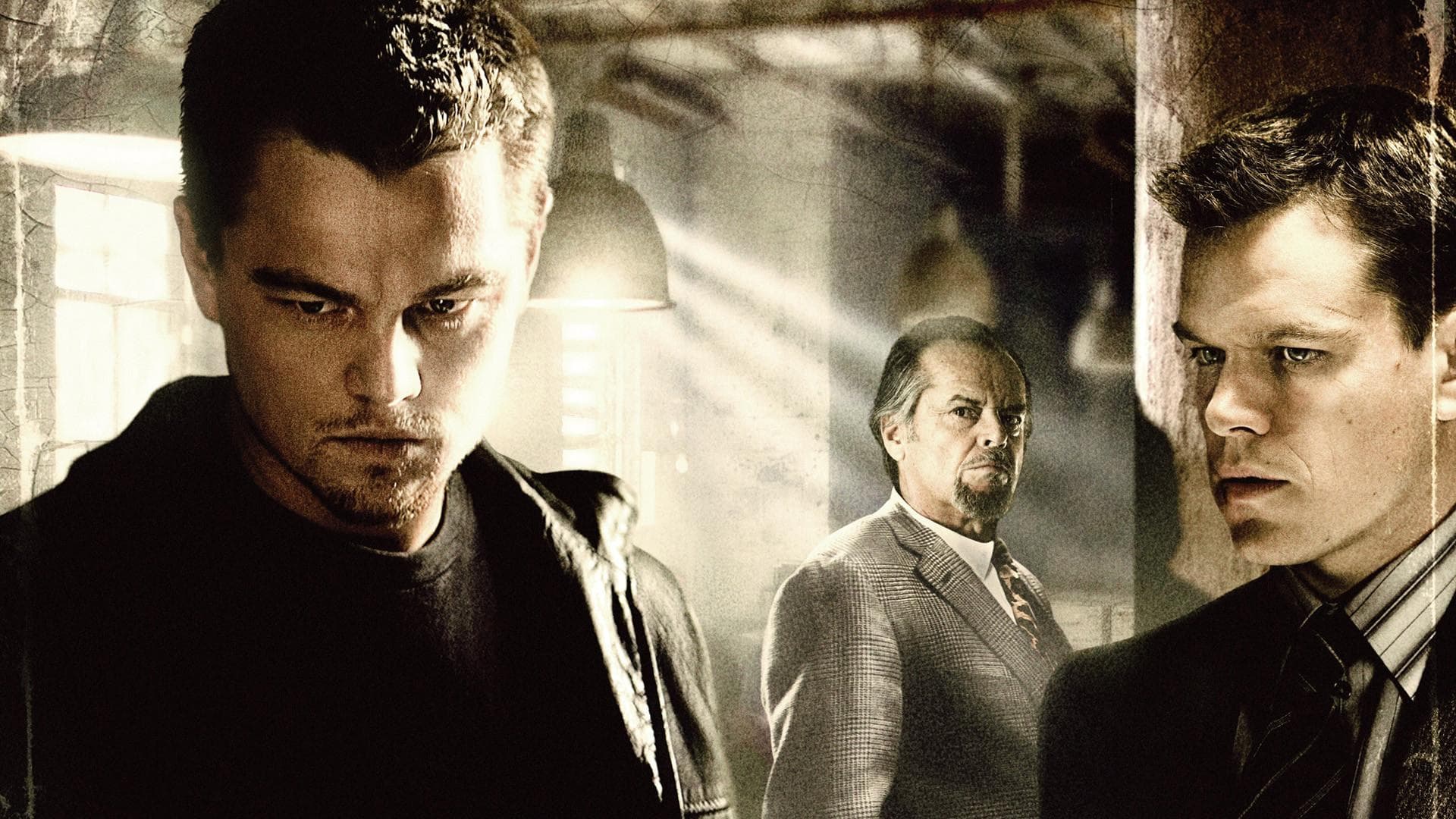
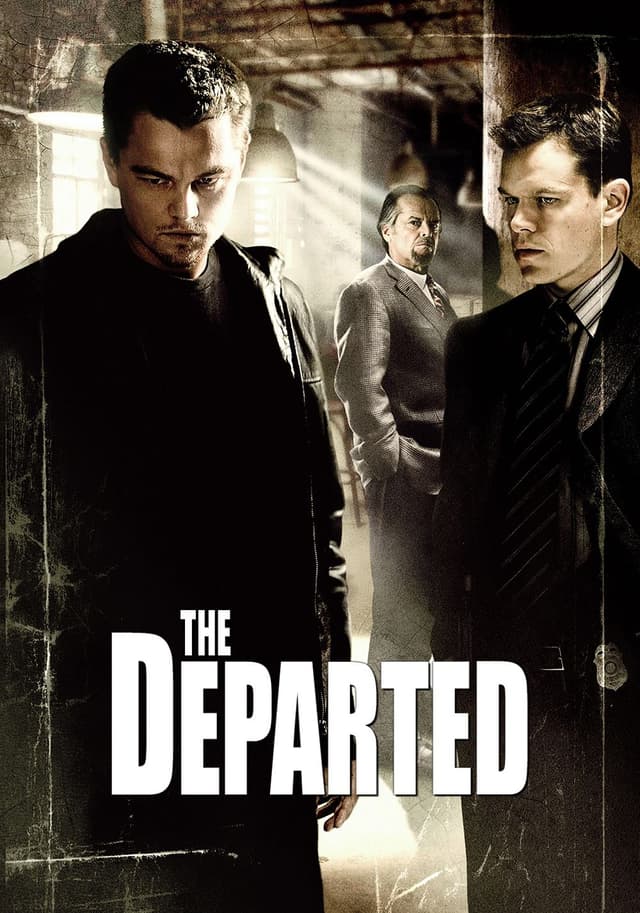
"The Departed" is a gripping crime thriller directed by Martin Scorsese, set against the backdrop of Boston's organized crime scene. The film follows two main characters: Billy Costigan, an undercover cop played by Leonardo DiCaprio, who infiltrates the Irish mob led by the ruthless Frank Costello, portrayed by Jack Nicholson. Simultaneously, Colin Sullivan, a mole within the police department played by Matt Damon, relays information back to Costello, creating a tense cat-and-mouse game. As both men navigate their dangerous double lives, the lines between loyalty and betrayal blur, leading to a shocking climax that explores themes of identity, morality, and the consequences of living a lie. With a stellar cast and masterful direction, "The Departed" delivers a powerful narrative filled with suspense and unexpected twists.
What Is the Budget of The Departed?
The Departed was produced with a budget of $90 million, making it one of Martin Scorsese's most expensive films at the time of its 2006 release. Warner Bros. greenlit the project with confidence, banking on the combination of Scorsese's directorial pedigree and a stacked ensemble cast headlined by Leonardo DiCaprio, Matt Damon, and Jack Nicholson. The investment reflected both the scale of the Boston-set crime epic and the caliber of talent involved on both sides of the camera.
For a character-driven crime thriller, $90 million placed The Departed in premium territory. The budget needed to accommodate salaries for multiple A-list leads, extensive location shooting across two cities, and the meticulous production standards Scorsese demanded. Warner Bros. viewed the spending as justified given the commercial potential of a Scorsese gangster film with mainstream star power, a genre combination the studio believed could cross over beyond the director's typical arthouse audience.
Key Budget Allocation Categories
- Above-the-Line Talent accounted for a significant portion of the budget, with Leonardo DiCaprio, Matt Damon, and Jack Nicholson all commanding top-tier salaries. Mark Wahlberg, Martin Sheen, Alec Baldwin, Vera Farmiga, and Ray Winstone rounded out a deep cast that pushed total talent costs well above the norm for a crime drama.
- Location Filming required extensive shooting across Boston and New York City. The production captured authentic street-level atmosphere in South Boston neighborhoods, the Massachusetts State House, and various waterfront locations, all of which demanded permits, traffic control, and logistical coordination across two major metropolitan areas.
- Production Design and Period Detail ensured the film's contemporary Boston setting felt lived-in and specific. Sets ranged from gritty Southie apartments and dive bars to sterile state police offices and Costello's underworld headquarters, each requiring distinct visual identities to reinforce the story's dual-identity themes.
- Cinematography under Michael Ballhaus brought Scorsese's signature visual intensity to the project. The film's kinetic camera work, rooftop sequences, and night shooting across urban landscapes required specialized equipment and extended shooting schedules to achieve the precise compositions Scorsese demanded.
- Post-Production and Editing involved Scorsese's longtime editor Thelma Schoonmaker shaping the complex, multi-perspective narrative. The film's intercutting between parallel storylines required extensive editorial work to maintain tension and clarity across its 151-minute runtime.
- Music and Score featured an original score by Howard Shore alongside a curated soundtrack of classic rock tracks. Licensing fees for songs by the Rolling Stones, the Dropkick Murphys, Pink Floyd, and others added notable cost to the music budget.
How Does The Departed's Budget Compare to Similar Films?
At $90 million, The Departed sat at the higher end of crime thriller budgets for the mid-2000s but remained competitive against other star-driven prestige films of the era. Its financial footprint reflects the cost of assembling an elite cast and shooting on location in major cities, a combination few crime dramas attempted at that scale.
- Infernal Affairs (2002) had an estimated budget of $6.5 million, producing the Hong Kong original that inspired The Departed. The massive cost difference illustrates how Hollywood's star-salary structure and location requirements transform the economics of adapting foreign-language films.
- The Town (2010) cost approximately $37 million for Ben Affleck's Boston-set crime thriller. Despite similar settings, The Departed's budget was more than double, driven largely by its deeper cast roster and longer production schedule under Scorsese's perfectionist approach.
- Mystic River (2003) was produced for around $25 million under Clint Eastwood's famously efficient direction. Both films explored crime and identity in working-class Boston, but Scorsese's more elaborate visual style and bigger cast pushed The Departed's costs significantly higher.
- Heat (1995) carried a budget of roughly $60 million for Michael Mann's sprawling crime epic. Both films featured multiple A-list leads in an ensemble crime narrative, though The Departed's additional decade of salary inflation and urban location costs pushed its budget higher.
- American Gangster (2007) was produced for approximately $100 million with Ridley Scott directing Denzel Washington and Russell Crowe. The two films occupy similar territory as premium crime dramas from elite directors, with comparable budgets reflecting the cost of prestige casting and period or location-specific production.
The Departed Box Office Performance
The Departed opened on October 6, 2006, and earned $26.9 million in its domestic opening weekend, claiming the number one spot. The film demonstrated strong legs throughout its theatrical run, benefiting from critical acclaim and growing awards-season buzz. Domestic receipts reached $132.4 million, making it Scorsese's highest-grossing domestic release at that point in his career, surpassing the $116.8 million earned by Gangs of New York.
International markets contributed an additional $159.1 million, bringing the worldwide total to $291.5 million. For Warner Bros., the film became a clear commercial hit that validated the studio's investment in prestige filmmaking with mainstream star power. The strong box office performance also helped build momentum during the awards season, reinforcing the narrative that The Departed was both a critical and commercial triumph.
Box Office Breakdown
The Departed

The Departed Production History
The Departed originated when Warner Bros. acquired the remake rights to Infernal Affairs, the 2002 Hong Kong thriller directed by Andrew Lau and Alan Mak. The original film, a taut cat-and-mouse story about a mole in the police force and an undercover cop inside a triad organization, had been a commercial and critical sensation across Asia. Initial development attached Brad Pitt to the project before Martin Scorsese came aboard as director, drawn to the material's potential for exploring themes of identity, loyalty, and moral corruption within a distinctly American context.
William Monahan wrote the screenplay, transplanting the story from Hong Kong to Boston and weaving in the city's Irish-American crime culture. Monahan's script drew on the legacy of real Boston mobsters, particularly the influence of Whitey Bulger, whose decades-long relationship with the FBI as both criminal kingpin and informant served as a foundation for Jack Nicholson's character Frank Costello. Scorsese was attracted to the layered betrayal at the story's core, seeing it as an opportunity to revisit the gangster genre he had defined with Goodfellas and Casino while adding a psychological complexity rooted in surveillance and paranoia.
Casting came together with Leonardo DiCaprio as undercover cop Billy Costigan, Matt Damon as Colin Sullivan (the mole planted by Costello inside the state police), and Jack Nicholson as the volatile mob boss Costello. Mark Wahlberg, a Dorchester native, brought authentic Boston energy to Staff Sergeant Dignam. Martin Sheen played Captain Queenan, Alec Baldwin took the role of Captain Ellerby, Vera Farmiga was cast as the psychiatrist Madolyn, and Ray Winstone played Costello's enforcer Mr. French.
Principal photography took place across Boston and New York City. South Boston locations provided the gritty neighborhood backdrop, while the Massachusetts State House and various government buildings stood in for police headquarters. Some interiors were shot on New York soundstages for logistical convenience. Cinematographer Michael Ballhaus, in what would be his final collaboration with Scorsese, created a visual palette that shifted between cold institutional interiors and the warm, grimy textures of Southie bars and apartments.
Scorsese pushed for an extended shooting schedule to accommodate the film's complex narrative structure, which crosscuts between Costigan's and Sullivan's parallel infiltrations. Thelma Schoonmaker's editing shaped the intricate dual storyline into a propulsive thriller that maintained clarity despite frequent shifts in perspective. The film's climactic sequence, a rapid cascade of violence and revelation, required careful choreography between stunt work, practical effects, and editorial pacing.
Awards and Recognition
The Departed earned Martin Scorsese his first and only Academy Award for Best Director at the 79th Academy Awards, a victory widely celebrated across the industry after decades of near-misses. The film won four Oscars in total: Best Picture, Best Director, Best Adapted Screenplay for William Monahan, and Best Film Editing for Thelma Schoonmaker. Mark Wahlberg received a Best Supporting Actor nomination for his scene-stealing performance as Sergeant Dignam.
At the Golden Globes, the film was nominated for Best Motion Picture (Drama), Best Director, Best Screenplay, and Best Supporting Actor for both Nicholson and Wahlberg. The Screen Actors Guild recognized the ensemble with a nomination for Outstanding Performance by a Cast in a Motion Picture. The film also earned BAFTA nominations for Best Direction and Best Adapted Screenplay.
Beyond the major ceremonies, The Departed collected awards from the Boston Society of Film Critics, the National Board of Review (Best Film), and the New York Film Critics Circle. Scorsese's win was treated as a career achievement moment, acknowledging not just The Departed but the cumulative weight of a filmography that included Taxi Driver, Raging Bull, Goodfellas, and The Age of Innocence, none of which had won him the directing prize.
Critical Reception
The Departed holds a 91% approval rating on Rotten Tomatoes, with the critical consensus praising Scorsese's visceral direction and the ensemble's commanding performances. Roger Ebert awarded the film four stars, calling it "Scorsese's most purely enjoyable movie in years" and highlighting the propulsive energy of its cat-and-mouse structure. Critics consistently pointed to the film's ability to sustain tension across its two-and-a-half-hour runtime, driven by the constant uncertainty of which character would be exposed first.
DiCaprio's performance as the increasingly unraveling Costigan drew particular praise, with many reviewers noting the raw vulnerability and desperation he brought to a character trapped between two worlds. Damon's cooler, more calculating turn as Sullivan provided a compelling counterpoint, while Nicholson's unpredictable, theatrical energy as Costello divided critics between those who found it electrifying and those who felt it occasionally tipped into excess. Wahlberg's profane, abrasive Dignam became the film's breakout supporting performance, earning him career-best reviews and his first Oscar nomination.
Some critics noted that the film's third-act body count departed sharply from the more restrained conclusion of Infernal Affairs, with Scorsese choosing a bleaker, more nihilistic ending. This divisive choice sparked debate about whether the American version improved upon or simplified the original's moral ambiguity. Despite these conversations, the overwhelming critical consensus held that The Departed represented Scorsese working at peak form within the genre he had made his own, delivering a mainstream crime thriller infused with the psychological depth and visual craft that defined his career.
अक्सर पूछे जाने वाले सवाल
How much did it cost to make The Departed (2006)?
The production budget was $90,000,000, covering principal photography, cast and crew salaries, locations, sets, post-production, and music. Marketing and distribution (P&A) costs are estimated at an additional $45,000,000 - $72,000,000, bringing the total studio investment to approximately $135,000,000 - $162,000,000.
How much did The Departed (2006) earn at the box office?
The Departed grossed $132,399,394 domestic, $159,065,606 international, totaling $291,465,000 worldwide.
Was The Departed (2006) profitable?
Yes. Against a production budget of $90,000,000 and estimated total costs of ~$225,000,000, the film earned $291,465,000 theatrically - a 224% ROI on production costs alone.
What were the biggest costs in producing The Departed?
The primary cost drivers were above-the-line talent (Leonardo DiCaprio, Matt Damon, Jack Nicholson); talent compensation, authentic period production design, and meticulous post-production; international production across Hong Kong, United States of America.
How does The Departed's budget compare to similar drama films?
At $90,000,000, The Departed is classified as a mid-budget production. The median budget for wide-release drama films in the 2000s ranges from $30 - 80M for mid-budget to $150M+ for tentpoles. Comparable budgets: Bad Boys for Life (2020, $90,000,000); Contact (1997, $90,000,000); DC League of Super-Pets (2022, $90,000,000).
Did The Departed (2006) go over budget?
There are no widely reported accounts of significant budget overruns for this production. However, studios rarely disclose precise budget overrun figures publicly. The reported production budget reflects the final estimated cost.
What was the return on investment (ROI) for The Departed?
The theatrical ROI was 223.9%, calculated as ($291,465,000 − $90,000,000) ÷ $90,000,000 × 100. This measures gross revenue against production budget only - it does not account for P&A or exhibitor shares.
What awards did The Departed (2006) win?
Won 4 Oscars. 100 wins & 141 nominations total.
Who directed The Departed and who were the key crew members?
Directed by Martin Scorsese, written by William Monahan, shot by Michael Ballhaus, with music by Howard Shore, edited by Thelma Schoonmaker.
Where was The Departed filmed?
The Departed was filmed in Hong Kong, United States of America.
Filmmakers
The Departed

Official Trailer
Saturation में ऐसे ही budgets बनाएं
Industry-standard feature film template से शुरू करें, अपना मौजूदा schedule और rates import करें, और खर्च के साथ cost report को अपने आप अपडेट होते देखें। Real-time collaboration, बिना spreadsheets।