Schindler's List Budget
 DramaHistoryWar3h 15m
अपडेट किया गया
Synopsis
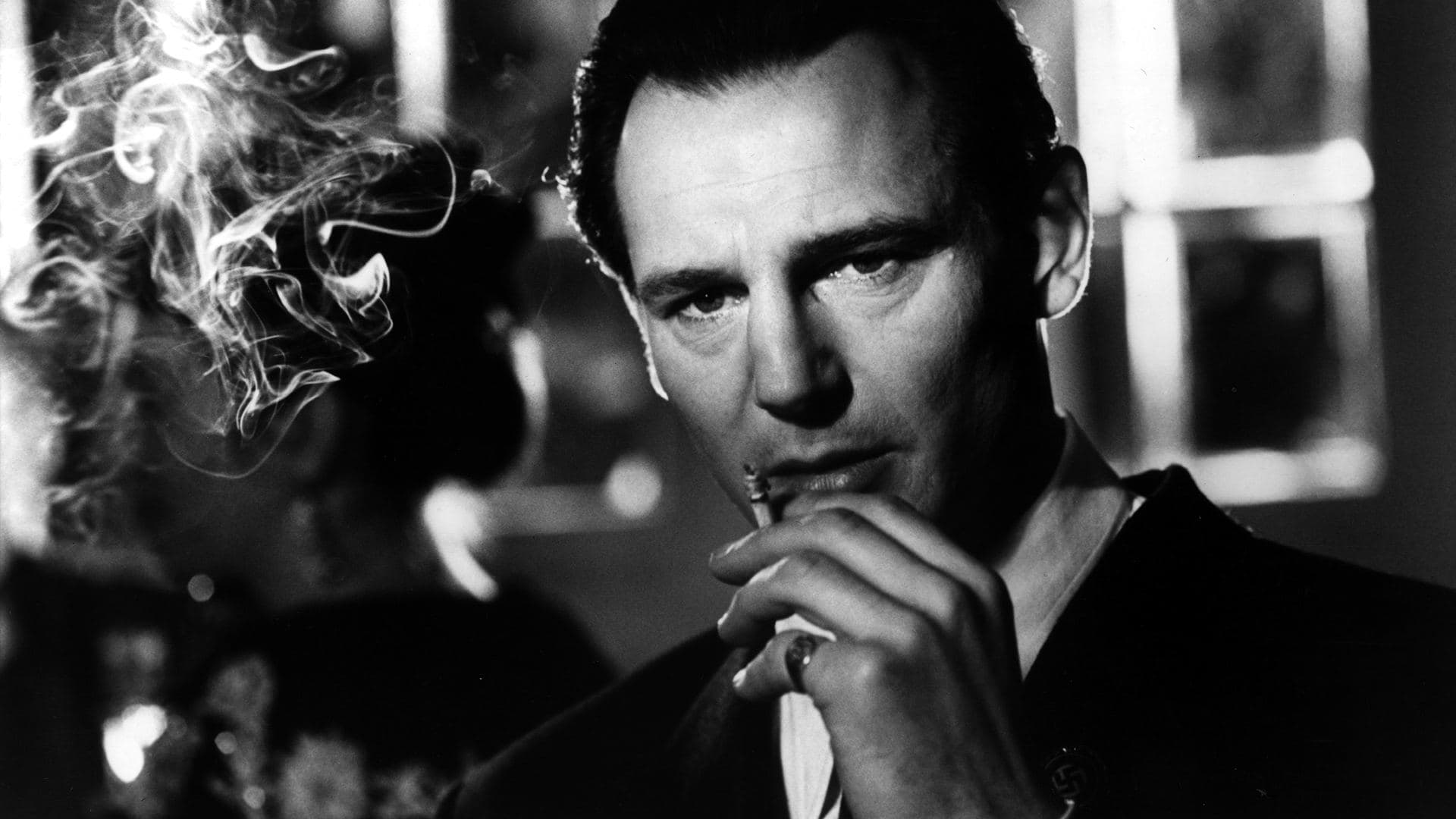
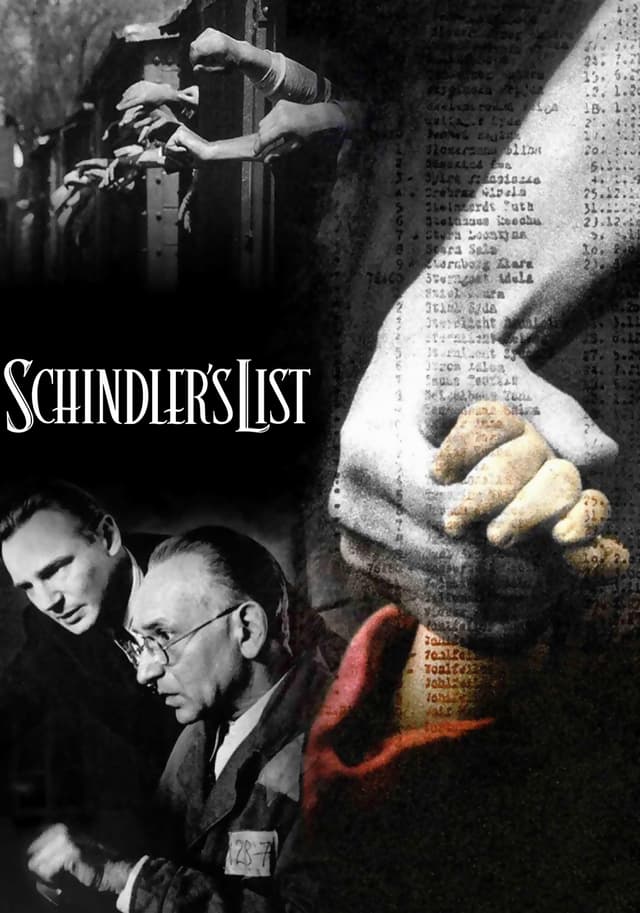
Oskar Schindler is a vain and greedy German businessman who becomes an unlikely humanitarian amid the barbaric German Nazi reign when he feels compelled to turn his factory into a refuge for Jews. Based on the true story of Oskar Schindler who managed to save about 1100 Jews from being gassed at the Auschwitz concentration camp, it is a testament to the good in all of us.
What Is the Budget of Schindler's List?
Schindler's List was produced on a budget of $22 million, a figure that appears modest given the scope and historical weight of the film. Steven Spielberg agreed to make the picture for Universal Pictures after spending years developing it, ultimately waiving his standard directing fee entirely. His $7 million director's salary was donated to establish the USC Shoah Foundation, which he founded to archive the testimonies of Holocaust survivors and witnesses.
Universal and Spielberg's Amblin Entertainment greenlit the film with the understanding that it would be shot in black-and-white, a commercially risky choice for a major studio release in 1993. Spielberg deferred his fee and accepted no upfront salary, reflecting the personal nature of the project. The $22 million budget was kept tight by the standards of a prestige historical drama, with production centered in Poland and a stripped-down, documentary-influenced visual style.
Key Budget Allocation Categories
- Cast and Above-the-Line Talent: Liam Neeson leads as Oskar Schindler, with Ben Kingsley as Itzhak Stern and Ralph Fiennes as Amon Goth. Spielberg waived his $7 million directing fee entirely, redirecting it to the USC Shoah Foundation. The ensemble above-the-line package, while substantial, was managed within the overall $22 million envelope by keeping the production lean rather than star-driven.
- Cinematography and Camera Approach: Janusz Kaminski shot the entire film in black-and-white on handheld Arriflex 35mm cameras, using available-light techniques that evoked newsreel and documentary footage. The stylistic discipline eliminated costly lighting rigs on many setups, but the approach demanded meticulous planning. Kaminski won the Academy Award for Best Cinematography for the work.
- Poland Location Logistics: Principal photography ran from March to May 1993, shot in Krakow's Kazimierz district, on the actual site of the Plaszow labor camp, and at the exterior of Auschwitz-Birkenau. A replica of the Plaszow camp was constructed on a hillside outside Krakow. The production also filmed in Lodz. Coordinating a major Hollywood production across Polish locations in the early 1990s required extensive on-the-ground logistics and crew.
- Original Score by John Williams: John Williams composed the film's score, with violinist Itzhak Perlman performing the central theme. Williams initially told Spielberg the film deserved a better composer. The score won the Academy Award for Best Original Score. Williams's contribution remains one of the most recognizable film scores of the decade.
- Period Production Design and Costumes: Production designer Allan Starski reconstructed wartime Krakow with period-accurate detail, including ghetto streets, factory interiors, and camp infrastructure. The black-and-white palette reduced some color-specific costume demands but required exacting historical accuracy in all visible period elements. Starski won the Academy Award for Best Art Direction for the work.
How Does Schindler's List's Budget Compare to Similar Films?
Schindler's List sits at the lower end of the budget range for major studio historical dramas of the 1990s and 2000s, yet it generated returns that far outpaced similarly budgeted prestige pictures. Its $22 million production cost is comparable to Life Is Beautiful and Sophie's Choice, two other widely seen Holocaust-related dramas, and roughly one-third the cost of Spielberg's later Saving Private Ryan.
- Saving Private Ryan (1998): Budget $70 million | Worldwide $481.8 million. Spielberg's World War II follow-up cost more than three times as much, reflecting the scale of the D-Day sequences and larger set pieces. Schindler's List achieved comparable critical and awards stature at a fraction of the cost.
- Life Is Beautiful (1997): Budget approximately $20 million | Worldwide $229.2 million. Roberto Benigni's Italian-language Holocaust drama was produced at nearly the same budget level and similarly crossed into mainstream international audiences, though Schindler's List's worldwide gross is roughly 40% higher.
- The Pianist (2002): Budget $35 million | Worldwide $120.1 million. Roman Polanski's Holocaust drama was produced at a higher budget and received seven Academy Award nominations, winning three. Schindler's List outperformed it at the box office by nearly three to one on a lower initial investment.
- Sophie's Choice (1982): Budget approximately $22 million | Worldwide $30 million. Alan Pakula's Holocaust-adjacent drama was produced at the same budget level a decade earlier. Meryl Streep won the Academy Award for Best Actress. Schindler's List's worldwide gross dwarfs it, reflecting both inflation and the difference in theatrical scale.
Schindler's List Box Office Performance
Schindler's List was distributed by Universal Pictures and opened in limited release on December 15, 1993, on four screens, earning $661,367 in its opening weekend. The film expanded progressively through early 1994, reaching wide release on February 4, 1994. Strong critical reception and sustained word-of-mouth drove an unusually long theatrical run. The domestic gross totaled $96,065,768 and the worldwide gross reached $321,306,305.
With a production budget of $22 million and an estimated prints-and-advertising spend of $15 million, the total investment was approximately $37 million. Theaters retain roughly 50% of gross receipts, meaning Universal's share of the $321 million worldwide gross was approximately $160.6 million. The film cleared its total investment many times over and returned substantial profit to Universal and Amblin Entertainment.
Box Office Breakdown
Schindler's List

The film earned roughly $14.60 for every $1 invested in production, an exceptional return even accounting for P&A costs and the theatrical revenue split. Because theaters retain approximately half of gross receipts, Universal's net after exhibition was closer to $160 million against a $37 million total outlay, still representing a return of more than four times the full investment. The film's longevity in theaters, driven by school group screenings and repeat viewings, extended its run well beyond a typical theatrical window.
Schindler's List Production History
The project originated with Thomas Keneally's 1982 novel Schindler's Ark, which won the Booker Prize that year. Universal acquired the rights and the property passed through several hands before landing with Spielberg. He originally considered passing the directing assignment to other filmmakers, including Roman Polanski, before committing to direct it himself. Spielberg had long felt personally connected to the subject matter but initially doubted his readiness to take on a film of such weight.
Casting proceeded with Spielberg's characteristic attention to specificity. Liam Neeson was cast as Oskar Schindler after Spielberg saw him in Anna Christie on Broadway. Kevin Costner had expressed interest in the role. Ben Kingsley was cast as Schindler's accountant and moral anchor Itzhak Stern. Ralph Fiennes, in his breakthrough film role, was cast as Amon Goth after a single audition. Fiennes reportedly gained weight for the role and spent time studying historical footage of the commandant.
Principal photography began in March 1993 and ran through May 1993, entirely on location in Poland. The Kazimierz district of Krakow, the historic Jewish quarter, stood in for wartime Krakow. The production built a replica Plaszow labor camp on a hillside near the actual camp site. Spielberg also filmed at the exterior of Auschwitz-Birkenau, one of the few film productions granted access. The crew also shot in Lodz. Spielberg later described the shoot as emotionally devastating, calling Robin Williams daily for relief. He did not accept any payment for directing.
Post-production included deliberate decisions to maintain the black-and-white palette throughout, with two notable exceptions: the girl in the red coat, which appears as a rare color element in two sequences, and the Shabbat candle flame at the opening. The film premiered in Washington D.C. on November 30, 1993, and opened in limited release on December 15, 1993. It went wide in February 1994 and played in theaters through mid-year. Universal released it on home video later in 1994.
Awards and Recognition
Schindler's List won seven Academy Awards at the 66th Academy Awards ceremony in March 1994, including Best Picture, Best Director, Best Adapted Screenplay (Steven Zaillian), Best Cinematography (Janusz Kaminski), Best Original Score (John Williams), Best Film Editing (Michael Kahn), and Best Art Direction (Allan Starski and Ewa Braun). It received five additional nominations: Best Actor (Liam Neeson), Best Supporting Actor (Ralph Fiennes), Best Costume Design, Best Sound, and Best Makeup.
Spielberg dedicated his Best Director Oscar to the six million victims of the Holocaust. The film also won the Golden Globe Award for Best Motion Picture in the Drama category and was named Best Film of the year by the National Society of Film Critics and the Los Angeles Film Critics Association. The American Film Institute ranked it ninth on its 100 Greatest American Films of All Time list in 1998, and the same list in 2007.
Critical Reception
Schindler's List received nearly universal critical acclaim on release. Roger Ebert awarded it four stars, calling it 'a film of enormous power' and naming it one of the greatest films ever made. Gene Siskel and Roger Ebert both named it the best film of 1993 on their year-end television programs. The film holds a 98% approval rating on Rotten Tomatoes based on 106 reviews.
Ralph Fiennes's performance as Amon Goth was singled out by critics as one of the most effective portrayals of evil in screen history. Liam Neeson's work as Schindler, depicting a morally complicated man's transformation from opportunist to rescuer, was widely praised and earned him his first Academy Award nomination. The film's cinematography, particularly Kaminski's use of handheld cameras and available light, was credited with creating a documentary texture unlike any previous Hollywood production on the subject.
Some critics, notably French filmmaker Claude Lanzmann, director of the Holocaust documentary Shoah, argued that dramatizing the Holocaust through a narrative feature risked trivializing it. Lanzmann wrote that the film was fundamentally a Hollywood entertainment built around a redemptive protagonist. This critique was a minority view; most critics and historians praised the film for bringing the subject to a mainstream global audience with unusual seriousness and historical specificity.
अक्सर पूछे जाने वाले सवाल
How much did it cost to make Schindler's List (1993)?
The production budget was $22,000,000, covering principal photography, cast and crew salaries, locations, sets, post-production, and music. Marketing and distribution (P&A) costs are estimated at an additional $11,000,000 - $17,600,000, bringing the total studio investment to approximately $33,000,000 - $39,600,000.
How much did Schindler's List (1993) earn at the box office?
Schindler's List grossed $96,898,818 domestic, $224,466,749 international, totaling $321,365,567 worldwide.
Was Schindler's List (1993) profitable?
Yes. Against a production budget of $22,000,000 and estimated total costs of ~$55,000,000, the film earned $321,365,567 theatrically - a 1361% ROI on production costs alone.
What were the biggest costs in producing Schindler's List?
The primary cost drivers were above-the-line talent (Liam Neeson, Ben Kingsley, Ralph Fiennes); talent compensation, authentic period production design, and meticulous post-production.
How does Schindler's List's budget compare to similar drama films?
At $22,000,000, Schindler's List is classified as a low-budget production. The median budget for wide-release drama films in the era ranges from $30 - 80M for mid-budget to $150M+ for tentpoles. Comparable budgets: 12 Rounds (2009, $22,000,000); Before I Go to Sleep (2014, $22,000,000); Dances with Wolves (1990, $22,000,000).
Did Schindler's List (1993) go over budget?
There are no widely reported accounts of significant budget overruns for this production. However, studios rarely disclose precise budget overrun figures publicly. The reported production budget reflects the final estimated cost.
What was the return on investment (ROI) for Schindler's List?
The theatrical ROI was 1360.8%, calculated as ($321,365,567 − $22,000,000) ÷ $22,000,000 × 100. This measures gross revenue against production budget only - it does not account for P&A or exhibitor shares.
What awards did Schindler's List (1993) win?
Won 7 Oscars. 91 wins & 49 nominations total.
Who directed Schindler's List and who were the key crew members?
Directed by Steven Spielberg, written by Steven Zaillian, shot by Janusz Kamiński, with music by John Williams, edited by Michael Kahn.
Where was Schindler's List filmed?
Schindler's List was filmed in United States of America.
Filmmakers
Schindler's List

Saturation में ऐसे ही budgets बनाएं
Industry-standard feature film template से शुरू करें, अपना मौजूदा schedule और rates import करें, और खर्च के साथ cost report को अपने आप अपडेट होते देखें। Real-time collaboration, बिना spreadsheets।