The Terminator Budget
 ActionThrillerScience Fiction1h 48m
Mis à jour
Synopsis
In the post-apocalyptic future, reigning tyrannical supercomputers teleport a cyborg assassin known as the "Terminator" back to 1984 to kill Sarah Connor, whose unborn son is destined to lead insurgents against 21st century mechanical hegemony. Meanwhile, the human-resistance movement dispatches a lone warrior to safeguard Sarah. Can he stop the virtually indestructible killing machine?
What Is the Budget of The Terminator?
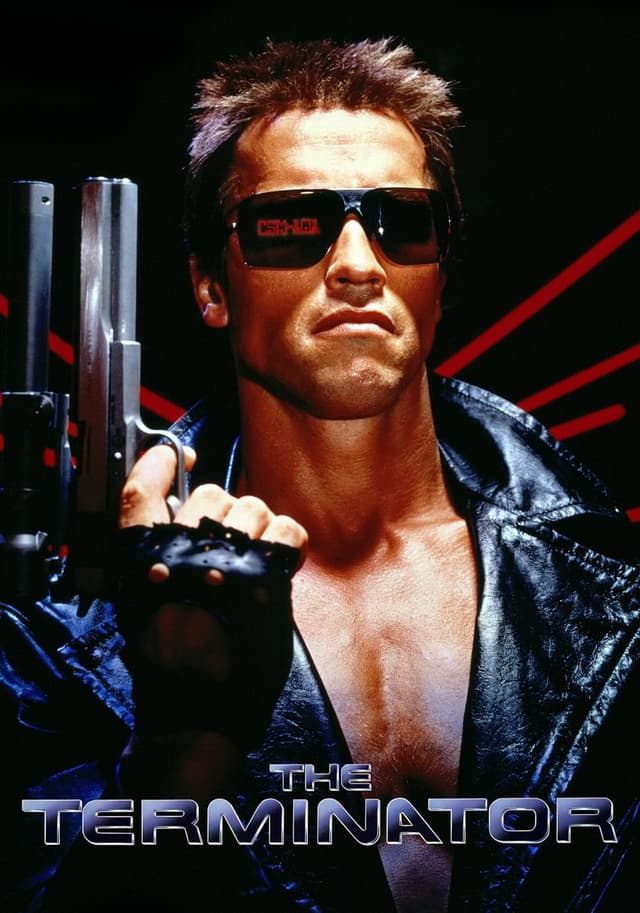
The Terminator was produced on a budget of $6.4 million by Hemdale Film Corporation and Pacific Western Productions and distributed by Orion Pictures in 1984. The film was made during a period when a $6 million budget was considered modest even by low-budget standards. James Cameron negotiated his directorial role through an unusual arrangement: he sold the screenplay rights to producer Gale Anne Hurd for $1 with the contractual condition that he would direct. The deal ensured the film got made with Cameron at the helm, at the cost of nearly all direct financial participation in its back-end success.
Despite the tight budget, The Terminator earned $38.4 million domestically and $78.4 million worldwide, generating a return of more than twelve times the production investment and establishing both Cameron and Arnold Schwarzenegger as major forces in Hollywood. The film's financial success was achieved not through spectacle and scale but through disciplined resource allocation, night exterior shooting to minimize set costs, and practical mechanical effects that have outlasted the digital effects of far more expensive productions.
Key Budget Allocation Categories
- Arnold Schwarzenegger Fee: Schwarzenegger received approximately $75,000 for the role, a fraction of the fees he would command after the film made him an international star. He was the largest single above-the-line expense on the production, and his commitment to the physical demands of the role, including months of weapons training and movement coaching to portray a machine, contributed substantially to the film's effectiveness.
- Stan Winston's Practical Effects: Stan Winston designed and fabricated the T-800 endoskeleton used in the film's climactic sequences, along with the animatronic puppet that portrayed the Terminator's mechanical interior after its skin was burned away. Winston's practical effects work is the film's most technically ambitious budget line item and remains the sequences that have aged most gracefully, outperforming later franchise entries that relied on digital effects.
- Adam Greenberg Night Cinematography: Cinematographer Adam Greenberg shot the majority of the film at night in downtown Los Angeles, giving it a neo-noir texture that suited both the dystopian subject matter and the production budget. Night exterior shooting reduced the need for elaborate interior set construction. Greenberg used anamorphic lenses and practical location light to give the film a visual scale that belied its budget.
- Brad Fiedel Synthesizer Score: Brad Fiedel's score, built around synthesizers and drum machines rather than a live orchestra, cost a fraction of what a conventional orchestral score would have required. The electronic palette was a creative choice as much as a budgetary one, suiting the film's machine-world themes. The main Terminator theme became one of the most recognizable cues in science fiction cinema.
- Post-Production and Stop-Motion Effects: The endoskeleton sequences required stop-motion animation from Fantasy II Film Effects, supervised by Gene Warren Jr., as well as optical compositing work to integrate the puppet with live-action plates. These effects sequences were technically demanding and consumed a significant portion of the below-the-line budget. Cameron and his effects team devised cost-effective solutions that made the endoskeleton feel credibly mechanical.
How Does The Terminator Compare to Similar Films?
The Terminator's $6.4 million budget places it in the company of other foundational science fiction films that launched major franchises on lean productions. The comparison set illustrates how efficiently Cameron's film converted its budget into cultural and commercial impact.
- RoboCop (1987): Budget $13 million | Worldwide $53 million. Paul Verhoeven's man-vs-machine sci-fi action film was produced three years after The Terminator with more than twice the budget. Both films use the machine body as a metaphor for dehumanization, but Verhoeven's satirical register and higher production spend resulted in a more polished visual style at the cost of the raw, documentary-like intensity Cameron achieved on a tighter budget.
- Alien (1979): Budget $11 million | Worldwide $203 million. Ridley Scott's film established the template for franchise-spawning science fiction horror on a contained budget. Both Alien and The Terminator converted modest productions into IP juggernauts, and both relied on practical creature and mechanical effects rather than digital work. Alien's higher gross reflects its broader initial release and the longer shadow cast by its creature design.
- Terminator 2: Judgment Day (1991): Budget $102 million | Worldwide $520 million. The sequel was produced with a budget sixteen times larger than the original, reflecting the franchise's commercial value and Cameron's post-Aliens leverage. T2 pioneered CGI character effects and set new standards for action film spectacle. The budget differential between the two films tracks Cameron's rise from a first-time studio director to one of Hollywood's most commercially powerful filmmakers.
- Mad Max (1979): Budget $400,000 | Worldwide $100 million. George Miller's debut feature remains the most extreme example of franchise-founding science fiction action on an ultra-low budget. Mad Max's return of 250x its production cost dwarfs even The Terminator's impressive 12x multiple. Both films demonstrate that the most durable science fiction franchises are built on strong concept, performance, and direction rather than budget scale.
The Terminator Box Office Performance
The Terminator opened on October 26, 1984, distributed by Orion Pictures. The film launched in wide release and reached number one at the domestic box office, where it held for two weeks. Domestic earnings totaled $38.4 million. The film performed across international markets as well, bringing worldwide gross to $78.4 million. The distributor's strong genre marketing positioned the film as a sci-fi thriller rather than a prestige release, targeting an audience primed by the decade's appetite for action and science fiction.
Against a combined production and marketing investment, the film's worldwide gross represented an exceptional return. Theaters retain approximately 50 percent of box office gross, giving Orion and the producers a studio share of roughly $39.2 million against a total estimated investment of $10.4 million, including production and estimated prints-and-advertising costs of approximately $4 million. The Terminator cleared its break-even point in domestic release alone.
Box Office Breakdown
The Terminator

The Terminator earned roughly $12.24 for every $1 invested in production. Even accounting for the theatrical split and print-and-advertising costs, the film was among the most profitable wide releases of 1984. That return is what funded James Cameron's next project, Aliens, gave Arnold Schwarzenegger the leverage to command eight-figure fees for the sequel, and transformed Hemdale Film and Pacific Western Productions from minor players into credible producers.
The Terminator Production History
The Terminator originated in a fever dream James Cameron experienced while sick in Rome in 1982 during the troubled production of Piranha II: The Spawning, a film from which he was eventually fired. In the dream, a metallic figure dragged itself across a floor toward a woman using knives as improvised legs after being damaged in an explosion. Cameron committed the image to paper and began developing it into a script. The science fiction framework, a machine sent from the future to kill the mother of an unborn resistance leader, gave the slasher-thriller conceit a philosophical dimension that distinguished the concept from the genre films it superficially resembled.
With no directing credits worth showing to studio executives, Cameron turned to producer Gale Anne Hurd, who had worked as an assistant to Roger Corman and understood low-budget production. The two reached an agreement that has since become one of the most-cited deals in independent film history: Cameron transferred the rights to the screenplay to Hurd for $1 with the contractual requirement that he direct. Hurd then used the property to approach Hemdale Film Corporation, a British-American production company known for backing unconventional genre films. Hemdale agreed to finance, and Orion Pictures agreed to distribute.
Casting followed a circuitous path. James Cameron originally considered O.J. Simpson for the role of the Terminator but concluded Simpson was too well-liked to read as a credible killer. Arnold Schwarzenegger was in discussions for the role of Kyle Reese, the human soldier sent back from the future to protect Sarah Connor. During a lunch meeting about the script, Schwarzenegger began articulating in detail how the Terminator would think and move, and Cameron recognized in those descriptions the performance the role required. Schwarzenegger was cast as the T-800. The role of Kyle Reese went to Michael Biehn, who was cast late in pre-production and shot his scenes in a compressed schedule. Linda Hamilton was cast as Sarah Connor and began the physical transformation of the character from uncertain waitress to determined survivor that would define the franchise.
Principal photography ran for 41 days, with the majority of shooting conducted at night in downtown Los Angeles locations. The production used the city's industrial districts, parking structures, and service corridors as stand-ins for a near-future environment without expensive set construction. Cinematographer Adam Greenberg maximized the visual impact of practical neon and sodium-vapor lighting to give the film a texture that the production design alone could not have achieved. Stan Winston began building the T-800 endoskeleton during pre-production. The practical puppet and animatronic components were used for the film's climactic sequences in which the skeletal machine pursues Sarah Connor through a hydraulic press facility. Post-production included stop-motion animation for the endoskeleton's ambulatory shots, supervised by Fantasy II Film Effects, and optical compositing to integrate the puppet elements with live-action photography.
Awards and Recognition
The Terminator was not nominated for Academy Awards during the 1984 ceremony, which was dominated by Milos Forman's Amadeus. The genre film category, then less represented in Oscar nominations than it would become in subsequent decades, was not a space where The Terminator was expected to compete. The film did win the Saturn Award for Best Science Fiction Film from the Academy of Science Fiction, Fantasy and Horror Films, recognizing its achievement within the genre context where its ambitions were most legible.
The film's long-term recognition has been substantial. In 2008, the Library of Congress selected The Terminator for preservation in the United States National Film Registry, citing it as culturally, historically, and aesthetically significant. The Registry selection confirmed what two decades of critical reassessment had already established: the film was not simply a successful genre entry but a foundational text in American science fiction cinema. The franchise it spawned, comprising six theatrical films, multiple television series, video games, and one of the most licensed characters in film history, underscores the original film's enduring commercial relevance.
Critical Reception
The Terminator received strong genre reviews on its 1984 release, with critics recognizing the efficiency of Cameron's direction and the unusual menace of Schwarzenegger's performance. Roger Ebert awarded the film three stars, praising the relentless pacing and the skill with which Cameron transformed a modest budget into sustained suspense. Ebert noted that Schwarzenegger's limited dialogue was not a deficiency but a strategic asset, making the T-800 more threatening precisely because it said so little and registered so much. The film was not positioned as a major awards contender, and the critical conversation around it was primarily genre-focused.
Reassessment over the following decades elevated The Terminator from a successful genre film to a canonical work. The consensus view that emerged by the 2000s positioned it as among the most accomplished low-budget science fiction films ever made, notable for the coherence of its vision, the effectiveness of its time-travel logic, and the clarity of its action sequences. On Rotten Tomatoes, the film holds a 100 percent critical score based on reviews aggregated over its theatrical and home video runs, reflecting a near-total critical consensus that was not present in the initial 1984 reception.
The Terminator's place in the science fiction canon rests on its demonstration that genre ambition and budget constraint are not mutually exclusive. Sarah Connor's arc from an ordinary young woman to a survivor who understands the stakes better than any institution around her established a character template that influenced decades of action and science fiction filmmaking. The film is taught in film schools as an example of how creative problem-solving can transform production limitations into aesthetic advantages. Its influence on subsequent science fiction, from The Matrix to Ex Machina, is traceable in the unstoppable-machine antagonist, the time-loop narrative structure, and the female protagonist whose competence develops over the course of the story.
Questions fréquentes
How much did it cost to make The Terminator (1984)?
The production budget was $6,400,000, covering principal photography, visual effects, cast and crew salaries, locations, sets, post-production, and music. Marketing and distribution (P&A) costs are estimated at an additional $3,200,000 - $5,120,000, bringing the total studio investment to approximately $9,600,000 - $11,520,000.
How much did The Terminator (1984) earn at the box office?
The Terminator grossed $38,371,200 domestic, $40,000,000 international, totaling $78,371,200 worldwide.
Was The Terminator (1984) profitable?
Yes. Against a production budget of $6,400,000 and estimated total costs of ~$16,000,000, the film earned $78,371,200 theatrically - a 1125% ROI on production costs alone.
What were the biggest costs in producing The Terminator?
The primary cost drivers were above-the-line talent (Arnold Schwarzenegger, Michael Biehn, Linda Hamilton); visual effects, practical stunts, and A-list talent compensation; international production across United Kingdom, United States of America.
How does The Terminator's budget compare to similar action films?
At $6,400,000, The Terminator is classified as a micro-budget production. The median budget for wide-release action films in the era ranges from $30 - 80M for mid-budget to $150M+ for tentpoles. Comparable budgets: Do the Right Thing (1989, $6,500,000); Shame (2011, $6,500,000); Men (2022, $6,500,000).
Did The Terminator (1984) go over budget?
There are no widely reported accounts of significant budget overruns for this production. However, studios rarely disclose precise budget overrun figures publicly. The reported production budget reflects the final estimated cost.
What was the return on investment (ROI) for The Terminator?
The theatrical ROI was 1124.5%, calculated as ($78,371,200 − $6,400,000) ÷ $6,400,000 × 100. This measures gross revenue against production budget only - it does not account for P&A or exhibitor shares.
What awards did The Terminator (1984) win?
9 wins & 8 nominations total.
Who directed The Terminator and who were the key crew members?
Directed by James Cameron, written by James Cameron, Gale Anne Hurd, shot by Adam Greenberg, with music by Brad Fiedel, edited by Mark Goldblatt.
Where was The Terminator filmed?
The Terminator was filmed in United Kingdom, United States of America.
Filmmakers
The Terminator

Official Trailer
Créez des budgets comme celui-ci dans Saturation
Partez d'un modèle de long métrage aux normes du secteur, importez le planning et les tarifs que vous avez déjà, et laissez le rapport de coûts se tenir à jour au fil des dépenses. Collaboration en temps réel, sans tableurs.