The Reader Budget
 DramaRomance2h 4m
Mis à jour
Synopsis
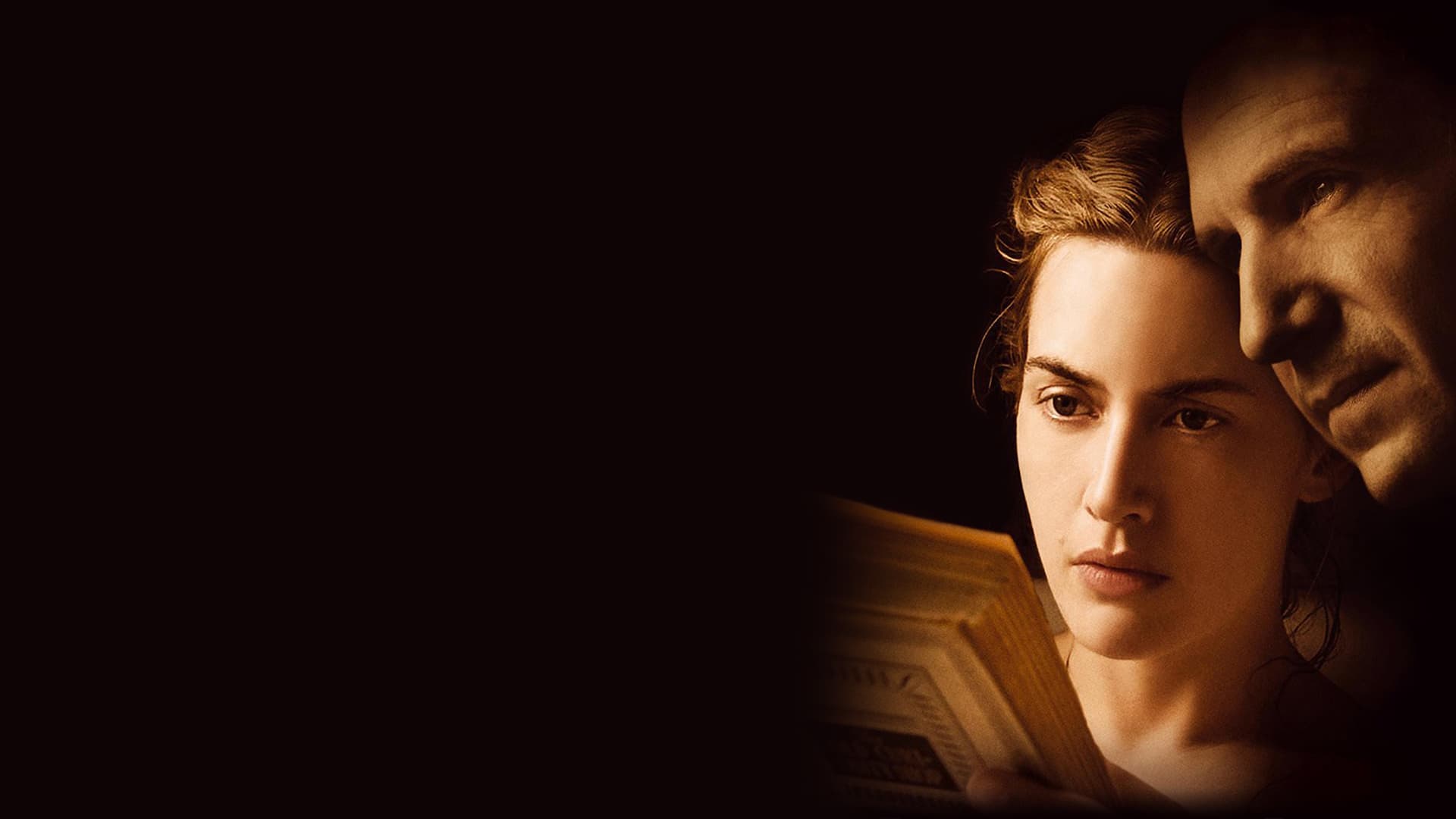
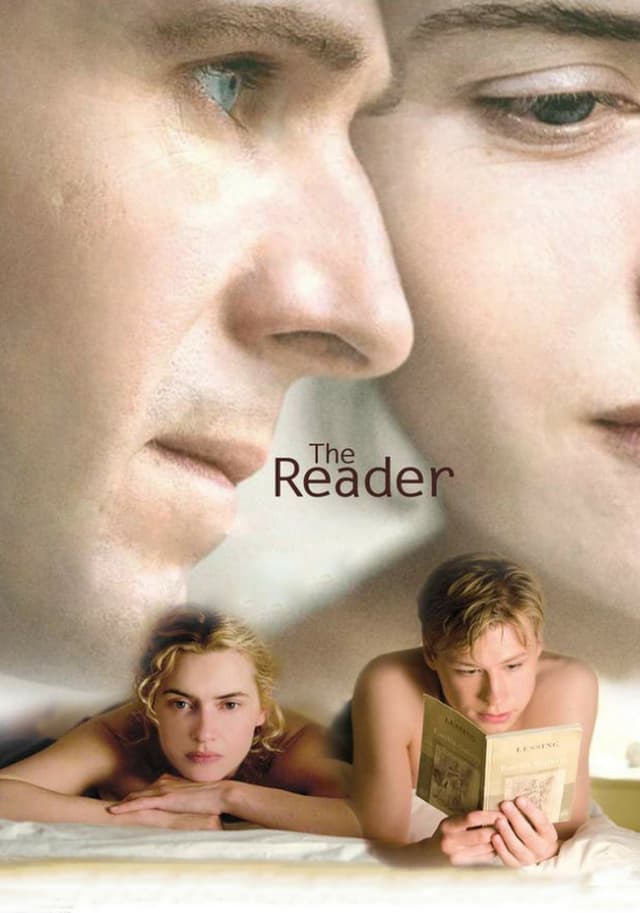
When he falls ill on his way home from school, 15 year-old Michael Berg is rescued by Hanna, a woman twice his age. The two begin an unexpected and passionate affair only for Hanna to suddenly and inexplicably disappear. Eight years later, Michael, now a young law student observing Nazi war trials, meets his former lover again, under very different circumstances. Hanna is on trial for a hideous crime, and as she refuses to defend herself, Michael gradually realizes his boyhood love may be guarding a secret she considers to be more shameful than murder.
What Is the Budget of The Reader?
The Reader was produced with an estimated budget of $32 million, positioning it as a mid-range prestige drama by 2008 standards. The Weinstein Company financed and distributed the film, investing heavily in its awards-season campaign. For a period drama requiring extensive location work across Germany and detailed post-war production design, the budget reflected a careful balance between artistic ambition and commercial viability.
Director Stephen Daldry, known for delivering Oscar-caliber films on controlled budgets (Billy Elliot at $25 million, The Hours at $25 million), brought disciplined production management to the project. The result was a polished literary adaptation that punched well above its weight class visually, with meticulous period detail spanning the 1950s through the 1990s.
Key Budget Allocation Categories
- Above-the-Line Talent accounted for a significant share, with Kate Winslet, Ralph Fiennes, and Bruno Ganz commanding fees reflective of their international stature. Newcomer David Kross, cast as young Michael Berg, kept one lead salary modest.
- Location and Production Design required extensive work across multiple German cities including Cologne, Berlin, and Gorlitz. Period-accurate set dressing for courtrooms, apartments, and a concentration camp memorial demanded detailed research and construction.
- Cinematography was handled primarily by Chris Menges, with Roger Deakins contributing uncredited work. Two world-class directors of photography, even with Deakins working informally, elevated the visual standard considerably.
- Costume and Makeup spanned four decades of German fashion, from 1950s postwar modesty through 1990s contemporary dress. Aging makeup for Kate Winslet in the later timeline sequences required prosthetic work and careful continuity management.
- Music and Score featured an original score by Nico Muhly, whose chamber-music approach complemented the film's intimate emotional register. Recording sessions and licensing rounded out the sound budget.
- Post-Production and Visual Effects covered seamless period transitions, color grading to distinguish three distinct timelines, and subtle digital work to enhance practical locations into convincing postwar and Cold War-era Germany.
How Does The Reader's Budget Compare to Similar Films?
- Atonement (2007) had a budget of $30 million and grossed $129 million worldwide. As a fellow literary adaptation with wartime settings and a British prestige pedigree, it represents the closest budget and genre comparison.
- The Hours (2002) was produced for $25 million and earned $108 million globally. Stephen Daldry directed both films, demonstrating his consistent ability to deliver prestige returns on mid-range budgets.
- Revolutionary Road (2008) cost $35 million and earned $75 million worldwide. Released the same year and also starring Kate Winslet, it shows how The Reader outperformed a comparable prestige drama at the global box office.
- Doubt (2008) was made for $20 million and grossed $50 million worldwide. Another 2008 awards contender, its lower budget and lower gross highlight how The Reader occupied the sweet spot of prestige investment and return.
- The Pianist (2002) cost $35 million and earned $120 million globally. As a Holocaust-adjacent European drama that won major Oscars, it set the benchmark that The Reader aspired to match in both scope and awards recognition.
The Reader Box Office Performance
The Reader earned $34,194,407 domestically and $108,902,486 worldwide against its $32 million production budget. The film opened in limited release on December 10, 2008, expanding gradually through awards season as nominations accumulated.
Box Office Breakdown
The Reader

The Weinstein Company deployed its signature awards-season release strategy, opening the film in a handful of theaters before expanding as critical buzz and nominations built momentum. The international gross of nearly $75 million demonstrated strong appeal in European markets, where the German-language subject matter and literary source carried particular cultural resonance.
The Reader Production History
Bernhard Schlink published his novel "Der Vorleser" (The Reader) in 1995, and it became the first German-language novel to reach number one on the New York Times bestseller list. Film rights were acquired quickly, but the project spent years in development as producers struggled to find the right approach to the sensitive material, which intertwines a love story with Holocaust guilt and moral complicity.
Playwright David Hare wrote the screenplay, condensing the novel's three-part structure into a flowing narrative that maintained the book's central tension between intimacy and horror. Stephen Daldry signed on to direct, bringing his background in theater and his track record of coaxing award-winning performances from his leads.
Casting was critical. Kate Winslet was not the original choice for Hanna Schmitz; Nicole Kidman had been attached but withdrew due to her pregnancy. Winslet stepped in relatively late, a decision that proved transformative for both the film and her career. David Kross, a young German actor, was cast as teenage Michael Berg after an extensive search, while Ralph Fiennes took the role of the older Michael.
Principal photography took place across Germany, with key locations in Cologne, Berlin, and Gorlitz standing in for various periods. The production required careful logistical coordination to shoot scenes spanning four decades, with costume, makeup, and production design teams working in parallel to maintain continuity across timelines. Chris Menges served as director of photography, with Roger Deakins contributing additional cinematography work on an uncredited basis.
The Weinstein Company initially planned a spring 2009 release but accelerated the schedule to December 2008 to qualify for that year's awards season. The compressed post-production timeline placed significant pressure on the editing and scoring teams, but the gamble paid off when the film secured five Academy Award nominations.
Awards and Recognition
The Reader received five Academy Award nominations at the 81st ceremony: Best Picture, Best Director (Stephen Daldry), Best Actress (Kate Winslet), Best Adapted Screenplay (David Hare), and Best Cinematography (Chris Menges and Roger Deakins). Kate Winslet won Best Actress, her first Oscar after five previous nominations across her career.
Winslet's victory was widely celebrated as overdue recognition for one of her generation's most accomplished performers. She also won the BAFTA, the Screen Actors Guild Award, and the Golden Globe for Best Actress in a Drama for the role. The dual recognition at the Golden Globes was notable: she won Best Supporting Actress for Revolutionary Road the same evening, becoming one of the few performers to win two acting Globes in a single ceremony.
The film's Best Picture nomination proved controversial. Many critics and industry observers felt the slot should have gone to The Dark Knight or WALL-E, both of which were shut out despite broad critical acclaim. The nomination fueled ongoing debate about the Academy's bias toward prestige dramas and Harvey Weinstein's influence on the voting process. This controversy contributed to the Academy's decision to expand the Best Picture field from five to ten nominees beginning with the following year's ceremony.
Critical Reception
The Reader holds a 63% approval rating on Rotten Tomatoes, reflecting a divided critical response. Supporters praised Kate Winslet's fearless performance, the film's moral complexity, and its refusal to offer easy answers about guilt and complicity. David Denby of The New Yorker called Winslet's work "the performance of her career," while Roger Ebert gave the film four stars and highlighted its thematic ambition.
Detractors argued that the film sentimentalized a Nazi war criminal and that the love story framework risked generating sympathy for an indefensible character. Some critics felt that David Hare's screenplay softened the novel's harder philosophical edges, and that the film's tasteful visual approach worked against the ugliness of its subject matter. The debate over whether the film adequately reckoned with the Holocaust became inseparable from the broader conversation about its awards success.
Despite the divided notices, Winslet's performance was nearly universally acclaimed, with critics who disliked the film still praising her commitment to the role's physical and emotional demands. The Reader remains a polarizing entry in the prestige drama canon: respected for its craft and performances, questioned for its moral framing, and remembered as the film that finally brought Winslet her Oscar.
Questions fréquentes
How much did it cost to make The Reader (2008)?
The production budget was $32,000,000, covering principal photography, cast and crew salaries, locations, sets, post-production, and music. Marketing and distribution (P&A) costs are estimated at an additional $16,000,000 - $25,600,000, bringing the total studio investment to approximately $48,000,000 - $57,600,000.
How much did The Reader (2008) earn at the box office?
The Reader grossed $108,902,486 worldwide.
Was The Reader (2008) profitable?
Yes. Against a production budget of $32,000,000 and estimated total costs of ~$80,000,000, the film earned $108,902,486 theatrically - a 240% ROI on production costs alone.
What were the biggest costs in producing The Reader?
The primary cost drivers were above-the-line talent (Ralph Fiennes, Kate Winslet, David Kross); talent compensation, authentic period production design, and meticulous post-production; international production across Germany, United States of America.
How does The Reader's budget compare to similar drama films?
At $32,000,000, The Reader is classified as a low-budget production. The median budget for wide-release drama films in the 2000s ranges from $30 - 80M for mid-budget to $150M+ for tentpoles. Comparable budgets: A History of Violence (2005, $32,000,000); Alive (1993, $32,000,000); Bad Times at the El Royale (2018, $32,000,000).
Did The Reader (2008) go over budget?
There are no widely reported accounts of significant budget overruns for this production. However, studios rarely disclose precise budget overrun figures publicly. The reported production budget reflects the final estimated cost.
What was the return on investment (ROI) for The Reader?
The theatrical ROI was 240.3%, calculated as ($108,902,486 − $32,000,000) ÷ $32,000,000 × 100. This measures gross revenue against production budget only - it does not account for P&A or exhibitor shares.
Who directed The Reader and who were the key crew members?
Directed by Stephen Daldry, written by David Hare, shot by Roger Deakins, Chris Menges, with music by Nico Muhly, edited by Claire Simpson.
Where was The Reader filmed?
The Reader was filmed in Germany, United States of America.
Filmmakers
The Reader

Official Trailer
Créez des budgets comme celui-ci dans Saturation
Partez d'un modèle de long métrage aux normes du secteur, importez le planning et les tarifs que vous avez déjà, et laissez le rapport de coûts se tenir à jour au fil des dépenses. Collaboration en temps réel, sans tableurs.