Casino Budget
 CrimeDrama2h 59m
Mis à jour
Synopsis
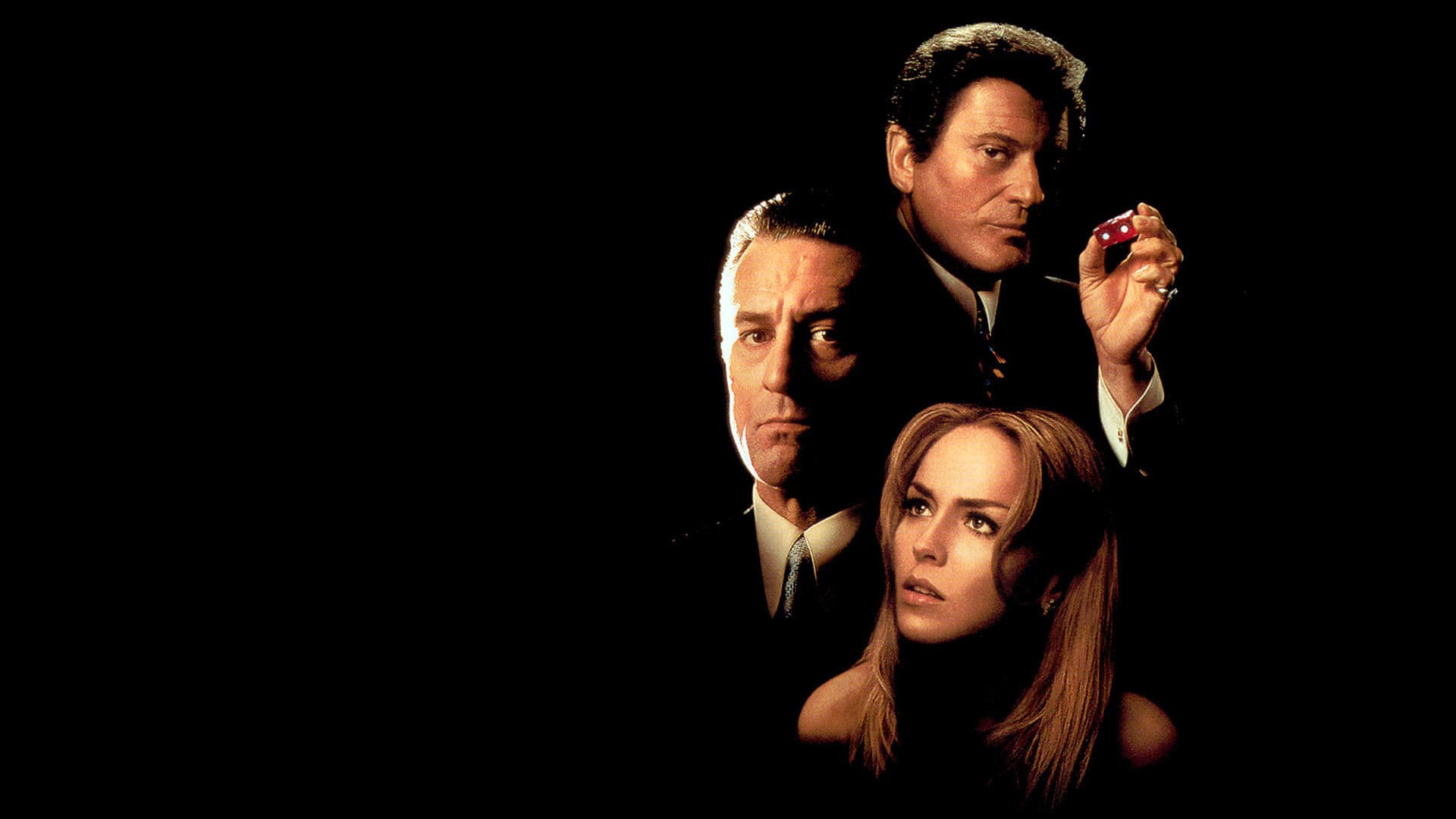
This Martin Scorsese film depicts the Janus-like quality of Las Vegas--it has a glittering, glamorous face, as well as a brutal, cruel one. Ace Rothstein and Nicky Santoro, mobsters who move to Las Vegas to make their mark, live and work in this paradoxical world. Seen through their eyes, each as a foil to the other, the details of mob involvement in the casinos of the 1970s and '80s are revealed. Ace is the smooth operator of the Tangiers casino, while Nicky is his boyhood friend and tough strongman, robbing and shaking down the locals. However, they each have a tragic flaw--Ace falls in love with a hustler, Ginger, and Nicky falls into an ever-deepening spiral of drugs and violence.
What is the budget of Casino?
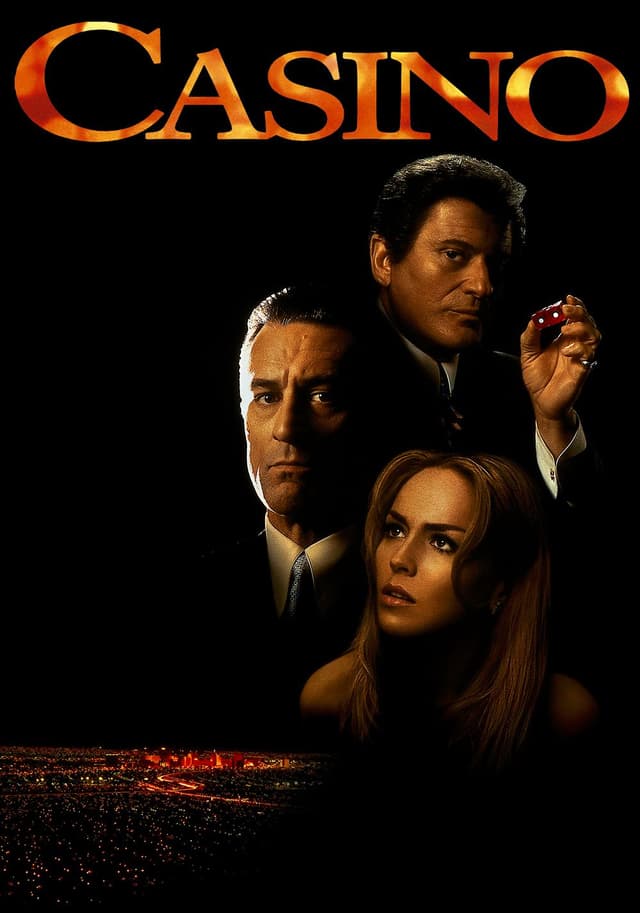
"Casino," a crime released in 1995, was directed by Martin Scorsese and stars Robert De Niro, Sharon Stone. The production budget was $50,000,000, placing it in the mid-budget range for crime productions of the 1990s.
Key Budget Allocation Categories
While specific budget breakdowns are not publicly available, typical cost drivers for a crime production like this include:
- Talent & Director Compensation: Thrillers depend on compelling lead performances to sustain tension, making cast compensation a primary budget concern. Directors with proven thriller credentials command premium fees.
- Cinematography & Location Photography: Thriller aesthetics demand specific visual languages , surveillance-style photography, claustrophobic framing, or expansive location work across multiple cities or countries.
- Editorial & Sound Post-Production: Precision editing , controlling information flow, building suspense through pacing, and orchestrating reveals , requires extended post-production schedules.
- Development: Casino is based on New York crime reporter Nicholas Pileggi's book Casino: Love and Honor in Las Vegas.
What were the major cost factors in Casino?
Several factors contributed to the overall production costs of "Casino."
- Talent: Talent & Director Compensation is one of the primary cost drivers in crime productions of this scale.
- Cinematography: Cinematography & Location Photography is one of the primary cost drivers in crime productions of this scale.
- Editorial: Editorial & Sound Post-Production is one of the primary cost drivers in crime productions of this scale.
How Does Casino's Budget Compare to Similar Films?
At $50,000,000, Casino sits in the mid-budget range. Here is how it compares to productions with a similar budget:
- Angela's Ashes (1999): Budget $50,000,000, Worldwide Gross $13,042,112
- Dredd (2012): Budget $50,000,000, Worldwide Gross $41,037,742
- Lord of War (2005): Budget $50,000,000, Worldwide Gross $72,600,000
- Shall We Dance? (2004): Budget $50,000,000, Worldwide Gross $170,128,460
- The Iron Giant (1999): Budget $50,000,000, Worldwide Gross $23,300,000
The median budget for wide-release crime films in the era ranges from $30 to 80M for mid-budget to $150M+ for tentpoles.
Casino Box Office Performance
"Casino" earned $42,512,375 domestically and $116,112,375 worldwide at the box office. Against a production budget of $50,000,000, the film showed modest profitability in theatrical release.
A film typically needs to earn approximately twice its production budget to cover marketing and distribution costs. For "Casino," that break-even threshold was roughly $100,000,000. With worldwide earnings of $116,112,375, the film cleared that threshold comfortably.
Box Office Breakdown
Casino

At 132.2%, "Casino" earned roughly $2.32 for every $1 invested in production.
Casino Production History
Casino is based on New York crime reporter Nicholas Pileggi's book Casino: Love and Honor in Las Vegas. The research for Casino began when Pileggi read a 1980 report from the Las Vegas Sun about a domestic argument between Frank "Lefty" Rosenthal, a casino figure, and his wife Geri McGee, a former topless dancer. This gave him an idea to focus on a new book about the true story of mob infringement in Las Vegas during the 1970s, when filming of Goodfellas (whose screenplay he co-wrote with Scorsese) was coming to an end.
Filming happened at night in the Riviera casino in Las Vegas, with the nearby defunct Landmark Hotel as the entrance, to replicate the fictional Tangiers. According to Barbara De Fina, the film's producer, there was no reason to construct a set if they could simply film around an actual casino. The opening scene, with Sam's car exploding, was shot three times; the third take was used for the film.
Disc 1 # "Contempt , Theme De Camille" by Georges Delerue (2:32) # "Angelina/Zooma, Zooma Medley" by Louis Prima (4:16) # "Hoochie Coochie Man" by Muddy Waters (2:50) # "I'll Take You There" by The Staple Singers (4:29) # "Nights in White Satin" by The Moody Blues (4:27) # "How High the Moon" by Les Paul & Mary Ford (2:08) # "Hurt" by Timi Yuro (2:27) # "Ain't Got No Home" by Clarence 'Frogman' Henry (2:22) # "Without You" by Nilsson (3:20) # "Love Is the Drug" by Roxy Music (4:08) # "I'm Sorry" by Brenda Lee (2:38) # "Go Your Own Way" by Fleetwood Mac (3:36) # "The Thrill Is Gone" by B.B. King (5:26) # "Love Is Strange" by Mickey & Sylvia (2:54) # "The 'In' Crowd" by Ramsey Lewis (5:50) # "Stardust" by Hoagy Carmichael (3:47) Disc 2 # "Walk on the Wild Side" by Jimmy Smith (5:56) # "Fa-Fa-Fa-Fa-Fa (Sad Song)" by Otis Redding (2:42) # "I Ain't Superstitious" by Jeff Beck Group (4:53) # "The Glory of Love" by The Velvetones (2:51) # "(I Can't Get No) Satisfaction" by Devo (2:39) # "What a Diff'rence a Day Made" by Dinah Washington (2:29) # "Working in the Coal Mine" by Lee Dorsey (2:45) # "House of the Rising Sun" by Eric Burdon (4:38) # "Those Were the Days" by Cream (2:55) # "Who Can I Turn To?" by Tony Bennett (2:55) # "Slippin' and Slidin'" by Little Richard (2:42) # "You're Nobody till Somebody Loves You" by Dean Martin (2:13) # "Compared to What" (Live) by Les McCann & Eddie Harris (8:35) # "Basin Street Blues/When It's Sleepy Time Down South" by Louis Prima (4:12) # "St. Matthew Passion (Wir setzen uns mit Tränen nieder)" by Johann Sebastian Bach (Chicago Symphony Orchestra, conducted by Sir Georg Solti) (6:26).
Awards and Recognition
Nominated for 1 Oscar. 4 wins & 11 nominations total
Critical Reception
Upon its release, Casino received mostly positive reviews from critics, although their praise was more muted than it had been for the thematically similar Goodfellas, released only five years earlier, with some reviewers criticizing Scorsese for retreading familiar territory. On review aggregator Rotten Tomatoes, the film has an approval rating of 78% based on 74 reviews, with an average rating of 7.1/10.
Questions fréquentes
How much did it cost to make Casino (1995)?
The production budget was $50,000,000, covering principal photography, cast and crew salaries, locations, sets, post-production, and music. Marketing and distribution (P&A) costs are estimated at an additional $25,000,000 - $40,000,000, bringing the total studio investment to approximately $75,000,000 - $90,000,000.
How much did Casino (1995) earn at the box office?
Casino grossed $42,512,375 domestic, $73,600,000 international, totaling $116,112,375 worldwide.
Was Casino (1995) profitable?
The film did not break even theatrically, earning $116,112,375 against an estimated $125,000,000 needed. Ancillary revenue may have improved the picture.
What were the biggest costs in producing Casino?
The primary cost drivers were above-the-line talent (Robert De Niro, Sharon Stone, Joe Pesci); talent compensation, location cinematography, and tension-driven editorial; international production across France, United States of America.
How does Casino's budget compare to similar crime films?
At $50,000,000, Casino is classified as a mid-budget production. The median budget for wide-release crime films in the era ranges from $30 - 80M for mid-budget to $150M+ for tentpoles. Comparable budgets: Angela's Ashes (1999, $50,000,000); Dredd (2012, $50,000,000); Lord of War (2005, $50,000,000).
Did Casino (1995) go over budget?
There are no widely reported accounts of significant budget overruns for this production. However, studios rarely disclose precise budget overrun figures publicly. The reported production budget reflects the final estimated cost.
What was the return on investment (ROI) for Casino?
The theatrical ROI was 132.2%, calculated as ($116,112,375 − $50,000,000) ÷ $50,000,000 × 100. This measures gross revenue against production budget only - it does not account for P&A or exhibitor shares.
What awards did Casino (1995) win?
Nominated for 1 Oscar. 4 wins & 11 nominations total.
Who directed Casino and who were the key crew members?
Directed by Martin Scorsese, written by Martin Scorsese, Nicholas Pileggi, shot by Robert Richardson, with music by Roy Hawkins, edited by Thelma Schoonmaker.
Where was Casino filmed?
Casino was filmed in France, United States of America. Filming happened at night in the Riviera casino in Las Vegas, with the nearby defunct Landmark Hotel as the entrance, to replicate the fictional Tangiers. According to Barbara De Fina, the film's producer, there was no reason to construct a set if they could simply film around an actual casino.
Filmmakers
Casino

Official Trailer
Créez des budgets comme celui-ci dans Saturation
Partez d'un modèle de long métrage aux normes du secteur, importez le planning et les tarifs que vous avez déjà, et laissez le rapport de coûts se tenir à jour au fil des dépenses. Collaboration en temps réel, sans tableurs.