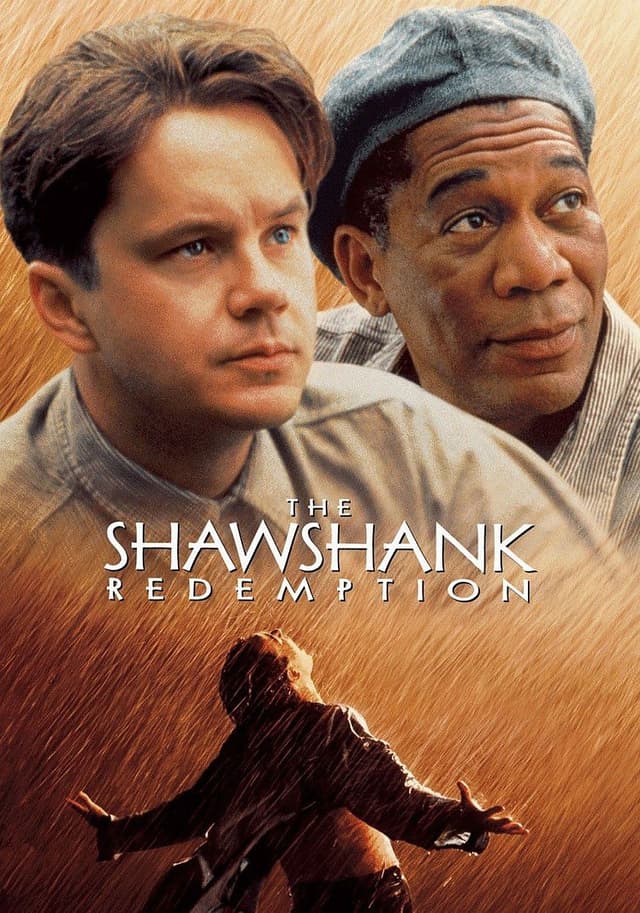
The Shawshank Redemption Budget
 DramaCrime2h 22m
Aktualisiert
Synopsis
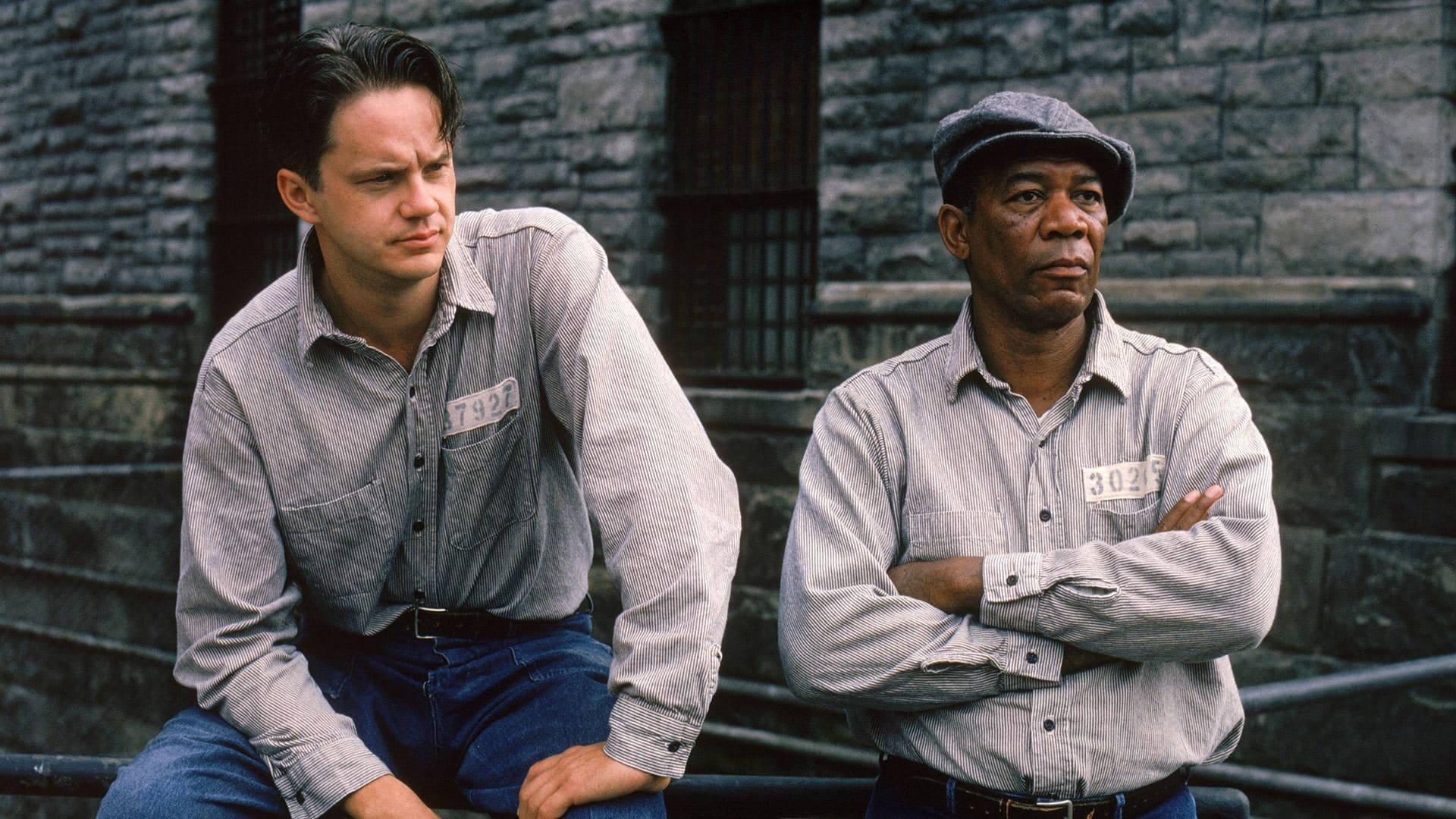
"The Shawshank Redemption" is a powerful drama that follows the life of Andy Dufresne, a banker wrongfully imprisoned for the murder of his wife and her lover. Set in the bleak confines of Shawshank State Penitentiary, Andy forms an unlikely friendship with fellow inmate Ellis "Red" Redding. As the years pass, Andy's resilience and hope shine through the oppressive environment, leading him to find ways to improve the lives of his fellow inmates. Through acts of ingenuity, he earns the respect of both prisoners and guards alike. The film explores themes of friendship, redemption, and the enduring human spirit, culminating in a breathtaking escape that underscores the importance of hope in the darkest of times.
What Is the Budget of The Shawshank Redemption?
The Shawshank Redemption was produced on a budget of $25 million, a moderate sum for a 1994 drama with no major action sequences or visual effects. Castle Rock Entertainment financed the project through its distribution deal with Columbia Pictures, betting on the strength of Frank Darabont's screenplay adaptation of Stephen King's novella "Rita Hayworth and Shawshank Redemption."
For context, $25 million in 1994 sits comfortably above the average drama budget of the era but well below blockbuster territory. The investment reflected confidence in Darabont's vision and the attachment of Tim Robbins and Morgan Freeman, both established names who brought credibility without commanding the highest tier of salaries at the time.
Key Budget Allocation Categories
The Shawshank Redemption allocated its $25 million budget across several key production areas:
- Above-the-Line Talent: Tim Robbins and Morgan Freeman headlined, with supporting performances from Bob Gunton, Clancy Brown, Gil Bellows, and James Whitmore. Writer-director Frank Darabont's fee also fell under this category, though as a first-time feature director his rate was modest.
- Location and Set Construction: The Ohio State Reformatory in Mansfield, Ohio served as the primary filming location. The production team spent heavily on refurbishing portions of the decommissioned prison while constructing additional interior sets, including Andy Dufresne's cell and the warden's office.
- Cinematography and Lighting: Roger Deakins was hired as director of photography, bringing his signature naturalistic lighting to the prison interiors. His work required extensive rigging to create controlled daylight effects inside stone walls and long cellblock corridors.
- Music and Score: Thomas Newman composed an original orchestral score that became one of the most recognizable in modern cinema. The production also licensed Mozart's "Le nozze di Figaro" for the iconic loudspeaker scene, adding to music costs.
- Period Production Design: Spanning roughly 20 years (1947 to 1966), the film required period-accurate wardrobe, props, vehicles, and set dressing across multiple decades, increasing both costume and art department budgets.
- Post-Production: Editing, sound design, and color timing were handled carefully to maintain the film's deliberate pacing. The team also invested in practical effects for sequences like Andy's tunnel escape and the storm drain finale.
How Does The Shawshank Redemption's Budget Compare to Similar Films?
Among the dramas released in 1993 and 1994, The Shawshank Redemption occupied a middle tier of studio investment:
- Forrest Gump (1994): Budget $55M | Worldwide $678M. The film that dominated the Oscars that year cost more than double Shawshank's budget, with significant spending on visual effects to insert Tom Hanks into historical footage.
- Pulp Fiction (1994): Budget $8M | Worldwide $214M. Quentin Tarantino's crime anthology was made for a third of Shawshank's cost and became a massive hit, demonstrating that strong writing could outperform lavish production values.
- Schindler's List (1993): Budget $22M | Worldwide $322M. Steven Spielberg's Holocaust drama was produced on a comparable budget and achieved both commercial success and sweeping awards recognition.
- The Fugitive (1993): Budget $44M | Worldwide $368M. This action-thriller cost nearly twice Shawshank's budget, reflecting the higher price of elaborate chase sequences and stunt work compared to a contained prison setting.
- Philadelphia (1993): Budget $26M | Worldwide $206M. Jonathan Demme's courtroom drama had a nearly identical budget to Shawshank and achieved solid theatrical returns, showing that character-driven dramas could find audiences at this price point.
The Shawshank Redemption Box Office Performance
The Shawshank Redemption opened on September 23, 1994, in a limited release before expanding wide. Its initial theatrical run was a commercial disappointment, grossing just $16 million domestically against the $25 million production budget. Multiple factors contributed to the underwhelming performance: the title was difficult for audiences to parse, the marketing campaign struggled to convey the film's emotional core, and it opened into a fall season dominated by Forrest Gump and Pulp Fiction.
Internationally, the film fared slightly better but still fell short, bringing total initial worldwide theatrical receipts to approximately $28.3 million. By traditional studio accounting, the theatrical run represented a loss when factoring in prints and advertising costs.
However, the story of Shawshank's commercial legacy is one of the most remarkable turnarounds in Hollywood history. After its underwhelming theatrical run, the film received seven Academy Award nominations, which prompted a brief re-release. More significantly, when it arrived on home video and cable television in 1995, audiences discovered it in enormous numbers. It became the number-one most rented title of 1995 and a constant presence on TNT, where it drew record ratings for the cable network. Over the following decades, re-releases, home media sales, and streaming have generated revenue many times the original theatrical gross.
Box Office Breakdown
The Shawshank Redemption

The Shawshank Redemption Production History
Frank Darabont first read Stephen King's novella "Rita Hayworth and Shawshank Redemption" in the 1980s while working as a set dresser and aspiring screenwriter in Hollywood. He acquired the film rights from King for $5,000, a figure often cited as one of the greatest bargains in cinema history. King, who had a longstanding practice of selling adaptation rights to emerging filmmakers for nominal sums (his "Dollar Baby" deals), trusted Darabont based on the strength of his earlier short film adaptation of King's "The Woman in the Room."
Darabont completed his screenplay in eight weeks and shopped it around Hollywood. Castle Rock Entertainment's Rob Reiner was so impressed that he offered Darabont $2.5 million for the script with the intention of directing it himself, reportedly with Tom Cruise as Andy Dufresne and Harrison Ford as Red. Darabont turned down the offer, insisting on directing the film himself as his feature debut. Castle Rock ultimately agreed, greenlighting the project with Darabont at the helm.
Casting came together over several months. Tim Robbins was cast as Andy Dufresne, while Morgan Freeman won the role of Ellis "Red" Redding, a character described as Irish in King's novella. Freeman's casting required reimagining the character's background, which Darabont handled with a single self-referential joke in the screenplay ("Maybe it's because I'm Irish"). Clancy Brown, Bob Gunton, William Sadler, Gil Bellows, and James Whitmore rounded out the ensemble.
Principal photography took place over three months in the summer of 1993, primarily at the Ohio State Reformatory in Mansfield, Ohio. The facility, which had been closed as a working prison in 1990, provided the imposing Gothic architecture that became central to the film's visual identity. Conditions during the shoot were challenging: the building had no air conditioning, temperatures routinely exceeded 100 degrees Fahrenheit, and parts of the structure were in poor repair. Several scenes, including the rooftop tarring sequence, were filmed during genuinely sweltering conditions that contributed to the authentic look of the actors' discomfort.
Roger Deakins served as cinematographer, establishing a visual language that tracked the passage of time through shifting color temperatures and compositions. Thomas Newman composed the score, blending harmonica motifs with sweeping orchestral passages. The film's final cut ran 142 minutes, longer than Castle Rock initially wanted, but Darabont successfully argued for preserving the deliberate pace.
Awards and Recognition
The Shawshank Redemption received seven Academy Award nominations at the 67th ceremony in 1995: Best Picture, Best Actor (Morgan Freeman), Best Adapted Screenplay (Frank Darabont), Best Cinematography (Roger Deakins), Best Editing (Richard Francis-Bruce), Best Original Score (Thomas Newman), and Best Sound Mixing (Robert J. Litt, Elliot Tyson, Michael Herbick, Willie D. Burton). It won none, losing across all categories to a field dominated by Forrest Gump, which took six Oscars that evening.
Beyond the Academy Awards, the film earned nominations from the Screen Actors Guild (Freeman for Outstanding Lead Actor), the Directors Guild of America, and the Writers Guild of America. It also received Golden Globe nominations for Best Motion Picture (Drama), Best Actor (Freeman), and Best Screenplay. The film won the Humanitas Prize for Darabont's screenplay and the PEN Center USA West Literary Award.
The film's most significant recognition has come from audiences rather than awards bodies. It has held the number-one position on IMDb's Top 250 user-rated films for over a decade, a ranking based on millions of individual votes. The American Film Institute included it in multiple retrospective lists, and the Library of Congress selected it for preservation in the National Film Registry in 2015, recognizing it as "culturally, historically, or aesthetically significant."
Critical Reception
The Shawshank Redemption holds a 91% approval rating on Rotten Tomatoes based on reviews from its original release and subsequent reappraisals. Critics praised the film's patient storytelling, the chemistry between Robbins and Freeman, and Darabont's ability to sustain emotional tension across a narrative spanning two decades.
Roger Ebert gave the film three and a half out of four stars, admiring its performances while noting its considerable length. Owen Gleiberman of Entertainment Weekly called it "a movie that belongs to an older, more spacious tradition of Hollywood storytelling." Many critics highlighted Morgan Freeman's narration as a defining element, comparing it favorably to the literary voice of King's original novella.
Initial reviews were generally positive but not overwhelmingly enthusiastic, with some critics finding the pacing slow and the ending overly sentimental. The critical consensus shifted markedly over the following years as home video audiences embraced the film with a passion that far exceeded its theatrical reception. By the 2000s, reassessments routinely placed it among the greatest films ever made, and its reputation has only strengthened with time. The gap between its modest initial reception and its eventual status as the most beloved film in IMDb's user rankings remains one of the most striking examples of a film finding its true audience after leaving theaters.
Häufig gestellte Fragen
How much did The Shawshank Redemption cost to make?
The production budget was $25,000,000. Castle Rock Entertainment produced the film, with Columbia Pictures handling theatrical distribution in North America.
How much did The Shawshank Redemption earn at the box office?
The film grossed $28,341,469 domestically in its original 1994 theatrical run and $30,000,000 internationally, for a worldwide total of approximately $58,500,000. The initial release fell short of expectations, prompting Castle Rock to re-release the film in 1995 following its seven Academy Award nominations.
Why did The Shawshank Redemption flop in theaters?
The film opened against Pulp Fiction and The Specialist on October 14, 1994, and suffered from a difficult title that test audiences could not remember, a male-heavy cast without a major star like Tom Cruise or Tom Hanks, and a 142-minute runtime. The home video release on VHS rental and cable broadcast on TNT transformed it into a phenomenon.
Who directed The Shawshank Redemption?
Frank Darabont directed the film, his feature directorial debut. Darabont had previously written A Nightmare on Elm Street 3: Dream Warriors (1987) and The Blob (1988). He returned to Stephen King material with The Green Mile (1999) and The Mist (2007).
Is The Shawshank Redemption based on a book?
Yes. The film adapts Stephen King's 1982 novella Rita Hayworth and Shawshank Redemption, published as part of the Different Seasons collection. King sold the rights to Frank Darabont for $1, the standard "Dollar Baby" arrangement King has offered to aspiring filmmakers since the 1970s.
Where was The Shawshank Redemption filmed?
Principal photography took place at the Ohio State Reformatory in Mansfield, Ohio, which had closed as a working prison in 1990. The production also shot in nearby Upper Sandusky and Pugh Cabin in Malabar Farm State Park.
Did The Shawshank Redemption win any Oscars?
The film was nominated for seven Academy Awards, including Best Picture, Best Director, Best Actor for Morgan Freeman, Best Adapted Screenplay, Best Cinematography, Best Original Score, and Best Sound, but won none. Forrest Gump won most of the major categories that year.
How did Shawshank become the #1 film on IMDb?
The film holds the #1 position on the IMDb Top 250 list, having displaced The Godfather in 2008. Strong cable broadcast performance on TNT and consistent home video sales throughout the late 1990s established a loyal audience that has translated into sustained top user ratings ever since.
What did critics think of The Shawshank Redemption?
The film received strong reviews on release and holds a 89% approval rating on Rotten Tomatoes and an 82 out of 100 score on Metacritic. Roger Ebert and Gene Siskel both gave the film positive reviews, with Ebert citing it as one of the great films of the decade.
Where was Shawshank filmed in Ohio?
The Ohio State Reformatory in Mansfield served as the primary prison setting and remains open as a museum and tourist attraction, drawing more than 165,000 visitors annually. The site offers Shawshank-themed tours that grew significantly following the film's home video popularity.
Official Trailer
Erstellen Sie Budgets wie dieses in Saturation
Starten Sie mit einer branchenüblichen Spielfilmvorlage, importieren Sie Drehplan und Gagen, die Sie schon haben, und lassen Sie den Kostenbericht sich beim Ausgeben von selbst aktualisieren. Zusammenarbeit in Echtzeit, ohne Tabellen.