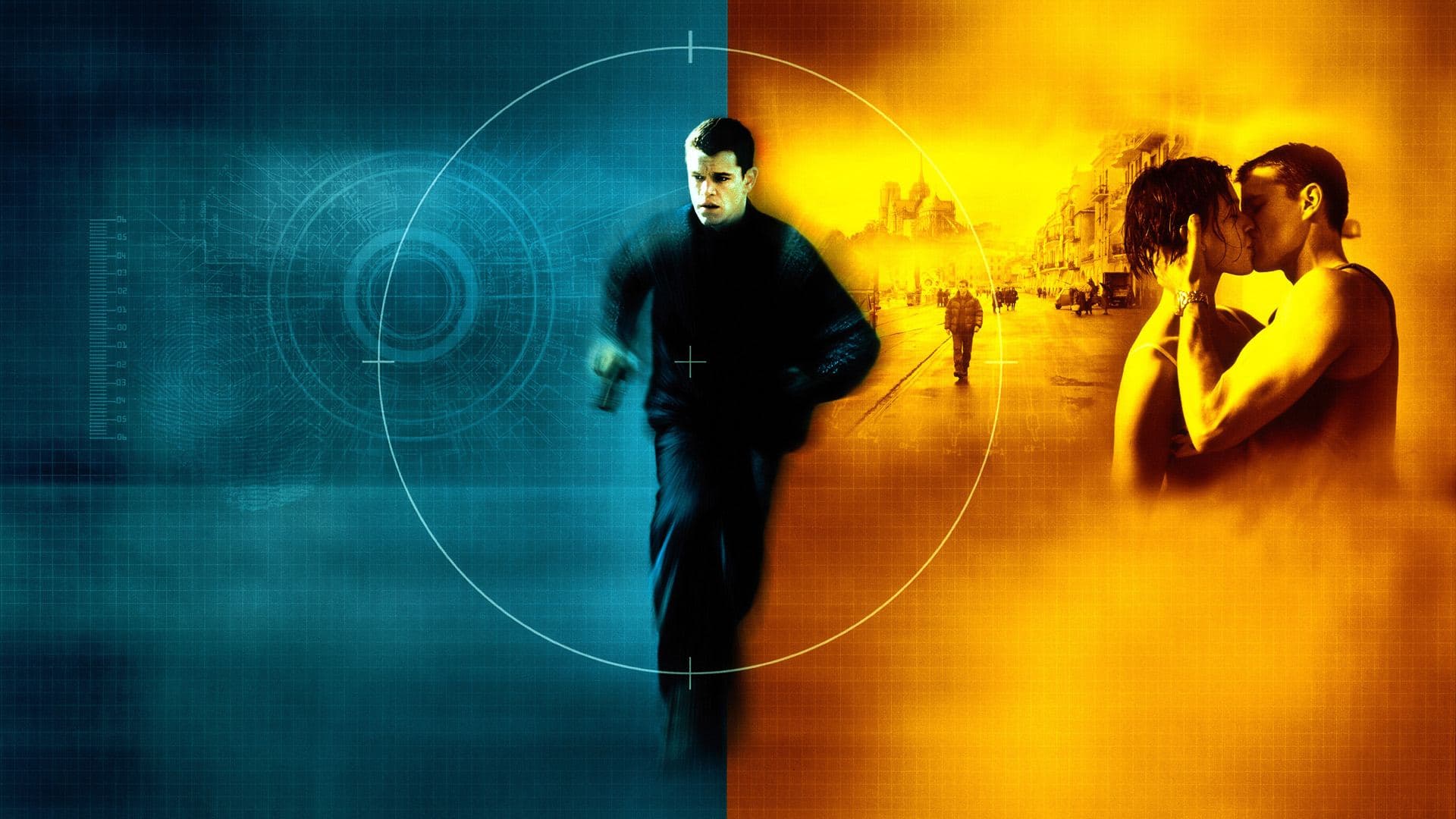
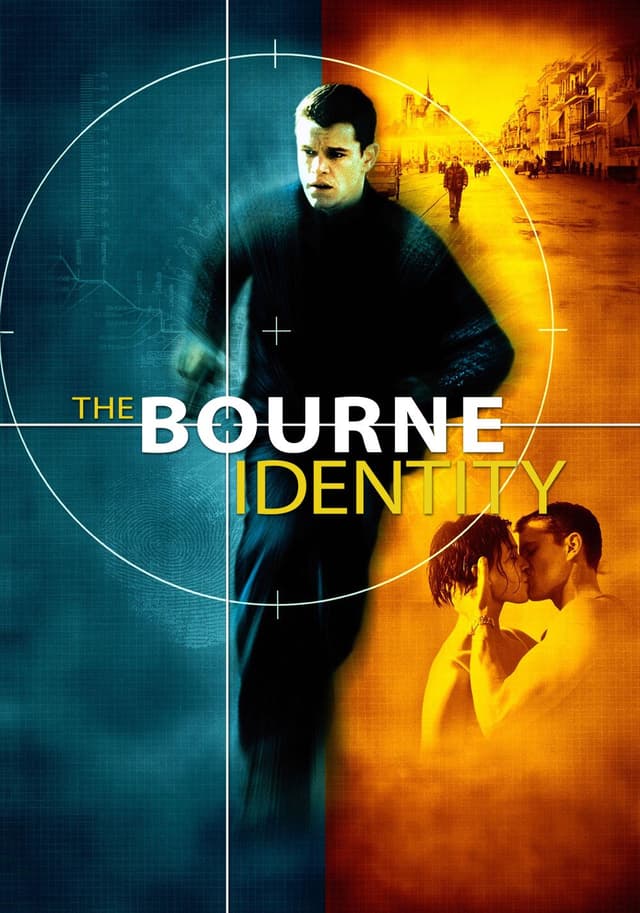
The Bourne Identity Budget
 ActionDramaMysteryThriller1h 59m
अपडेट किया गया
Synopsis
"The Bourne Identity" follows the gripping journey of Jason Bourne, a man suffering from amnesia who is found adrift in the Mediterranean Sea. Rescued by fishermen, he soon discovers that he possesses extraordinary combat skills and a mysterious past. As he attempts to piece together his identity, Bourne becomes the target of assassins and government agents who want him silenced. With only a few clues to guide him, including a Swiss bank account number, he embarks on a thrilling quest across Europe. Along the way, he encounters Marie, a woman who becomes his ally and love interest. Together, they navigate a dangerous world of espionage, uncovering secrets that could change everything. As Bourne delves deeper into his past, he must confront the truth about who he is and the dark forces that seek to control him. The film masterfully blends action, suspense, and psychological intrigue, making it a standout in the spy thriller genre.
What Is the Budget of The Bourne Identity?
The Bourne Identity was produced on a budget of $60 million, a moderate figure for a summer action thriller released in 2002. Universal Pictures financed the project, which underwent significant cost overruns due to extensive reshoots and post-production reworking that stretched the original timeline by several months. Director Doug Liman, known for his independent sensibility on films like Swingers and Go, pushed for a grittier, more grounded approach to the spy genre that required location shooting across multiple European countries rather than relying on studio backlots.
The budget positioned The Bourne Identity as a mid-range studio release, sitting well below the $100 million-plus blockbusters of the era while still allowing for practical action sequences, international production logistics, and a cast anchored by Matt Damon. The financial discipline proved wise: the film launched a franchise that would eventually generate over $1.6 billion in worldwide box office revenue across five installments.
Key Budget Allocation Categories
- Above-the-Line Talent comprised a significant portion of the budget, with Matt Damon commanding a substantial salary as the lead. Franka Potente, Chris Cooper, Clive Owen, Brian Cox, and Julia Stiles rounded out the ensemble, each bringing credibility to supporting roles that demanded strong dramatic performances alongside physical action work.
- Action Choreography and Stunt Work required months of preparation. Damon trained extensively with fight coordinator Jeff Imada to perform the close-quarters combat sequences himself, learning Filipino martial arts (Kali) and a blend of practical fighting styles that would define the franchise. The emphasis on real physicality over CGI spectacle meant higher stunt budgets but more visceral on-screen results.
- International Location Shooting across Prague, Paris, Zurich, Mykonos, and other European cities drove significant production logistics costs. Filming in real urban environments rather than studio recreations gave the movie its distinctive lived-in European texture but required permits, local crews, transportation, and extended shooting schedules in each country.
- Post-Production and Reshoots consumed a disproportionate share of the budget. Universal ordered extensive reshoots after test screenings, including a reworked third act. The original score by Carter Burwell was replaced late in production by John Powell, whose propulsive, percussion-driven compositions became integral to the film's identity. Editor Saar Klein restructured significant portions of the narrative during a prolonged editing process.
- Cinematography and Camera Equipment reflected the film's commitment to handheld, documentary-influenced visual storytelling. Oliver Wood's cinematography employed mobile camera rigs and natural light setups across European locations, creating the raw, immediate aesthetic that would later influence the entire action genre.
- Production Design and Set Construction balanced practical European locations with constructed interiors for key sequences, including the Zurich bank, the Paris apartment, and the Treadstone facility. The design team emphasized realistic, unglamorous spaces that reinforced the film's grounded tone.
How Does The Bourne Identity's Budget Compare to Similar Films?
- Die Another Day (2002) had a budget of $142 million and earned $431 million worldwide. The final Pierce Brosnan Bond film cost more than double The Bourne Identity yet received significantly weaker reviews, illustrating the diminishing returns of the gadget-heavy, CGI-reliant approach to spy thrillers that Bourne would soon render obsolete.
- Spy Game (2001) had a budget of $115 million and earned $143 million worldwide. Tony Scott's espionage thriller starring Robert Redford and Brad Pitt cost nearly twice as much as The Bourne Identity but returned only a fraction of its box office performance, demonstrating that star power alone could not guarantee returns in the genre.
- The Sum of All Fears (2002) had a budget of $68 million and earned $193 million worldwide. Released the same summer as The Bourne Identity, this Jack Ryan reboot starring Ben Affleck operated at a comparable budget level but relied on a geopolitical plot rather than the visceral, character-driven action that made Bourne stand out.
- Mission: Impossible II (2000) had a budget of $125 million and earned $546 million worldwide. John Woo's stylized sequel cost more than double Bourne's budget and performed well commercially, but its over-the-top approach highlighted exactly what audiences were growing tired of, setting the stage for Bourne's stripped-down realism to land.
- Casino Royale (2006) had a budget of $150 million and earned $616 million worldwide. The Daniel Craig Bond reboot directly borrowed Bourne's grounded, brutal approach to action, spending more than twice the budget while openly acknowledging Bourne as the catalyst for reinventing 007.
The Bourne Identity Box Office Performance
The Bourne Identity opened on June 14, 2002, earning $27.1 million in its opening weekend, placing second behind Lilo & Stitch. The film demonstrated strong legs throughout the summer, holding well against heavy competition and ultimately earning $121.7 million domestically. Its international run brought the worldwide total to $214 million, making it one of the more profitable mid-budget releases of the year.
Box Office Breakdown
The Bourne Identity

The film cleared its break-even point comfortably on domestic gross alone, with the international performance representing pure profit for Universal. Home video sales were equally robust, and the strong commercial showing immediately greenlit The Bourne Supremacy (2004), which would earn $288 million worldwide. The franchise economics validated Universal's patience through a troubled production: a $60 million investment generated a multi-billion-dollar property.
The Bourne Identity Production History
Robert Ludlum's 1980 novel had been in development at various studios for nearly two decades before Universal secured the rights in the late 1990s. A 1988 television miniseries starring Richard Chamberlain had adapted the story previously, but the feature film would take a substantially different approach. Doug Liman signed on to direct after the critical and commercial success of Swingers (1996) and Go (1999), bringing an independent filmmaker's instinct for naturalism to a studio action picture.
Casting Matt Damon as Jason Bourne was controversial at the time. Damon was known primarily as a dramatic actor following Good Will Hunting and The Talented Mr. Ripley, and the studio had concerns about his viability as an action lead. Damon committed fully, undergoing months of intensive physical training with fight choreographer Jeff Imada, learning close-quarters combat techniques rooted in Filipino martial arts. The decision to cast a thinking-person's actor in an action role proved transformative for the genre.
Production began in late 2000 and extended through 2001 across locations in Prague, Paris, the Greek islands, and various European cities. Liman's directorial style clashed repeatedly with Universal executives. He favored improvisation and multiple takes, pushing schedules past their limits. The relationship between director and studio grew increasingly strained as costs mounted and deadlines slipped.
Test screenings prompted Universal to order extensive reshoots, including a reworked third act. Composer Carter Burwell, who had scored the original cut, was replaced by John Powell after the studio felt Burwell's atmospheric approach did not match the film's revised, more propulsive pacing. Editor Saar Klein spent months restructuring the narrative. The contentious production ultimately led Universal to hire Paul Greengrass rather than Liman for the sequels, though Liman remained a producer on the franchise.
Despite the behind-the-scenes turmoil, the creative friction produced something genuinely new. Oliver Wood's handheld cinematography, Powell's urgent score, and Damon's committed physical performance cohered into a spy thriller that felt startlingly real compared to its contemporaries. The film's gritty, grounded aesthetic would reshape Hollywood action filmmaking for the next decade.
Awards and Recognition
The Bourne Identity received recognition primarily in technical and genre categories, reflecting its impact on action filmmaking rather than traditional awards-circuit prestige. The film was nominated for the Saturn Award for Best Action/Adventure Film by the Academy of Science Fiction, Fantasy & Horror Films. Editor Saar Klein received particular industry attention for assembling a coherent, propulsive narrative from what had been a notoriously difficult post-production process.
John Powell's replacement score earned widespread praise within the film music community and established a template for modern action scoring that moved away from orchestral bombast toward percussive, electronic-influenced compositions. While the film did not receive major Academy Award nominations, its lasting influence on the genre proved more significant than any single trophy. The "Bourne style" of filmmaking became an industry shorthand, directly inspiring the Daniel Craig era of James Bond beginning with Casino Royale (2006) and reshaping audience expectations for what a spy thriller could look and feel like.
Critical Reception
The Bourne Identity holds an 84% approval rating on Rotten Tomatoes, with critics consistently praising its departure from the formulaic spy thrillers that dominated the early 2000s. Roger Ebert awarded the film three out of four stars, noting that it succeeded by treating its audience as intelligent participants rather than passive spectators. Critics highlighted the film's refusal to rely on the gadgetry and one-liners that had become spy-genre cliches.
Matt Damon's performance drew particular praise for bringing genuine vulnerability and confusion to an action protagonist, creating a character whose amnesia served as more than a plot device. Franka Potente's Marie was recognized as a refreshingly capable and grounded female lead in a genre not known for well-written women. Chris Cooper's cold bureaucratic menace and Clive Owen's brief but memorable turn as a rival assassin were singled out as examples of casting that elevated the material beyond its genre conventions.
The film's legacy has only grown in the two decades since its release. It is now widely credited as the film that forced the James Bond franchise to reinvent itself, with the producers of Casino Royale openly acknowledging Bourne's influence on their grittier, more realistic approach. The handheld camera work, practical stunt choreography, and emphasis on character psychology over spectacle became the template for a generation of action thrillers. What began as a troubled mid-budget production became one of the most consequential action films of the 21st century.
अक्सर पूछे जाने वाले सवाल
How much did The Bourne Identity cost to make?
The production budget was $60,000,000. Universal Pictures and The Kennedy/Marshall Company financed the spy thriller, which underwent a famously troubled production that included extensive reshoots ordered by Universal.
How much did The Bourne Identity earn at the box office?
The Bourne Identity grossed $121,661,683 domestically and $92,300,000 internationally, for a worldwide total of $214,000,000. It opened to $27,118,640 on June 14, 2002, finishing second behind Scooby-Doo.
Who stars in The Bourne Identity?
Matt Damon stars as Jason Bourne, an amnesiac assassin discovered floating in the Mediterranean. Franka Potente plays Marie, the German backpacker who reluctantly aids him. Chris Cooper plays the CIA section chief Alexander Conklin, with Brian Cox as Ward Abbott and Clive Owen as the Professor.
Who directed The Bourne Identity?
Doug Liman directed the film, following Swingers (1996) and Go (1999). Liman's directing style clashed with Universal during production, leading to additional photography by uncredited director Roger Christian. Paul Greengrass took over the franchise for the sequels.
Is The Bourne Identity based on a book?
Yes. The film adapts Robert Ludlum's 1980 spy novel of the same name. Screenwriters Tony Gilroy and W. Blake Herron substantially modernized the story, dropping the Carlos the Jackal plot from the novel in favor of an internal CIA operation called Treadstone.
Where was The Bourne Identity filmed?
Principal photography took place in Paris, Prague, Zurich, Mykonos, and Imperia, Italy, with additional production in Toronto and Montreal. The film made extensive use of European locations to distinguish itself from American spy thrillers of the period.
Were there reshoots on The Bourne Identity?
Yes. Universal ordered extensive reshoots, adding approximately $10,000,000 to the budget and pushing the release from a planned 2001 window to June 2002. Director Doug Liman was significantly sidelined from the post-production process by the studio.
What did critics think of The Bourne Identity?
Reviews were strong, with a 84% approval rating on Rotten Tomatoes and a 68 out of 100 score on Metacritic. Critics praised Matt Damon's grounded, athletic performance and the film's rejection of the gadget-driven Bond template, which influenced the entire spy genre over the next decade.
How does The Bourne Identity compare to its sequels?
The Bourne Identity's $214,000,000 worldwide gross was outperformed by The Bourne Supremacy (2004, $75,000,000 budget, $288,500,000 worldwide), The Bourne Ultimatum (2007, $110,000,000 budget, $443,800,000 worldwide), and Jason Bourne (2016, $120,000,000 budget, $415,500,000 worldwide). The Bourne Legacy (2012, with Jeremy Renner replacing Damon) grossed $276,100,000 worldwide.
Did The Bourne Identity influence James Bond?
Yes. The Bourne franchise's grounded action style is widely credited with prompting the Daniel Craig-era reboot of the James Bond franchise beginning with Casino Royale (2006). Craig himself has cited the Bourne films as a direct creative influence on the Bond revival.
Official Trailer
Saturation में ऐसे ही budgets बनाएं
Industry-standard feature film template से शुरू करें, अपना मौजूदा schedule और rates import करें, और खर्च के साथ cost report को अपने आप अपडेट होते देखें। Real-time collaboration, बिना spreadsheets।