Twister Budget
 ActionAdventureDrama1h 53m
Aktualisiert
Synopsis
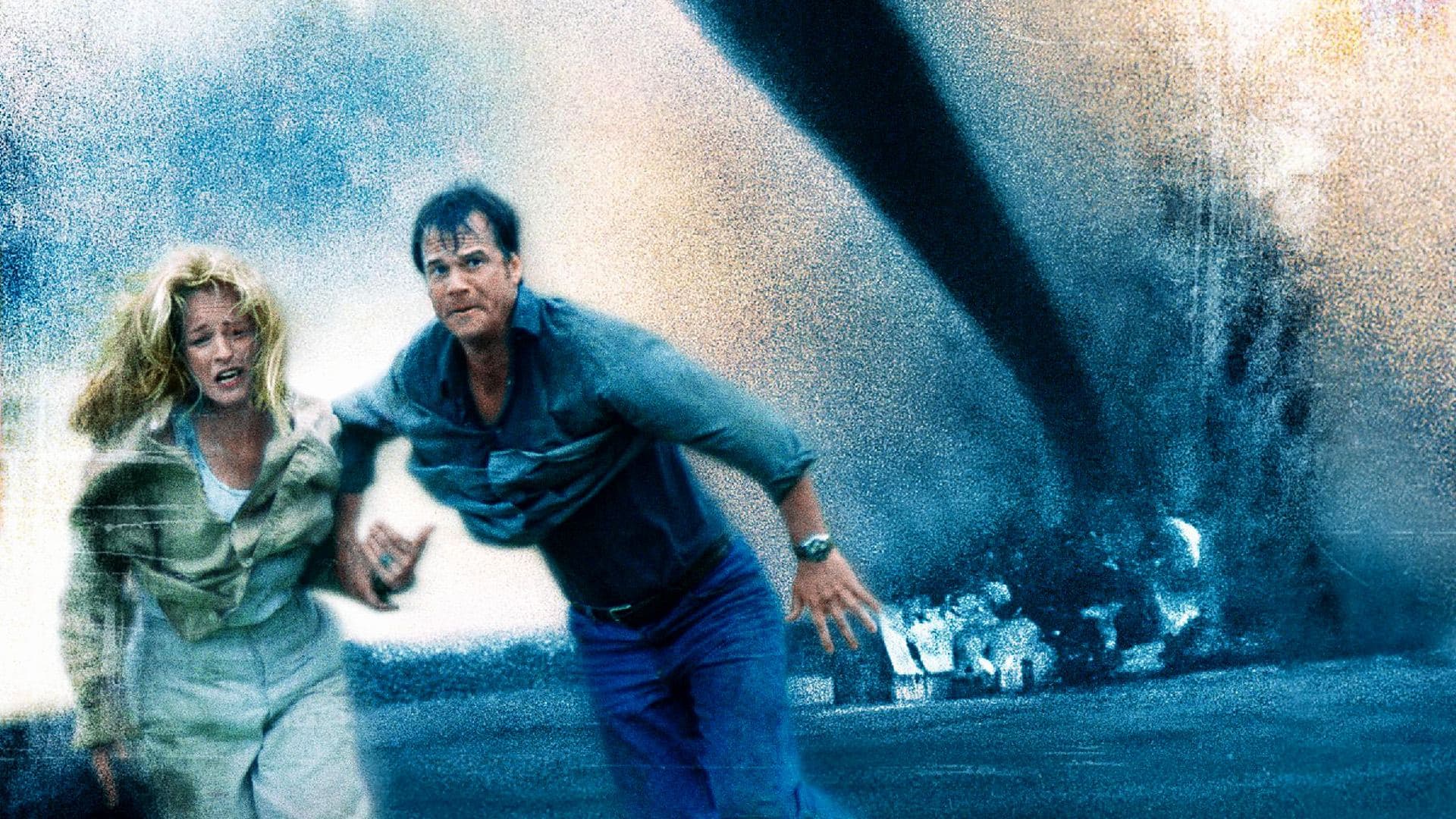
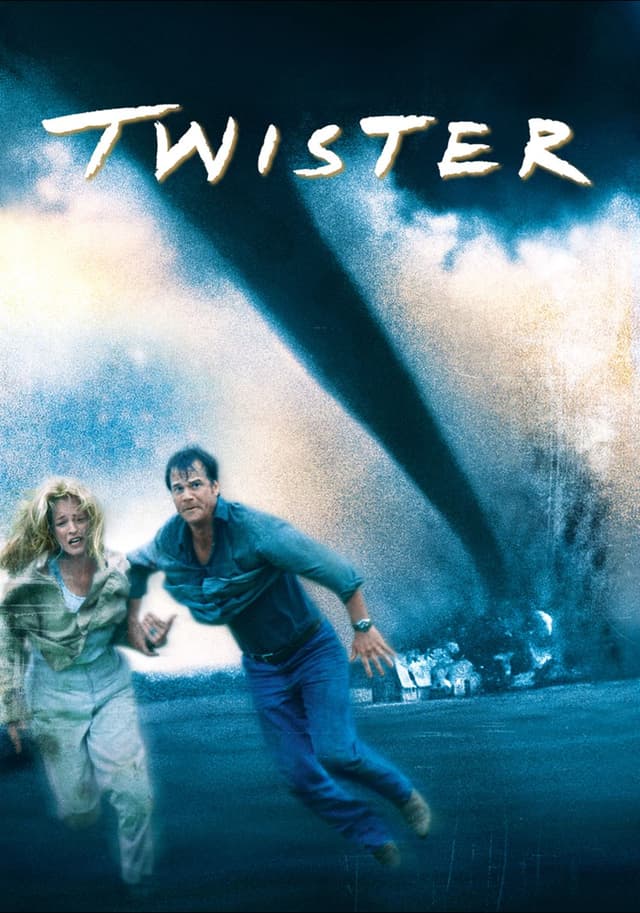
An unprecedented series of violent tornadoes is sweeping across Oklahoma. Tornado chasers, headed by Dr. Jo Harding, attempt to release a groundbreaking device that will allow them to track them and create a more advanced warning system. They are joined by Jo's soon to be ex-husband Bill, a former tornado chaser himself, and his girlfriend Melissa.
What Is the Budget of Twister (1996)?
Twister was produced on a budget of $92 million, a figure that reflected both its ambitions as a spectacle film and Michael Crichton's commercial standing in Hollywood following the success of Jurassic Park (1993). The production was financed through a partnership between Amblin Entertainment, Steven Spielberg's production company, and Universal Pictures, with Warner Bros. handling distribution. At $92 million, Twister ranked among the most expensive films of 1996 and was a significant bet on the emerging capabilities of digital visual effects to put real danger on screen.
Director Jan de Bont, coming off the surprise hit Speed (1994), brought a practical approach to the action sequences: wherever possible, the production used real weather conditions and actual Oklahoma locations rather than stage work. ILM was brought in to create the tornado sequences, which required developing new fluid dynamics simulation tools. The combination of location authenticity and cutting-edge CGI defined the film's visual identity and drove the majority of the above-the-line and below-the-line costs.
Key Budget Allocation Categories
- Above-the-Line Talent: Helen Hunt, fresh off Mad About You, and Bill Paxton, coming off Apollo 13 and Tombstone, anchored the film. Cary Elwes and Philip Seymour Hoffman rounded out a strong ensemble. The above-the-line package likely consumed $15 to $20 million of the budget, including director fees for de Bont and Crichton's combined producer and screenplay credit.
- ILM Tornado Visual Effects: Industrial Light and Magic created the tornado sequences using fluid dynamics simulations at a scale not previously attempted in a studio feature. The CGI tornadoes were composited against real Oklahoma footage. The visual effects work represented the single largest budget line item, estimated to have consumed $30 to $35 million of the total budget, and led to an Academy Award nomination for Best Visual Effects.
- Oklahoma Location Shoot: Principal photography took place across multiple Oklahoma counties during spring 1995, timed to align with actual tornado season. The production was based primarily in Wakita, a small town whose main street served as a key set. Coordination with the National Weather Service and the National Severe Storms Laboratory (NSSL) at the University of Oklahoma was built into the production logistics, adding to location costs.
- Mark Mancina Score and Van Halen Soundtrack: Mark Mancina composed the orchestral score, having previously worked with de Bont on Speed. The film also licensed Van Halen's "Humans Being" as the end-credits track, a prominent placement that was central to the film's marketing campaign and required a significant licensing fee.
- Michael Crichton Screenplay and Producer Fee: Crichton commanded above-market rates following the $357 million domestic gross of Jurassic Park. His combined fee for the original screenplay (co-written with his then-wife Anne-Marie Martin) and producer credit represented a meaningful share of the above-the-line budget, estimated in the $5 to $8 million range.
How Does Twister's Budget Compare to Similar Films?
At $92 million, Twister was positioned as a major studio event film rather than a tentpole franchise entry. Comparisons with its contemporaries and successors reveal both how far it punched above its weight and how the disaster genre evolved over the following decade.
- Speed (1994): Budget $30M | Worldwide $350M. Jan de Bont's debut feature was made for a third of Twister's budget. The contrast illustrates how much Twister's scope and ILM costs inflated the production, and how confident Universal and Amblin were in de Bont after Speed's commercial success.
- Independence Day (1996): Budget $75M | Worldwide $817M. The dominant disaster blockbuster of the same summer, Independence Day outgrossed Twister globally but was produced for less. Twister's higher budget reflected the greater complexity of the practical location work versus Independence Day's primarily studio-based production.
- The Day After Tomorrow (2004): Budget $125M | Worldwide $544M. Roland Emmerich's climate disaster film spent a third more than Twister eight years later and earned modestly more worldwide. The comparison shows how production costs inflated over the decade while the genre's audience ceiling remained roughly comparable.
- Dante's Peak (1997): Budget $116M | Worldwide $178M. Released the year after Twister, Dante's Peak was the most direct market comparison: a Crichton-era-style disaster film with a higher budget that earned less than half of Twister's worldwide gross, demonstrating how difficult the disaster genre is to replicate at the box office.
Twister Box Office Performance
Twister opened on May 10, 1996, to a then-record $41.1 million opening weekend, distributed by Warner Bros. domestically. The film earned $241.7 million in North America and approximately $253.2 million internationally, for a worldwide total of $494.9 million. It was the second-highest-grossing film globally in 1996, behind Mission: Impossible. The film sustained its theatrical run through the summer on the strength of its spectacle, with audiences returning for the tornado sequences in the same way they returned for the action setpieces in Speed.
Against a $92 million production budget and an estimated $45 million in print and advertising costs, the total studio investment was approximately $137 million. Theatrical exhibitors retain roughly 50 percent of ticket revenue, meaning the studio's share of the $494.9 million worldwide gross was approximately $247.5 million. That represents a significant return on the production investment, clearing the break-even threshold by more than $100 million on the studio share alone.
Box Office Breakdown
Twister

Twister earned roughly $5.38 for every $1 invested in production, a return that placed it among the most efficient blockbusters of the 1990s. The P&A spend and the 50 percent exhibitor share reduce the actual studio profit relative to the raw gross, but the film was comfortably profitable on theatrical revenue alone before home video and cable licensing.
Twister Production History
The project originated with Michael Crichton, who had been fascinated by the work of storm chaser groups in the Great Plains. Crichton developed the original screenplay with his then-wife Anne-Marie Martin, drawing on real research from the National Severe Storms Laboratory and basing the central dramatic device, the Dorothy sensor array, on an actual research project called TOTO (Totable Tornado Observatory) that had been developed by NSSL scientists. The screenplay was packaged through Crichton's deal with Amblin Entertainment, where Steven Spielberg's producing team, led by Kathleen Kennedy and Ian Bryce, oversaw the development.
Jan de Bont was attached to direct after the commercial success of Speed. Helen Hunt was cast as Jo Harding, a tornado researcher whose obsession with the storms is rooted in a childhood trauma. Bill Paxton was cast as her estranged husband Bill. The casting of Jami Gertz as Bill's new girlfriend, Cary Elwes as the antagonist Jonas Miller, and Philip Seymour Hoffman as the comic-relief meteorologist Dusty completed the ensemble. Hoffman, still primarily a character actor in 1996, made the role a breakout moment that introduced him to broader mainstream audiences.
Principal photography commenced in spring 1995 and was conducted across multiple Oklahoma counties, primarily in and around Wakita, El Reno, Guthrie, and Pauls Valley. The production was deliberately timed to coincide with tornado season in Tornado Alley. Real storm chasers, including scientists from NSSL, served as technical advisors and were embedded with the crew. The physical production involved coordinating large vehicle convoys and practical wind and debris effects staged against actual Oklahoma sky, with ILM's digital tornadoes composited in post-production.
ILM's post-production work was among the most technically demanding digital effects projects undertaken to that point. The team developed new fluid dynamics simulation software to model the behavior of tornado debris and funnel clouds at a photorealistic level. The film premiered at the Cannes Film Festival in May 1996 and opened in wide release in the United States on May 10, 1996. The marketing campaign leaned heavily on the visual effects footage and the Van Halen end-credits placement, positioning the film as a must-see theatrical experience.
Awards and Recognition
Twister received two Academy Award nominations at the 69th Academy Awards ceremony in March 1997: Best Sound (Steve Maslow, Gregg Landaker, Kevin O'Connell, Geoffrey Patterson) and Best Visual Effects (Stefen Fangmeier, John Frazier, Habib Zargarpour, Henry LaBounta). The film did not win either award. The visual effects nomination was particularly notable given the scale of ILM's tornado work, which had required the development of new simulation technology.
Beyond the Oscar nominations, Twister's lasting cultural recognition is as the defining disaster blockbuster of the 1990s. Its May 10 opening weekend of $41.1 million set a record at the time and established the late-spring blockbuster window as a commercially viable launch date. The film was the second-highest-grossing movie worldwide in 1996 and remains one of the most commercially successful disaster films ever produced relative to its budget. The Twisters sequel released in 2024 directly acknowledged the original's place in popular culture.
Critical Reception
Twister received mixed-to-positive reviews from critics on release, with the consensus acknowledging the film's extraordinary visual spectacle while noting the thinness of its characters and screenplay. Roger Ebert gave the film two and a half stars out of four, writing that it was a film built almost entirely around its tornado sequences and that those sequences delivered on their promise, while the human drama between them felt perfunctory. The New York Times similarly praised the effects while describing the characters as functional rather than compelling.
Twister holds a 57 percent critics score on Rotten Tomatoes, with an audience score substantially higher. Over time the film's reputation has settled into the category of unambiguous summer entertainment: critics who engaged with it as a pure spectacle experience responded more warmly than those who evaluated it against dramatic standards. The release of Twisters in 2024 revived popular interest in the original, introducing the film to a new generation and prompting a widespread reassessment of Twister as a foundational text of 1990s blockbuster filmmaking.
Häufig gestellte Fragen
How much did it cost to make Twister (1996)?
The production budget was $92,000,000, covering principal photography, visual effects, cast and crew salaries, locations, sets, post-production, and music. Marketing and distribution (P&A) costs are estimated at an additional $46,000,000 - $73,600,000, bringing the total studio investment to approximately $138,000,000 - $165,600,000.
How much did Twister (1996) earn at the box office?
Twister grossed $241,830,615 domestic, $252,640,909 international, totaling $494,471,524 worldwide.
Was Twister (1996) profitable?
Yes. Against a production budget of $92,000,000 and estimated total costs of ~$230,000,000, the film earned $494,471,524 theatrically - a 437% ROI on production costs alone.
What were the biggest costs in producing Twister?
The primary cost drivers were above-the-line talent (Helen Hunt, Bill Paxton, Jami Gertz); visual effects, practical stunts, and A-list talent compensation.
How does Twister's budget compare to similar action films?
At $92,000,000, Twister is classified as a mid-budget production. The median budget for wide-release action films in the era ranges from $30 - 80M for mid-budget to $150M+ for tentpoles. Comparable budgets: A Good Day to Die Hard (2013, $92,000,000); Black Hawk Down (2001, $92,000,000); Tropic Thunder (2008, $92,000,000).
Did Twister (1996) go over budget?
There are no widely reported accounts of significant budget overruns for this production. However, studios rarely disclose precise budget overrun figures publicly. The reported production budget reflects the final estimated cost.
What was the return on investment (ROI) for Twister?
The theatrical ROI was 437.5%, calculated as ($494,471,524 − $92,000,000) ÷ $92,000,000 × 100. This measures gross revenue against production budget only - it does not account for P&A or exhibitor shares.
What awards did Twister (1996) win?
Nominated for 2 Oscars. 11 wins & 17 nominations total.
Who directed Twister and who were the key crew members?
Directed by Jan de Bont, written by Michael Crichton, Anne-Marie Martin, shot by Jack N. Green, with music by Mark Mancina, edited by Michael Kahn.
Where was Twister filmed?
Twister was filmed in United States of America.
Filmmakers
Twister

Official Trailer
Erstellen Sie Budgets wie dieses in Saturation
Starten Sie mit einer branchenüblichen Spielfilmvorlage, importieren Sie Drehplan und Gagen, die Sie schon haben, und lassen Sie den Kostenbericht sich beim Ausgeben von selbst aktualisieren. Zusammenarbeit in Echtzeit, ohne Tabellen.