Ghostbusters Afterlife Budget
 FantasyComedyAdventure2h 4m
Aktualisiert
Synopsis
When a single mom and her two kids arrive in a small town, they begin to discover their connection to the original Ghostbusters and the secret legacy their grandfather left behind.
What is the budget of Ghostbusters Afterlife?
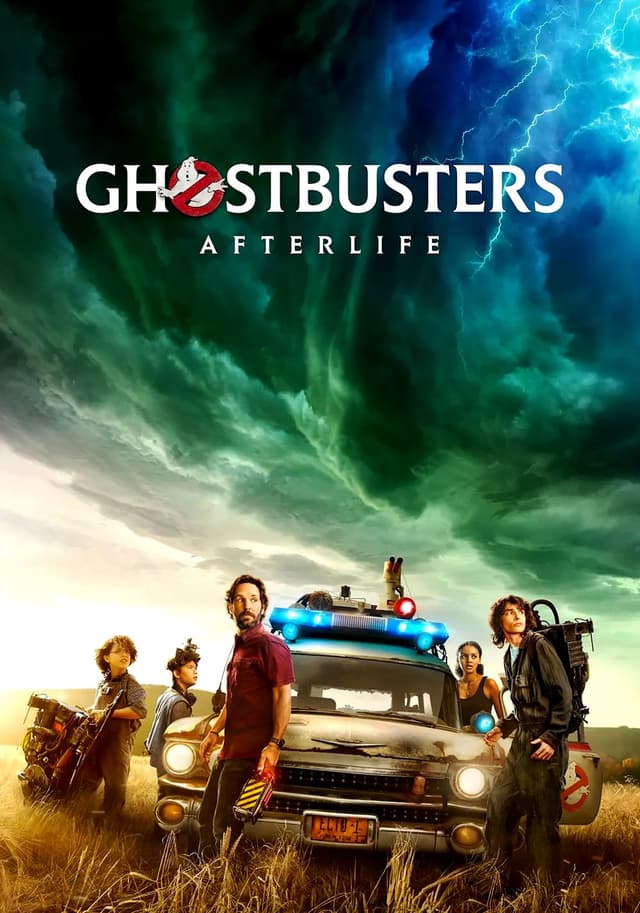
"Ghostbusters Afterlife," a fantasy released in 2021, was directed by Jason Reitman and stars Mckenna Grace, Finn Wolfhard. The production budget was $75,000,000, placing it in the high-budget range for fantasy productions of its era.
Key Budget Allocation Categories
While specific budget breakdowns are not publicly available, typical cost drivers for a fantasy production like this include:
- Visual Effects & Creature Design: Fantasy productions require extensive VFX for magical elements, mythical creatures, and fantastical battle sequences.
- Costumes, Prosthetic Makeup & Production Design: Period-inspired or wholly original costumes, elaborate prosthetic and makeup applications, and richly detailed set construction are hallmarks of fantasy filmmaking.
- Music Score & Sound Design: Fantasy epics typically commission full orchestral scores recorded with 80 to 100 piece ensembles, plus extensive sound design for magical effects, creature vocalizations, and immersive world audio.
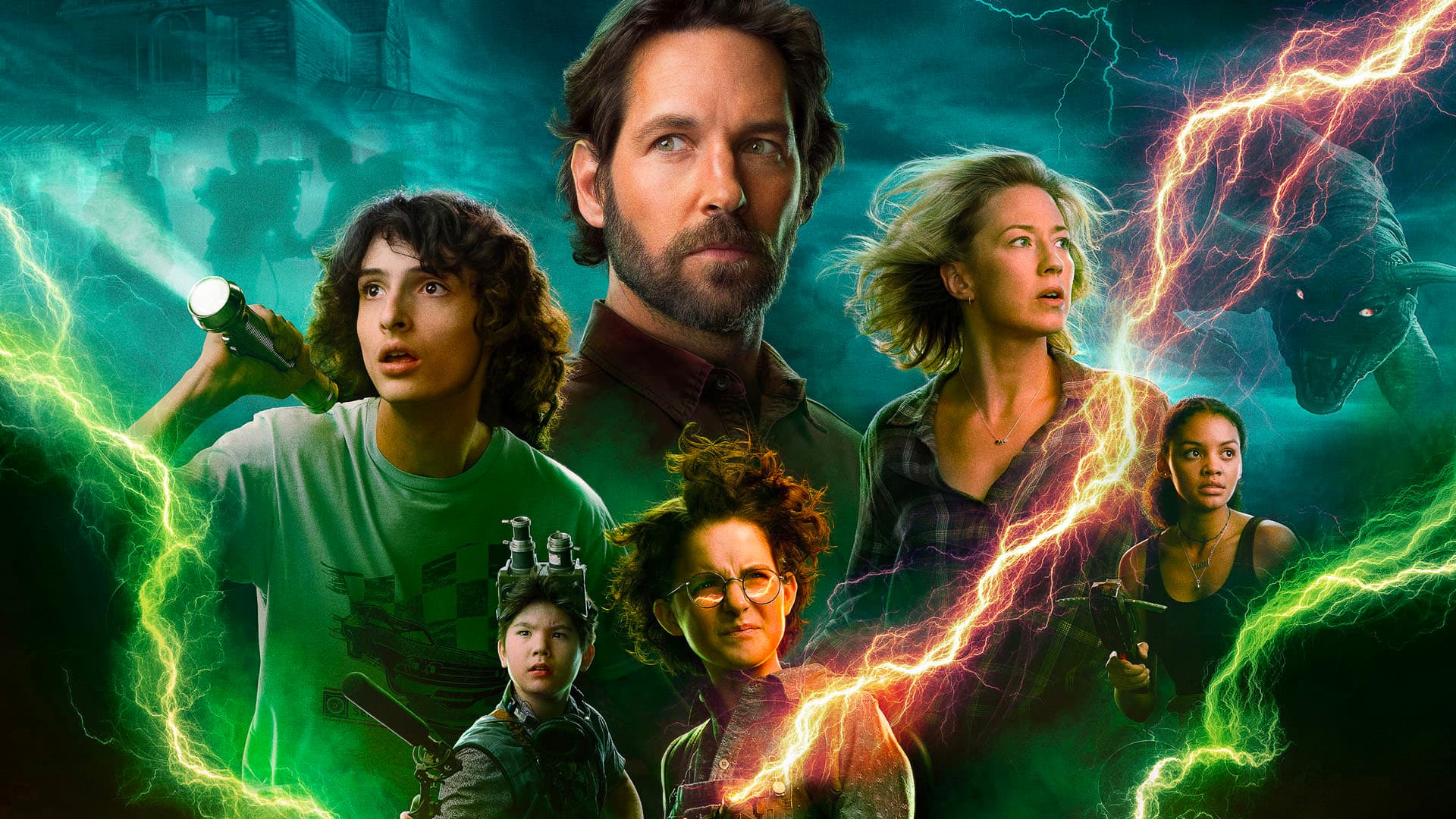
- Casting: The castings of Mckenna Grace as the young female protagonist, Finn Wolfhard as her brother, and Carrie Coon as their single mother were revealed in March 2019.
What were the major cost factors in Ghostbusters Afterlife?
Several factors contributed to the overall production costs of "Ghostbusters Afterlife."
- Visual Effects: Visual Effects & Creature Design is one of the primary cost drivers in fantasy productions of this scale.
- Costumes: Costumes, Prosthetic Makeup & Production Design is one of the primary cost drivers in fantasy productions of this scale.
- Music Score: Music Score & Sound Design is one of the primary cost drivers in fantasy productions of this scale.
How Does Ghostbusters Afterlife's Budget Compare to Similar Films?
At $75,000,000, Ghostbusters Afterlife sits in the high-budget range. Here is how it compares to productions with a similar budget:
- Practical Magic (1998): Budget $75,000,000, Worldwide Gross $46,733,235
- The Hunger Games (2012): Budget $75,000,000, Worldwide Gross $694,000,000
- Robots (2005): Budget $75,000,000, Worldwide Gross $262,511,490
- Sing (2016): Budget $75,000,000, Worldwide Gross $634,151,679
- Mamma Mia! Here We Go Again (2018): Budget $75,000,000, Worldwide Gross $395,607,854
The median budget for wide-release fantasy films in the 2020s ranges from $30 to 80M for mid-budget to $150M+ for tentpoles.
Ghostbusters Afterlife Box Office Performance
"Ghostbusters Afterlife" earned $129,360,575 domestically and $204,445,747 worldwide at the box office. Against a production budget of $75,000,000, the film performed strongly at the box office.
A film typically needs to earn approximately twice its production budget to cover marketing and distribution costs. For "Ghostbusters Afterlife," that break-even threshold was roughly $150,000,000. With worldwide earnings of $204,445,747, the film cleared that threshold comfortably.
Box Office Breakdown
Ghostbusters Afterlife

At 172.6%, "Ghostbusters Afterlife" earned roughly $2.73 for every $1 invested in production.
Ghostbusters Afterlife Production History
The castings of Mckenna Grace as the young female protagonist, Finn Wolfhard as her brother, and Carrie Coon as their single mother were revealed in March 2019. Paul Rudd was cast in the film in June, later confirming his role of Mr. Grooberson, the children's new teacher who knows of the Ghostbusters' legacy.
Under the working title "Rust City", principal photography began on July 12, 2019, in and around Calgary, Alberta, and lasted until October. Location filming occurred in surrounding communities such as Crossfield, Beiseker, Drumheller and Fort Macleod (Muncher chase scene) during July and August. Other locations around Alberta were also used.
The score for Ghostbusters: Afterlife was composed by Rob Simonsen and conducted by William Ross and Anthony Parnther. Simonsen studied Elmer Bernstein's score for the first Ghostbusters film and recruited Bernstein's son Peter, who guided the orchestration of Simonsen's score and the use of material from Ghostbusters (1984), as a score consultant. Simonsen used the ondes martenot throughout the score, which was played by Cynthia Millar, who played the same instrument on Bernstein's 1984 Ghostbusters score.
Awards and Recognition
Nominated for 1 BAFTA Award1 win & 21 nominations total
Critical Reception
On the review aggregator website Rotten Tomatoes, 63% of 309 critics' reviews are positive, with an average rating of 6.1/10. The site's critical consensus reads, "Ghostbusters: Afterlife crosses the streams between franchise revival and exercise in nostalgia , and this time around, the bustin' mostly feels good." Metacritic, which uses a weighted average, assigned the film a score of 45 out of 100 based on 47 critics, indicating "mixed or average" reviews.
Häufig gestellte Fragen
How much did Ghostbusters: Afterlife cost to make?
The production budget was $75,000,000. Sony Pictures and Columbia Pictures produced the legacy sequel, with Ghost Corps, the Sony-owned production company stewarding the Ghostbusters franchise, anchoring the project. Ivan Reitman, who directed the 1984 original, produced.
How much did Ghostbusters: Afterlife earn at the box office?
The film grossed $129,360,575 domestically and $74,800,000 internationally, for a worldwide total of approximately $204,000,000. It opened to $44,003,003 on November 19, 2021, finishing first at the box office during the early pandemic recovery period.
Who directed Ghostbusters: Afterlife?
Jason Reitman directed the film, the son of original Ghostbusters director Ivan Reitman. Jason Reitman had previously directed Juno (2007), Up in the Air (2009), Young Adult (2011), and Tully (2018). Afterlife was a deliberate generational handoff within the Reitman family.
Who stars in Ghostbusters: Afterlife?
McKenna Grace plays Phoebe Spengler, granddaughter of Egon Spengler, with Finn Wolfhard as her brother Trevor and Mckenna Grace alongside Carrie Coon as their mother Callie, Paul Rudd as the teacher Gary, Logan Kim as the friend Podcast, and Celeste O'Connor as Lucky. Bill Murray, Dan Aykroyd, Ernie Hudson, Sigourney Weaver, and Annie Potts return from the original films.
Was Harold Ramis in Ghostbusters: Afterlife?
Harold Ramis, who played Egon Spengler in the original films, died in 2014. The film honors his memory through a CGI recreation in the climactic sequence, prepared with input from the Ramis family. The CGI appearance was controversial among critics but praised by many fans as an emotional tribute.
Where was Ghostbusters: Afterlife filmed?
Principal photography took place in Calgary, Alberta, and surrounding rural Alberta locations, doubling for the fictional Summerville, Oklahoma setting. The Alberta Film and Television Tax Credit and federal Canadian production incentives supported the budget, with additional pickup work in Crossfield, Beiseker, and Drumheller.
What did critics think of Ghostbusters: Afterlife?
Reviews were mixed, with a 64% approval rating on Rotten Tomatoes and a 51 out of 100 score on Metacritic. Critics praised McKenna Grace's lead performance and the emotional handling of the Egon legacy but objected to what many described as a nostalgia-dependent third act. Audiences gave the film an A- CinemaScore.
Was Ghostbusters: Afterlife profitable?
Yes, modestly. Against the $75,000,000 production budget and an estimated $50,000,000 in marketing spend, the worldwide gross of $204,000,000 produced a theatrical profit despite operating during the difficult late-2021 pandemic recovery period. Strong premium VOD and home-video revenue extended profitability significantly.
Is there a sequel to Ghostbusters: Afterlife?
Yes. Ghostbusters: Frozen Empire (2024), directed by Gil Kenan from a screenplay co-written with Jason Reitman, returned the franchise to New York City with a $100,000,000 budget. Frozen Empire grossed $200,800,000 worldwide, broadly matching Afterlife despite weaker reviews.
How does Afterlife compare to the 2016 Ghostbusters reboot?
Ghostbusters (2016), the Paul Feig female-led reboot, had a $144,000,000 production budget against $229,100,000 worldwide and was widely considered a financial disappointment. Afterlife operated at half the budget of the 2016 reboot, with a more favorable cost-to-gross ratio, and successfully relaunched the original continuity.
Official Trailer
Erstellen Sie Budgets wie dieses in Saturation
Starten Sie mit einer branchenüblichen Spielfilmvorlage, importieren Sie Drehplan und Gagen, die Sie schon haben, und lassen Sie den Kostenbericht sich beim Ausgeben von selbst aktualisieren. Zusammenarbeit in Echtzeit, ohne Tabellen.